


Tune in to listen
Bounce FM

In this discussion with BSide, Ayinoluwa discusses what his Billboard recognition means for all, the complexities of advancing creative protection locally and more.

Akinyemi Ayinoluwa is now getting due attention as one of the central players shaping Africa’s music economy from behind the scenes. His inclusion as the only Nigerian in Billboard’s 2025 Top Music Lawyers list ensured that, peeling back the layers of a 13-year career in advocacy and a commitment to building progressive legal frameworks across Africa’s evolving music ecosystem.
For much of his life, Akinyemi has always been in close orbit with music, though he initially set out as a recording artist during his university days. Raised in a conservative and deeply religious household steeped in two of Nigeria’s most prominent denominations: Mountain of Fire Ministries and Deeper Life Bible Church, he was, as he puts it, largely shielded from secular influences. His exposure to music was limited to gospel records and the radio. Those moments would prove pivotal, forming the foundation of his early interest in the art and shaping his subsequent creative expressions during his university days.
The transition into the legal side of music was largely shaped by law school and the influence of discovering Chocolate City’s Audu Maikori. He eventually found a way to make both paths work by committing to music law, and he has become a trusted name in the space.
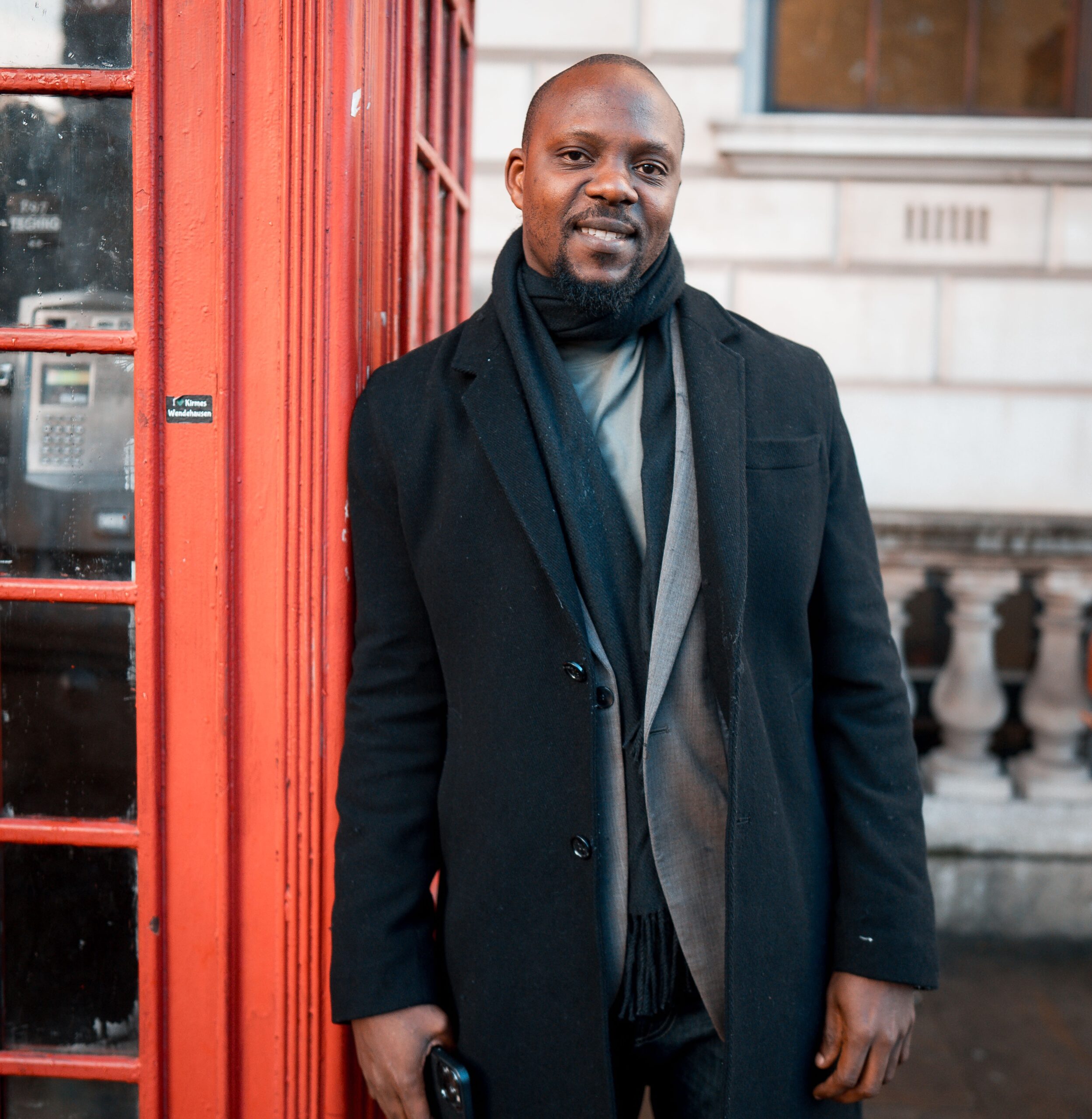
Akinyemi co-founded Hightower Solicitors & Advocates, a Lagos-based law firm where he currently serves as Managing Partner. For 13 of his 16 years in legal practice, he has remained at the forefront of entertainment law on the continent. With a robust client list featuring some of Afrobeats’ most influential producers, including Masterkraft, Magicsticks, Rexxie, and Kukbeatz, and others, Hightower Solicitors has grown into one of Africa’s premier firms in the creative space. Beyond legal representation, Ayinoluwa also champions talent development through a pan-African songwriting contest and a mentorship program in development to groom the next generation of entertainment lawyers.
In this conversation with BSide, Akinyemi Ayinoluwa discusses what his Billboard recognition means for all, the complexities and realities of advancing legal reform and creative protection locally, and the broader challenge of the continent keeping pace with global trends and emerging technologies.
*This discussion has been slightly edited for brevity and clarity.
How did you feel when you heard you made Billboard’s 2025 Top Music Lawyers list, the only Nigerian and African on the list, and how important is this recognition not just for you but for our creative economy?
Akinyemi Ayinoluwa: The Billboard recognition is a huge one for me. Yes, I’m a lawyer, but I’m also inspired by great Africans who were born and raised on the continent and have gone on to do great things internationally. People like Burna Boy, Trevor Noah, and Chimamanda Adichie. They grew up here, and they’ve become global icons for excellence. That inspires me. I want to be excellent in my own field and perform at the highest level. So, to be recognised by a platform like Billboard is a big deal.
As for the industry, I hope my recognition serves as a signpost for the coming generation. It should make them believe that it is possible. I believe everything I’ve achieved in my professional life stems from seeing examples I could emulate. Finding my footing in entertainment law came from reading about legendary entertainment lawyers like the late Efe Ozakoa, and contemporary practitioners like Audu Maikori and Mena Ajakpovi. Seeing their paths gave me clarity. In the same way, I hope my recognition and achievements so far can serve that purpose for others.
You’ve been able to do most of this through Hightower Solicitors and Advocates, a firm you founded and have been managing for over a decade. What would you say your firm is doing differently that’s giving you an edge in the space?
A.A.: For one, I’d say the choice of leader, myself. I used to be a musician, songwriter, recording artist and performing artist. That experience shows in our work. We serve our clients with the same passion because we’ve been in their shoes. I still live vicariously through these acts, but now my role has changed. I’m a lawyer who champions their interests. We keep chasing excellence, and we want to represent our clients at the highest level possible.
Can you give a practical instance where that experience gave you an edge?
A.A.: One of my biggest examples would be a case we handled around 2020. We rescued one of Nigeria’s biggest record producers from a bad deal with a label that didn’t know what to do with him. He got signed and was essentially shelved. His potential wasn’t being tapped. As someone who used to be on the other side of the table, I could tell that this guy was capable of doing big things. His quality, even as an up-and-coming, was remarkable, and he had the right features to back it up.
It was easy to see all this as someone who was a recording artist, so I fought tooth and nail for him. Other lawyers might not have given it that much because he was really in a bad spot. But I could see it, because I still have the ear for great music and the eye for talent.
Is that talent now fully maximising his potential?
A.A.: I believe so. He is thriving and doing well because of the decision we made five years ago. He’s gone on to collaborate at the highest level and has built a music catalogue that fetches him tens of thousands of dollars monthly.
Wow. Do you miss doing music, being the main act?
A.A.: No, I don’t. It’s a very tough business and world. To still be experiencing music through my current work is enough privilege for me, and I’m happy with that.

You have worked on deals involving both local and international talent. What are the key complexities you face doing the same for local talent, especially when international stakeholders are involved?
A.A.: Well, one of the main complexities, I believe, is that many talents operate from a place of survival and desperation. If someone hasn’t started earning well, they’ll most likely jump at anything that’s dangled in front of them, sometimes despite legal recommendations.
I remember a case about seven years ago when a client was offered $50,000 as an advance in a co-publishing deal. Based on the co-publishing clause, going ahead with the deal would have meant giving up half of his publishing interest in his music catalogue.
Because he had people like us advising him, he avoided that bad decision. Many of his peers would have accepted that offer. People often don’t realise how valuable their catalogue can be in the long run. Not seeing beyond the present is also a big issue. A lot of poor decisions boils down to the refusal to think long term.
Would you say Nigerian creatives are earning enough from the global Afrobeats boom?
A.A.: For me, I believe that you get what you give. And as a collective movement, we’re doing well. A lot of people might not agree, but as someone on the business side of things, I acknowledge that the industry in 2025 is a lot better than it was 10 or 20 years ago. That’s progress.
There are different ways to look at it, but it’s now relatively easier for our talents to scale. When you have a great team, a good lawyer, a good talent manager, you’re more likely to make the kind of decisions that guarantee success. Sure, many people are short-sighted, but those who think long-term and make the right decisions are doing well. We have great examples. It just depends on what you’re looking at.
The adoption of AI in the Nigerian music space raises legitimate concerns about legal infringements, much like what we’ve seen internationally. From a legal standpoint, what is your view, and how should the Nigerian legal system prepare for it?
A.A.: The reality is that technology always moves faster than lawmaking, regulations and enforcement. And I know for certain that our music market is also five or ten years behind what is happening in the US, UK, and the likes. But when it comes to intellectual property, the principle is the same everywhere: the people who create original work should control how it is used. AI is just a tool. If you’re using AI to create something based on my past work, likeness, or voice, you need to get the proper permission. It’s that simple.
No one can win a battle against technology. Let’s just ensure that its use is governed by rules, regulations, and ethics that protect people’s rights.
The music business continues to evolve, driven largely by streaming, social media, global licensing and more. How have you adapted your legal strategies to protect your clients?
A.A.: Well, I try to stay current so I’m never caught off guard. The industry keeps moving like you said, so I move with it both in and outside Nigeria, travelling and networking. We must continue leveraging opportunities for our clients. That’s how we keep them ahead.
What are the most common mistakes you see young African creatives making when it comes to protecting their rights?
A.A.: Ignorance is the costliest mistake. Many talents make far-reaching decisions without understanding the ecosystem. They don’t take time to study the industry or consult people with more knowledge. When you make decisions without proper information, you’re bound to make grave errors.
No one is better-placed to give that response than you, considering your advocacy work and mentorship initiatives across the continent. How would you describe the level of interest and proactiveness of the early-career
A.A.: I’d say relatively fair. Our advocacy work over the past 13 years has helped spread awareness, but there is still a lot to be done. You might educate 5,000 people in one year, but there’s always another 5,000 the next year who also need that education. It should be a continuous effort from both sides of the industry.
What reforms do you think are most needed in Nigeria’s copyright and intellectual property system to meet the demands of digital music production and global distribution?
A.A.: There was a recent amendment to the copyright law. It shows an effort to keep up. But then, there are new developments, especially AI, that we discussed earlier. The National Assembly needs to double down and ensure that the threat is contained, and that it is used in line with global best practices, which are still in development too.
Also, like India, Nigeria could benefit from a centralised licensing system for music. That would make commercial exploitation of music much more structured and efficient. Those are some reforms I recommend.