


Tune in to listen
Bounce FM

Contrary to its present controversial position, that phrase has a salutary history.
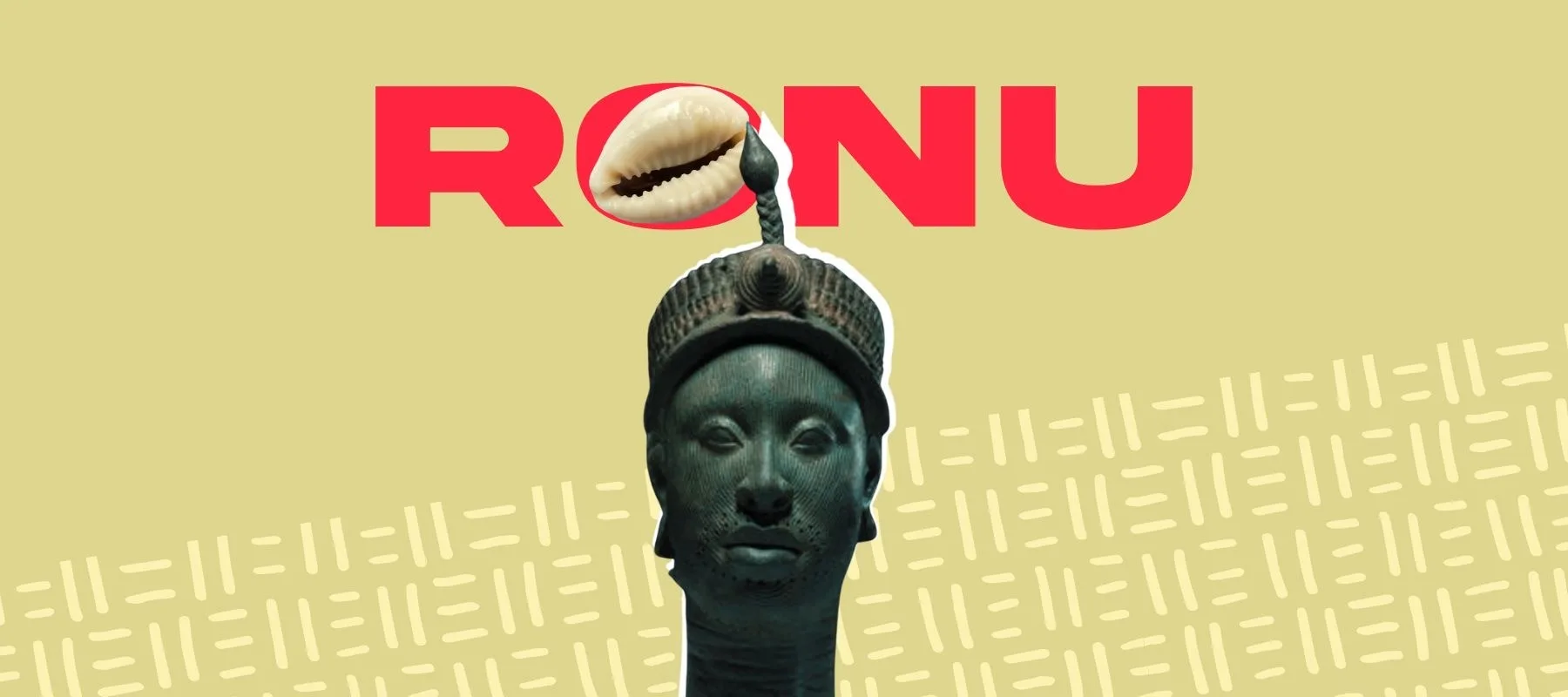
Tribal bigotry has always been a fact of Nigerian life, the kind of reality everyone knows is there but often pretends not to see. What has changed in the last decade is that social media has torn the veil away. What used to be expressed in jokes, muttered slurs, and private resentments has been dragged into the open and amplified for thousands (primarily on the internet) to see. Hate has now become something of a spectacle. If there was a moment when it became clear that online platforms had made tribal divisions not just visible but combustible, it was in 2023, when Dayo Israel, a national youth leader of the All Progressives Congress (APC), posted two words that reverberated across Nigerian X: “Yoruba Ronu.”
Dayo Israel used Yoruba Ronu after Peter Obi defeated Tinubu in Lagos state despite the rigging. He saw the real result and shouted this.
You people won't change history. It won't happen. https://t.co/ffd8EZzYpS pic.twitter.com/9wuZXjlyKF
— DISTINGUISHED KPMG LinkedIn Everest (@novieverest) July 1, 2023
Contrary to its present controversial position, that phrase has a salutary history. In the 1960s, it was the title of Hubert Ogunde’s play, a provocation aimed at Yoruba political leaders to reflect on their stewardship of the region. But when Israel revived it in 2023, it was employed without its founding moral inquiry. Bola Tinubu, the Yoruba political strongman who would go on to become president, had just suffered the humiliation of losing Lagos, his supposed impregnable base, to Peter Obi, the Igbo candidate of the Labour Party (LP). For many Yoruba nationalists, the defeat was a spiritual trespass, an invasion of territory by outsiders. Israel’s tweet summoned a wounded, misplaced sense of belonging that was recast as a defence of land, power, and birthright. That sentiment became the undertone heading into the governorship election, where the Labour Party’s candidate, Gbadebo Rhodes-Vivour, was suddenly considered as a serious threat to the All Progressives Congress incumbent, Babajide Sanwo-Olu. It did not matter much that Rhodes-Vivour was a Yoruba man with ancestry that could be traced back 400 years. Israel’s tweet was eventually deleted, but the damage was done. “Yoruba Ronu” has since become shorthand for a siege mentality that still has not subsided.
That impulse surfaced again recently with Nigerian-American artist Uzo Njoku, known professionally as Uzo Art. Her offence, according to Yoruba fundamentalists on X, was twofold: as an Igbo woman, she had titled her upcoming art exhibition An Owambe Exhibition and, worse still, she spelt “Owambe” with an ”m” instead of an “n.” To these ‘critics,’ that made the exhibition an act of cultural theft. Petitions demanding its cancellation have drawn thousands of signatures, and a Yoruba traditional ruler, Omotooyosi Akinleye, the Olukosi of Ilukosi-Ijesa in Osun State, has pledged to “take every necessary action” should it go forward. Njoku herself has faced harassment and calls for boycotts.
OWAMBE is All over your timeline but all of a sudden uzo is the one who rewrote just because she wants to profit from it. But you know the correct spelling is OWANBE but you’ve never used it correctly. It is a problem today cos how dare UZO NJOKU want to profit from it Abi? 😂😂 https://t.co/6wRP9SpEI3 pic.twitter.com/MvDwQQ6xXJ
— Owelle of OWAMBE 🇳🇬 🇺🇸 (@Owelle_Ikemba) September 7, 2025
The irony is that “Owambe” has long circulated as an acceptable variant spelling, used in everything from party flyers to Nollywood subtitles, even by some of the same people now pretending it’s a bastardisation. The Tinubu-owned The Nation Newspaper has used “Owambe” several times in its reporting. Of course, the issue was never about orthography. It was a pretext for, and a volatile manifestation of, the deep tribal anxieties that have haunted Nigeria since its creation, and was recently firmly summoned.
Since 2023, Tinubu’s rise to the presidency has been accompanied by a steady uptick in Yoruba-Igbo antagonism, particularly online. Rather than attempt to calm the waters, the president has appeared content to let them rage. His silence on episodes of ethnic bigotry is read by some as tacit approval, and it is not hard to see why that might suit him politically. In Lagos, where he lost to Obi, stoking fears of Igbo encroachment became a way to re-mobilise Yoruba voters for the governorship contest that followed.
Moreover, under billionaire Elon Musk’s ownership, X has stripped back many of its moderation protocols and restructured its monetisation system so that engagement—not civility—drives rewards. Outrage spreads faster, hateful posts earn more replies, and verified accounts that pay for a Premium subscription are algorithmically boosted. The result is a permission structure in which bigots can spew vitriol with little fear of consequence. And, perversely, the more outrageous their views, the more likely they are to profit from them. Hate has become content, and content has become currency. Scroll through the feeds of the loudest Yoruba fundamentalists today and you’ll see a set of talking points repeated with near-religious fervour. They accuse outsiders of cultural theft. They insist Lagos must be defended from “non-indigenes.” And, importantly, they don’t apply these standards evenly; they excuse their allies but use them to attack opponents. That’s what makes their arguments dangerous: by dressing up political fear as cultural pride, they turn hate into something that feels righteous.
Tribal bigotry on Nigerian social media is not a one-way street. Although the Yoruba nationalists are the loudest and closest to power, they are not the only players on the bigotry field. Daily, people from different tribes go after one another, hurling insults based on their differences and further stoking hatred and division. For a country that often pretends to be united at official functions, political leaders have done very little or nothing to address these raging ethnic divisions online.
Further, Nigeria is not unique. Across the Black world, one sees the same patterns of intra-Black hostility that revive colonial ways of dividing people. In the United States, self-styled “Foundational Black Americans” rail against African immigrants, calling them interlopers and insisting that only descendants of American slaves can claim legitimacy. In South Africa, waves of xenophobic violence have targeted Nigerians, Somalis, Zimbabweans and others, with mobs insisting that foreign Africans are stealing their jobs. In the 1980s, Nigeria expelled hundreds of thousands of Ghanaian migrants in the infamous “Ghana Must Go” episode, while earlier this year, some Ghanaians called for “Nigeria Must Go” in retaliation for perceived slights.
Do Yoruba Fundamentalists have a point? The honest answer is that their claims contain a kernel of legitimacy that has been twisted beyond recognition. Yes, every culture has the right to protect its heritage from bastardisation. Language matters. Symbols matter. But protection does not require intimidation, and heritage cannot survive if it is reduced to a weapon against neighbours. When cultural pride becomes indistinguishable from political hatred, it ceases to be pride at all. It becomes a tool of elites who are happy to see ordinary Nigerians at one another’s throats while they share drinks in the same elite circles where tribe matters far less than status. The deeper tragedy is that Nigerians keep falling for it. Instead of seeing one another as human beings with shared struggles, they are taught to see one another as threats — threats to identity, threats to resources, threats to dignity.
If there is a way out, it will not come from waiting for elites to lead. Their incentives run the other way. It must come from citizens choosing to refuse the bait. That means embracing the uncomfortable truth that identities overlap, that cultures borrow from one another, that no Nigerian tribe exists in splendid isolation.