


Tune in to listen
Bounce FM

In this conversation with BSide, they reflect on the backlash and praise The Herd has received, and the responsibility that comes with telling African stories that hits close to home.
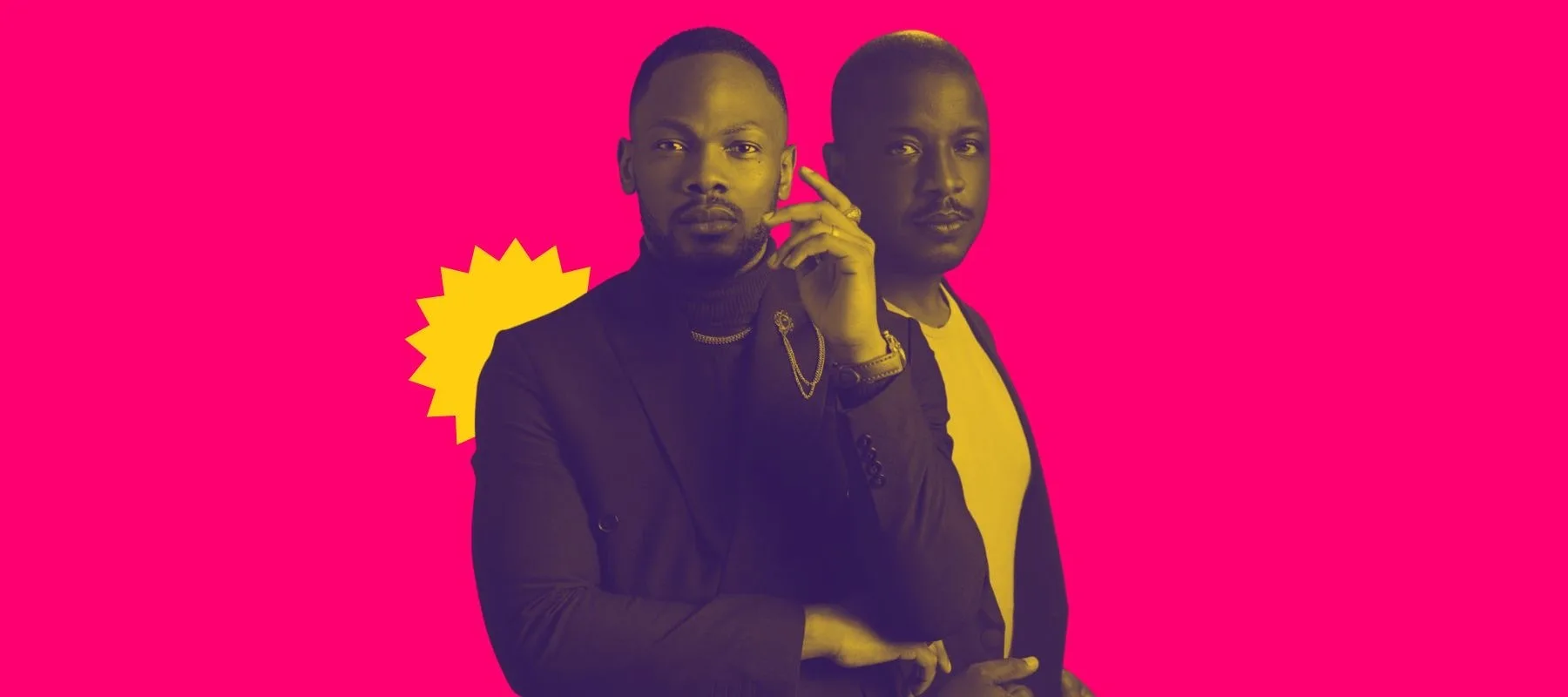
When a film feels “too real,” it often means it has touched a nerve. Netflix Nigerian film,The Herd did exactly that, pulling audiences into a narrative that mirrors Nigeria’s lived realities ofinsecurity. For Daniel Etim Effiong, who wears three hats as director, producer, and lead actor, and Lani Aisida, the screenwriter behind the story, The Herd was never about reliving traumatic experiences. It was about telling the stories behind the headlines. The ones that feel too heavy to tell, and even when they do, rarely get told in full.
One minute they're celebrating love, the next they're fighting for their lives. The Herd is now playing on Netflix. pic.twitter.com/p1SBl3Ucht
— Netflix Nigeria (@NetflixNaija) November 21, 2025
In this conversation with BSide, they reflect on the weight of telling stories rooted in national trauma, the backlash and praise The Herd has received, and the responsibility that comes with telling African stories that doesn’t only hit this close to home but remain impactful.
The Herd has generated strong reactions because of how closely it mirrors real crises in Nigeria. Was there a specific event, or personal experience that sparked the initial story?
Lani Aisida: It wasn’t a personal experience. But I was at a crossover service a couple of years ago where someone gave testimony that he had been rescued from a kidnap. He gave so little information that I felt he was still living in fear. There was something in him that connected with me, and I realized that, while I hear about kidnaps, I don’t really know the stories beyond the numbers. It was at that point that I also realized how many people don’t know either. Especially people who live in Lagos and don’t have to travel to Ibadan or any other state by road. That’s when I dug deeper to say, I want to tell this story. And then tell it from the lenses of the abducted and the one waiting for their loved one to return home. We also added the lens of the police investigation, but that was the inspiration for it.
To Daniel, what convinced you that this was a film you had to tell and one you were willing to carry as your debut directorial role?
Daniel Etim Effiong: I was at a point in my career where I wanted to tell my own stories. I was doing a lot of YouTube films, and I just felt those films were not inspiring to me. So I was looking for an inspiring story to tell; something that would resonate with me first and then with others. Then I reached out to Lani if he had any stories that might interest me. He had presented three synopses to me, and immediately, when I read the synopsis for The Herd, I just knew that was a story I wanted to tell, because it was immediately relatable. It was relatable because I used to go on road trips a lot with my dad, and now, I have that palpable fear of the highways in Nigeria.
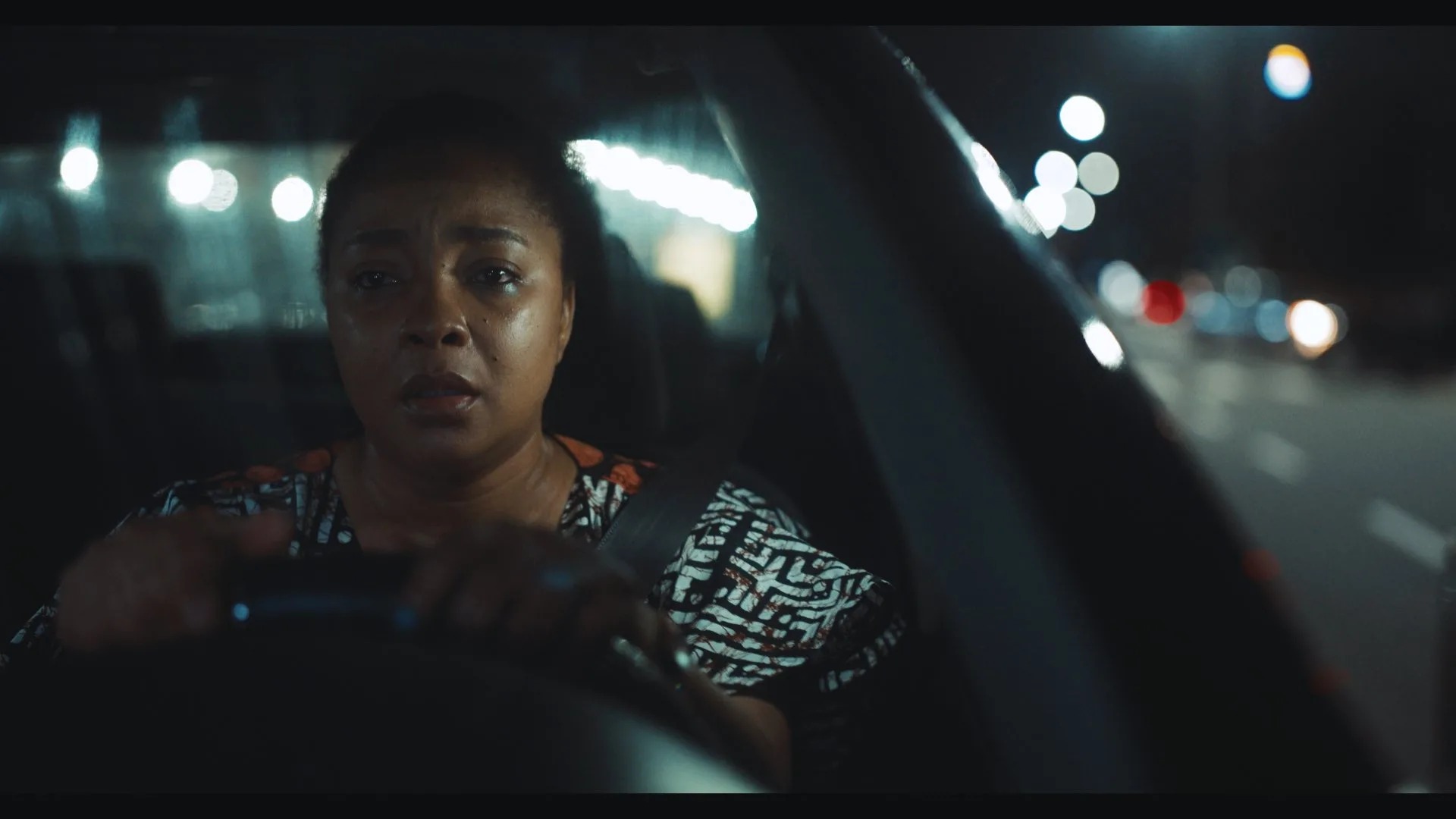
Also, there was a character, Adamma, who was left in Lagos when her husband got kidnapped, and she was doing everything she could in Lagos to help him come back. I could relate to that because at some point in my life, my dad was arrested by the military government and put in prison, and my mother was back home, doing everything that she could to ensure that he was released and came back to his family. So those two factors just made the story very relatable for me, and I immediately connected with the story and knew that that was the story that I wanted to tell.
The Herd sparked critical acclaim, including claims that it painted the North negatively. Do you think the film retraumatizes Nigerians, or helps them confront hard truths?
Daniel Etim Effiong: The process of making the film was quite rigorous. We had enough time to go through the story and the script over and over again. We consulted widely: with Muslims, Christians, Northerners, Southerners, the military, and DSS. We’re not naive enough to believe that whatever we put out there would be acceptable to all. Once you decide to tell an impactful story, you can rest assured that people will have something to say, both negatively and positively. So we were prepared for it. I would even add that I had dreams. I think it was last year before the film came out. I was visited by the Hisbah police, the Sharia police in the North. In my dream, I was visited by the Sharia police, and there was a kind of movement surrounding the film and all that. But in the film, nothing came out of it. I sort of knew that it would cause some discussion, but I also knew it would be fine because we had done our homework.
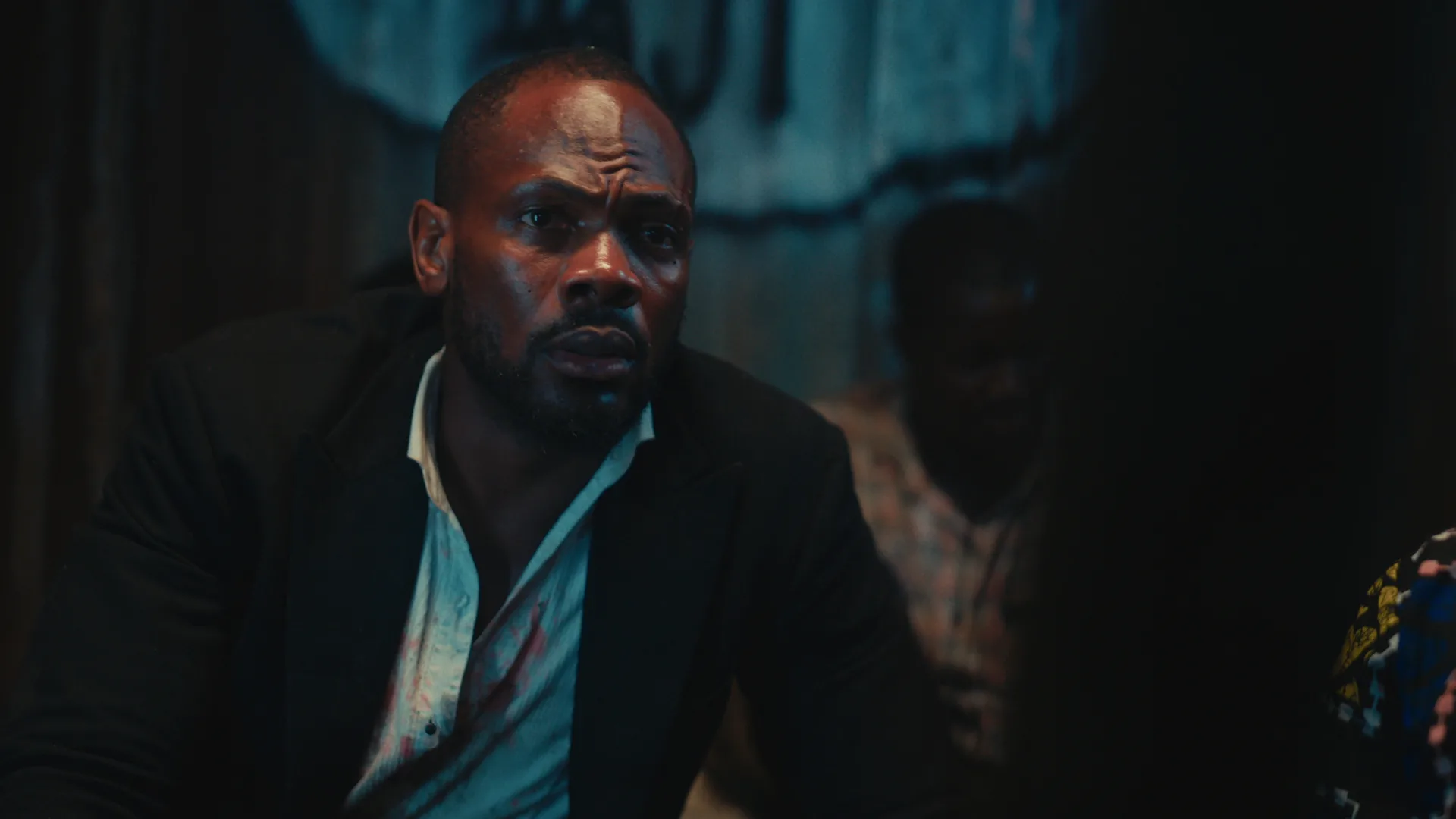
Additionally, spiritually, we had done our homework, so we were in a good place. I was excited that people talked about it. The worst thing any filmmaker or storyteller can experience is releasing a film or story and having no one care about it. I think that’s a terrible place to be as a creative. That people had something to say about it was, in a way, a blessing. And for the naysayers, it was interesting to read their comments, and, you know, learn a thing or two about their views.
As a director, producer, and lead actor, how did you manage these roles on set altogether, especially during emotionally intense scenes?
Daniel Etim Effiong: Well, it was a lot of hard work. It was the first time I was doing such on a scale. It was really difficult, but I was able to succeed at it because I think I had solid people around me. First of all, we did a lot of prepping, and then, going into filming, I had a solid crew behind me. The actors all brought their A-game and did their homework. It was quite easy for me to focus on acting and directing because everyone else was really strong in their different departments. They covered me when I was asking everyone to watch, making sure that everything within the frame was really good.
Daniel recounted consulting widely while making The Herd. As the screenwriter, how immersed were you in the film’s themes, and did your research change how you saw these issues?
Lani Aisida: Like Daniel said, we were very prepared. I’ve been in the industry for 10 years. This is the most work I’ve done, even before writing the scripts. But I’m happy that it was rewarding. The honest truth is that we understood the sensitivity of the subject matter. It was a case of how to address this. There are several stakeholders interested. And as you said, it’s something that can be triggering and relive trauma for certain people. How do you address it such that you’re not just leveraging their experiences? Instead, you’re trying to convey the truth of their experiences that they haven’t been able to share with a wider audience. That involved speaking with people who have gone through this. And then it’s crazy, because I remember one time I was looking for someone who has had an experience or someone in their family being kidnapped, and someone said, Oh, my father has been kidnapped. These things are closer to us than we imagine.
However, for whatever reason, people who go through difficult times often don’t share the information with the people around them. They experience it as a family, and they sort of lock up. And it’s almost the same thing that I experienced with the man who shared his testimony on the pulpit, where he just said as little as he could, and he locked up. However, we then began researching what it is. Well, we couldn’t speak to any herdsmen, so we had to look into several papers, videos, theses on the genesis of certain groups, and how some of these groups perpetrate this act.
And the beauty of this is that we always put it at the top of our minds that we were creating a film for an entertainment platform. I have a friend who is the head of a DSS desk in a particular state. When I saw him for the first time since the film came out, he said everything was spot on. He then made a comment about the lady who went and told the herdsmen that the police were around the old lady. He said that was actually very spot on, because it’s not because she’s part of the crew or the kidnappers. She fears for her safety. We have people in villages who will help them, not for money, but simply to show that I’m with you. Please don’t harm me and my family, you know.
I won’t say we explored the full depth of it, but I’m happy that we scratched the surface. And as you said, it’s generated conversations. It has helped people gain a deeper understanding of what may be happening around us. And when you were talking about the controversy, one of the most beautiful things for me was that most people who were coming out to say negative things hadn’t watched the whole film. However, it was people who had watched the film who came out to counter them. And not the makers of the film. This just shows that people didn’t just get the entertainment value, but then they also got the right messaging behind it, and they can become ambassadors for the project.
What was the most challenging scene you had to write, emotionally or structurally, and why?
Lani Aisida: I’ll be honest with you, structurally, it was basically, how do you fit everything into a movie? Because, as I mentioned earlier, I’m coming from three perspectives: the people who have their family kidnapped, the kidnappers and their victims, and then the law. So we came from those three perspectives. How do you keep it tight so that it still feels like one film? What is the spine of the film that remains constant and consistent throughout all the scenes? That was the structural challenge.
From an emotional perspective, I must be honest with you; a lot of it was quite emotional. But if I were to say one, it was when Adamma (Linda Ejiofor-Suleiman), the first character, went to the bank asking for her husband’s money, and I know it’s not something people talk about. Basically, the underlying question is: Is there a fault in our banking system? If you look at the context of what was happening. I’ve watched it with different audiences because they don’t know I’m the writer, and they’re just talking.
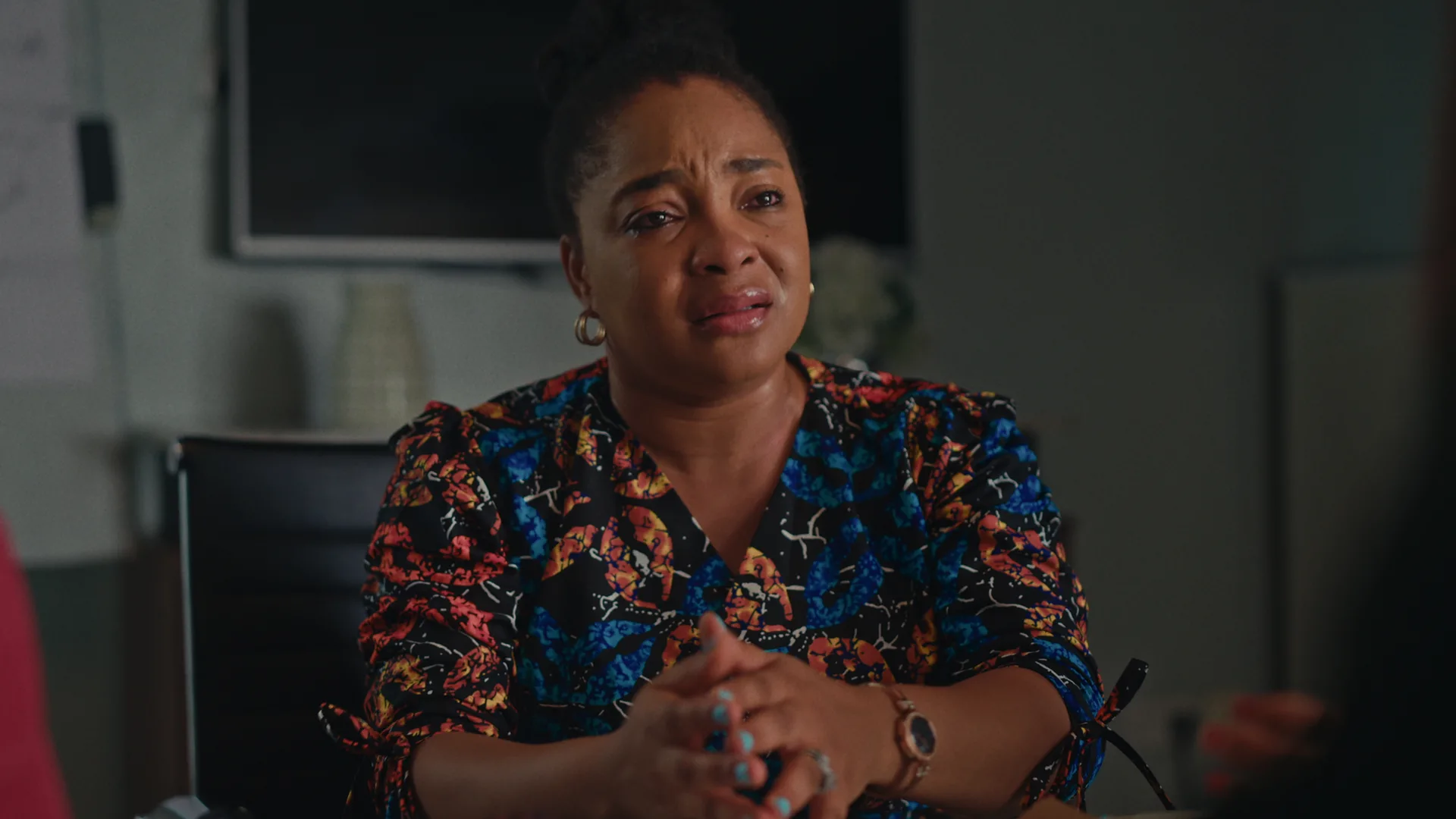
And I remember one guy said, “I empathize with the bank because there is nothing she can do.” That’s exactly what I hoped to create with that scene, where nobody is trying to be a bad person, but the truth is that our country permits that. If it’s the banking industry, the healthcare industry, or our OSU culture. But for me, when I think of that scene, I can’t imagine having a loved one, being somewhere where I do not know what is happening with them. However, on my end, I have to forget all that I’m going through, because life is tough enough on its own. I think that was the most emotional scene for me.
Back to Daniel. Your character carries a lot of emotions. Which scene would you say resonated with you the most as an actor?
Daniel Etim Effiong: I think there were several key scenes for me as an actor, but maybe the penultimate scene, where I’m coming out of the forest, and I’m seeing my wife for the first time, after I’ve been saved. I think the scene for me was particularly very moving, because of how you spend all your days in captivity, and you’re just hoping and praying that you make it alive.
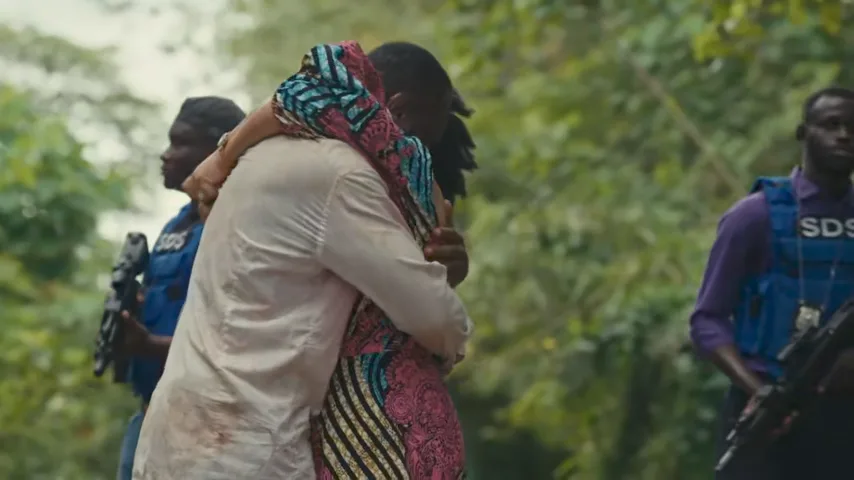
Even after you’ve been saved and you’re coming out of the forest, you don’t have the full release yet, until you come out and you see your wife. Then everything just comes flooding in; all that emotion, you remember your children, you remember the phone calls you made to her in captivity, everything just flashes before you, and the overwhelming emotion that you feel. Everything just came rushing in, and then it was natural for me to feel that release and just embrace her, letting myself be human again. Because while you’re in captivity, you have to survive and be strong for your family. You have to be strong for Derin, who is also there with you. But in that moment where I meet my wife in the film, it’s like I can let myself feel again. I can let it all go, and then it’s the rush of all the emotions. So for me, it was that scene.
Producing a film of this scale and sensitivity in Nigeria comes with its own challenges. What were the biggest challenges you had to face as a producer?
Daniel Etim Effiong: I think it was fighting for a certain standard. In Nigeria, when you hire people to get a job done, the tendency is that they want to just complete the job. As a direct producer, the job is to bring everyone up to speed with the vision that you have. You show them the standard, and bring everyone up to that standard. But as time goes on, when fatigue and pressure set in, people tend to want to settle back to their own standard, or settle back to the status quo. So the task for me as producer and director was to ensure that I held that standard up and said, Let’s not drop the ball. Let’s maintain this level of excellence.
Also for instance, when the executive producers complain that they can’t afford some things. It was tough, but I had to push. It was almost like a tug of war between the executive producers and me, because it’s a struggle between time, funding, and quality. You toggle these three elements until you get the project where you want it to be. If you don’t have enough time, then you have to spend money to get quality. If you don’t have money, then you have to spend time to get quality. If you don’t have time and money, then, you know, the quality will suffer. So, it’s a constant tug of war between these three elements, ensuring that we maintain the standard. For me, that was the challenge, and I embraced it. And thankfully, we’re able to get the film to a level that everyone could appreciate.
Following a critically acclaimed film like The Herd, what comes next for Daniel Etim Effiong and Lani Aisida?
Daniel Etim-Effiong: I’m an actor, so I am looking forward to making money. Like I jokingly say, back to my 9-5. I’m looking forward to working on more projects with Lani.
Lani Aisida: In the hands of another creative, The Herd wouldn’t be what it is. Good scripts don’t eventually make good movies. But I want to give Daniel his flowers for bringing this story to life and making it an excellent production.
I look forward to telling more African stories through my production company, African Stories Untold. Although I’m looking forward to writing less, I’m hoping to tell more quality and reliable stories.