



Tune in to listen
Bounce FM

Nigeria must now focus on putting plans in place early ahead of the 2030 World Cup, if it’s to break free from the damaging pattern.

When the 2026 FIFA World Cup commences in June in North America, the Super Eagles of Nigeria will not be present, having missed out on the automatic qualification route that guaranteed Africa nine teams in the expanded 48-team Mundial.
Nigeria finished second behind South Africa in Group C of the African qualifying series, and were thus condemned to miss the World Cup for the second consecutive time. However, a twist in the CAF playoff structure handed the three-time African champions a lifeline to the world tournament through the playoff route. But as we now know, the Eric Chelle-led side bungled that opportunity after losing to DR Congo via penalties, ensuring the Central African country proceeds to the intercontinental playoff stage.
Despite the Super Eagles being beaten fair and square, the Nigeria Football Federation (NFF) has refused to move on and has since formally petitioned FIFA to investigate the eligibility of some players fielded by DR Congo, who they claim are ineligible under Congolese national law. It was a wild goose chase, one that the NFF had a duty of undertaking, regardless, to salvage something from another ill-fated qualifying campaign.
FIFA’s expected rejection of the petition eventually arrived, albeit later than many anticipated. Even that has not deterred the NFF, which has now indicated its intention to appeal the verdict at the Court of Arbitration for Sport.
FIFA, the world’s football governing body, has rejected #Nigeria‘s petition alleging #DRCongo fielded ineligible players in their Nov’s African qualification play-off for the 2026 World Cup.
NFF top official Sanusi says they’ve appealed FIFA’s decision on their petition.
JOK😂R pic.twitter.com/uHBiT238X4
— Olúwashínà Òkélèjì (@oluwashina) March 17, 2026
It remains to be seen what comes of this, though it continues to reflect poorly on an organisation that should instead be focused on investigating the root causes of the failures and uprooting them. The Super Eagles’ failure to qualify ultimately comes down to not being primed to do so, a serious indictment of the NFF, which has little in its defence.
While the nine qualified African teams will aim to surpass Morocco’s achievements from the 2022 World Cup when the 2026 edition begins in June, Nigeria must now focus on putting plans in place early ahead of the 2030 edition to avoid extending the damaging pattern.
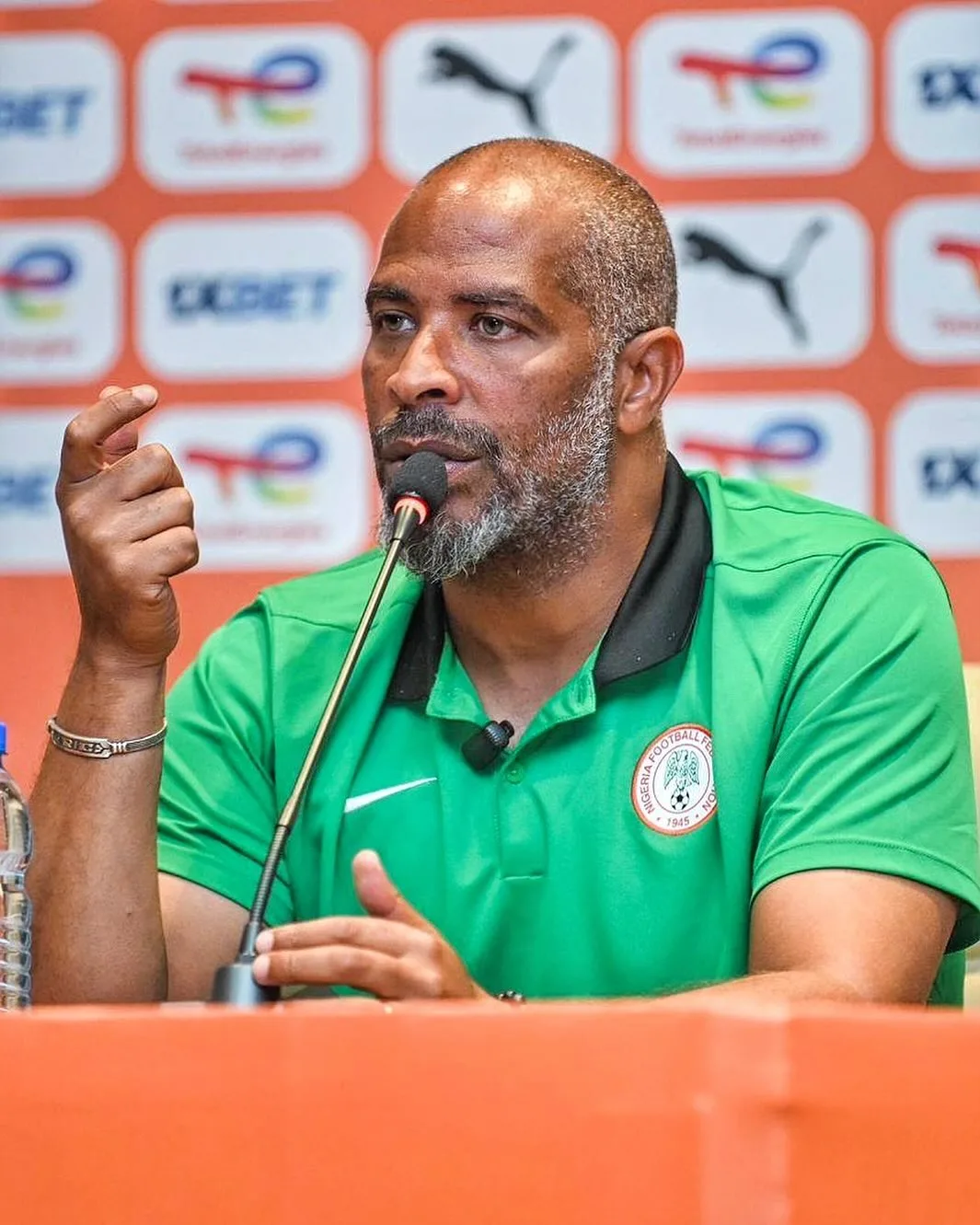
In the 2026 World Cup qualifiers, the Super Eagles were managed by three coaches: José Peseiro, Finidi George and the current head coach, Eric Chelle. Both Peseiro and Finidi handled two matches apiece, all of which ensured Nigeria recorded no victories in the opening four games.
This immediately put the Super Eagles on the back foot, with further administrative delays only compounding the pressure and ensuring that Chelle, who was eventually employed to salvage the situation, had little time to work before he was thrust into arguably one of the most difficult sporting tasks in the country.
He did not exactly achieve the objective, but his result was decent enough, even though more tactical flexibility earlier in the campaign could have helped Nigeria’s cause.
Having a stable environment is not a surefire guarantee of qualification in a tournament setting, but it at least removes instability from the list of problems a team could face. This is especially important in national team football, where there is a very limited window for trial and error.
Per Punch Sports, Chelle’s contract with the NFF is still under review after he led the Super Eagles to a bronze medal finish at AFCON, a shortfall from their prior outing in Cote d’Ivoire. In typical NFF fashion, the process has been unnecessarily prolonged, with other countries reportedly vying for the signature of the Franco-Malian tactician. The NFF needs to reach a decision and set the ball rolling with clear objectives that can guide the team towards the next qualification cycle.
Athletes and coaches are professionals who often perform consistently despite the challenges that may come their way. But at its core, performance can also be relative to the incentives on offer, regardless of personal goals and ambitions.
This is an area the NFF has consistently struggled with. Over the last four months, the Super Eagles have protested unpaid bonuses on two occasions: first, ahead of their clash with Congo and later during the 2025 AFCON.
🗞 Super Eagles boycott training ahead of Thursday’s World Cup playoffs over unpaid match bonuses and allowances spanning two years, according to reports. pic.twitter.com/s0Mz0oF7Ob
— Leagues Reporter (@LeaguesReporter) November 11, 2025
Footballers are professionals working to earn a living like every other professional. If they consistently perceive that they are not being appreciated or compensated fairly, it will ultimately affect their performance.
The same applies to the coaching crew. After the recent requests Chelle made leaked to the media, one can only wonder how many basic provisions the coaching staff and players are being deprived of. These are not the markers of a well-incentivised team.
Eric Chelle’s 19-point conditions to NFF for a contract extension
1. Private car (SUV) with a chauffeur and security.
2. House in a well secured environment with 24hrs uninterrupted power supply (electricity).
3. Furnished office with projector for analysis.
4. Internet… pic.twitter.com/EPzqA49xxp— YabaLeftOnline (@yabaleftonline) February 19, 2026
Whether it concerns financial obligations or other welfare provisions, these shortcomings should never become a recurring issue for a national side from which the very best is expected.
For anyone who keenly watches the Super Eagles, the quality of play when they are at the Godswill Akpabio International Stadium is starkly different from when they play on world-class pitches outside the country.
Their free-flowing displays at the just concluded AFCON in Morocco, as well as their intercontinental friendlies against Gabon and DR Congo in Rabat, were clear evidence of this. Many observers were left asking where this version of the team had been all along.
While the disparity in quality cannot be entirely attributed to the pitches, it remains a factor that cannot be ignored when discussing the Super Eagles’recent performances. After all, this is a team largely made up of players who were developed and currently ply their trade in Europe, where football pitches are largely of high standards.
It is therefore not far-fetched to suggest that the contrast between those conditions and what they sometimes encounter in Nigeria affects their play. The responsibility is on the NFF to improve its facilities to genuine world-class standards if it intends to fully maximise the potential of the group it has entrusted with the country’s football ambitions.