




Tune in to listen
Bounce FM

The commission doesn’t need a new policy to suppress participation. The system is already doing that on its own.
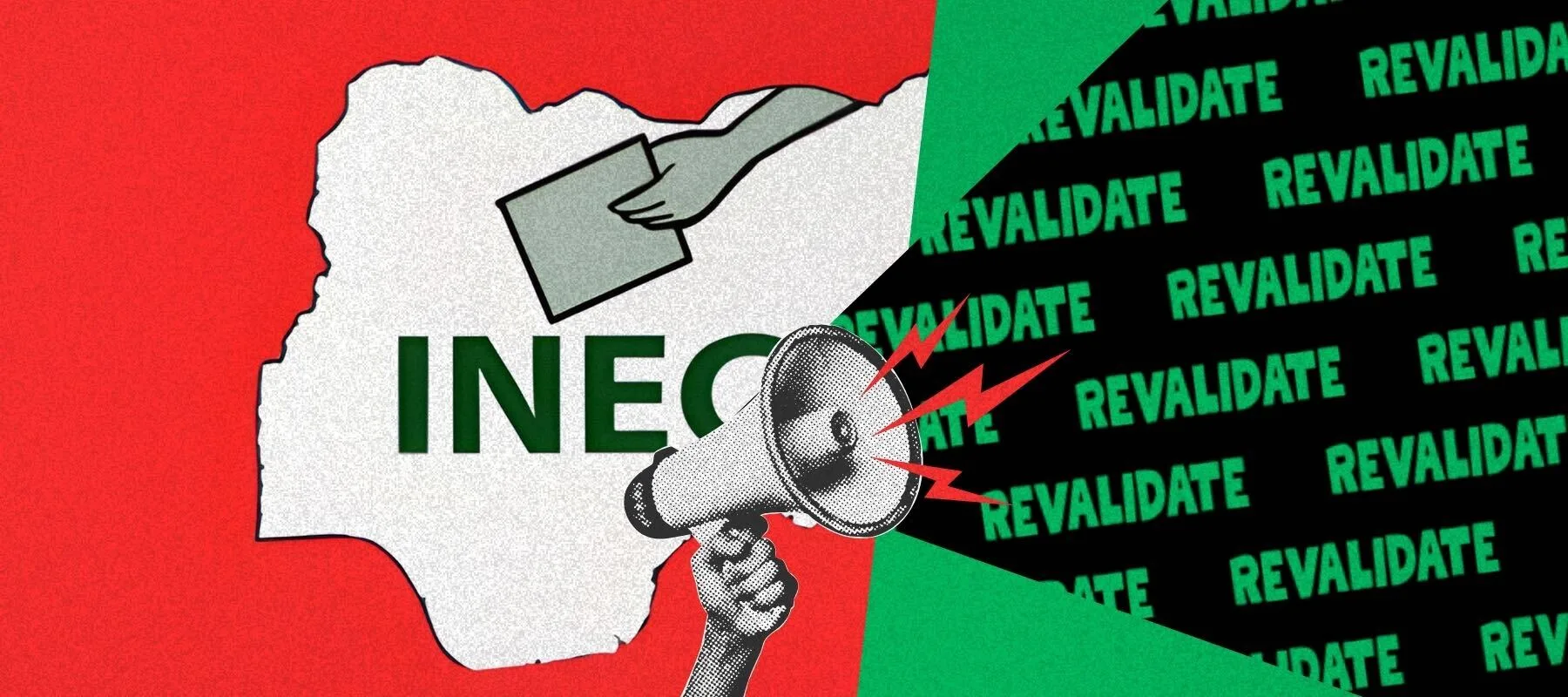
Nigeria’s electoral commission has a register problem. What it doesn’t have, apparently, is a viable plan to fix it.
Last Friday, April 3, 2026, the Independent National Electoral Commission (INEC) announced that everyone who registered to vote between 2011 and 2024 — that’s over 93 million registered voters — would need to revalidate their voter details before the 2027 general elections. In a now-deleted post on its official X handle, the commission said the exercise was aimed at removing “null and ineligible voters, such as deceased, non-Nigerians, underage, and multiple registrations, in accordance with the provisions of the law.”
Breaking news: INEC JUST DELETED THE REVALIDATION POST ON THEIR OFFICIAL X HANDLE. pic.twitter.com/uxFzeyjsXY
— PETER OBI LAST BORN (@ikangbo_gabriel) April 5, 2026
The process was scheduled to begin April 13. Then, barely a day after the announcement, specifically in a letter dated Saturday, April 4, INEC quietly told its officials to stand down and await further directives. No explanation. No new date. Just silence.
So here we are. Over 93 million registered voters don’t know if they need to do something to keep their vote, when they need to do it, or what happens if they don’t. With the election cycle already underway, that is not a minor administrative hiccup. That is a crisis in the making.
To be fair, the commission’s concerns about the voter register are legitimate.
Yiaga Africa’s Executive Director Samson Itodo acknowledged as much, describing the revalidation exercise as “a great approach to clean the register.” Nobody serious is arguing the register doesn’t need cleaning.
But Itodo didn’t stop there. “This is a case of a good policy implemented at the wrong time,” he said, pointing out that the 2027 electoral cycle already has the most compressed timelines for electoral activities, with continuous voter registration still ongoing and political party primaries set to begin within weeks.
Even INEC’s most charitable defenders cannot defend the timing.
Think about what INEC is actually asking. Over 90 million registered voters. Pressed into a tight window to revalidate their voter status. With the implication that failure to do so could affect their eligibility to vote.
INEC wants you to believe this is simple: just go online, visit cvr.inecnigeria.org, confirm your details, done. But Nigeria is a country where millions of registered voters have never sent an email. Where mobile data is expensive. Where electricity is unreliable. The digital option may work for urban, connected voters, but not for rural residents, who stood in a queue for hours to get their Permanent Voter Cards (PVCs) in the first place.
The African Democratic Congress (ADC) captured this disconnect perfectly: “It is already difficult enough to get citizens to register to vote in the first place. To now require them to return and ‘revalidate’ their registration is, in effect, to ask them not to bother at all.”
That is not an exaggeration. It is a description of how voter apathy actually works. It is about the quiet, rational decision of a citizen who has been asked to do too much for too little.
Nigeria’s 2023 presidential election recorded a voter turnout of just 26.72 percent, the worst since the return to democracy in 1999. Only 24.9 million voted out of nearly 100 million registered voters.
INEC doesn’t need a new policy to suppress participation. The system is already doing that on its own. Piling a mandatory revalidation exercise on top of that environment, with a compressed timeline and no clear logistics framework, is not electoral reform. It is electoral recklessness.
Is the exercise happening or not? INEC has not said. The suspension letter told officials to stand down but keep their equipment ready. That tells you everything: the commission itself doesn’t seem to know what it’s doing next.
TRAINING OF TRAINERS (TOT) IN PREPARATION FOR THE NATIONWIDE VOTER REVALIDATION EXERCISE SCHEDULED TO COMMENCE 13TH APRIL, 2026
The Training-of-Trainers (ToT) workshop ahead of the Nationwide Voter Revalidation Exercise took place Monday 30th March, 2026 at The Electoral… pic.twitter.com/2or6xKtCGb
— INEC Nigeria (@inecnigeria) March 31, 2026
Voters deserve better than that ambiguity. Awaiting further directives doesn’t work for anyone.
INEC will have to find another way to fix its register or risk locking millions of eligible voters out of the 2027 elections.