



Tune in to listen
Bounce FM

These twists and turns of those behind the stories of our becoming as a people deserve their own spotlight and headlines.
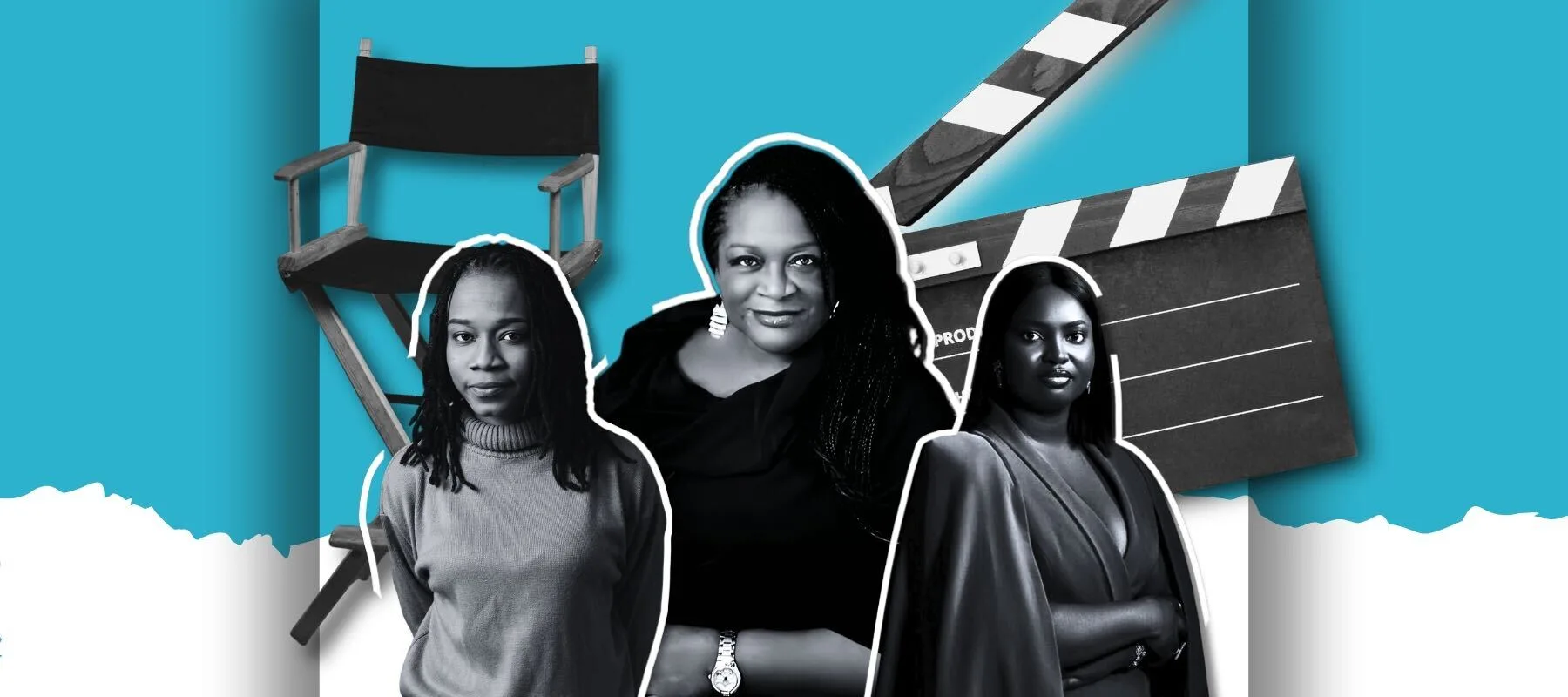
Storytelling in Nigeria has never existed in a monolith. That said, like all industries, it has been open to shifts, changes and reinventions that are not linear. Be it in commercial storytelling in movie industries like Nollywood, films shown in the cinema or independent filmmaking done with the intention to first screen at festivals, Nigerian filmmakers have seen their own twists and turns. These twists and turns of those behind the stories of our becoming as a people deserve their own spotlight and headlines.
In speaking about the evolution of Nigerian filmmakers, some names are crucial to that story. Filmmakers like Amaka Igwe, Kenneth Nnebue and Ola Balogun are central in discussing how the Nigerian film industry from the 70s to the 90s was shaped. For instance, Amaka Igwe professionalized the home video industry in the 90s. with movies like Rattlesnake and Violated. She was also behind the popular sitcom Fuji House of Commotion and is cited as one who built studios, trained talent and opened doors for more Nigerian women filmmakers.
For Kenneth Nnebue, he was the one who projected the home video industry prior to Amaka Igwe’s emergence. This was primarily through his role as producer in the Living In Bondage movie in 1992, a movie which has also seen a modern remake just like Rattlesnake. Other notable filmmakers pivotal to the foundations of Nigerian film before 2007 are people like Ola Balogun, who was the first Nigerian to direct and make films in 35mm and industry giants like Tunde Kelani, Zeb Ejiro, Adeyemi Afolayan and Ego Boyo, to name just a few.
Post 2007, Nigerian film and cinematography has definitely seen newer filmmakers refining what commercial and independent storytelling should look like. Central to the direction of Nigerian cinematography in the past ten years are filmmakers like Barnabas “Barny” Emordi and Nora Awolowo. Both of them are “veterans” in impact, if not age. They are central because they solved Nollywood’s biggest post-2010 problem: how to make Nigerian films look and feel globally competitive without losing local talent.
To start with, Barnabas “Barny” Emordi is popularly known as Barny Blockbuster, a title he earned shortly after shooting The Prophetess and The Ghost and The Tout Too in 2021, both of which crossed 100 million naira at the box office. He is a filmmaker with a BSc in Mathematics from Delta State University. His journey into film from a science background started in 2015 when he was waiting for his NYSC. He began as a puppeteer and then went on to be a camera assistant. What is interesting about his shift from the sciences to film is that he trained under Niyi Akinmolayan, a renowned filmmaker crucial to the direction of New Nollywood movies.
Furthermore, the current vision of Nigerian cinematography cannot be properly reiterated without mentioning the impact of filmmakers like Barny Emordi. For one, asides being the highest-grossing DP in 2021 and 2024 and being an AMVCA nominee, Emordi has critically defined the Nigerian box office visual culture. To put it simply, by shooting 6+ 100 million naira films, he has proven that Nigerians will pay for a “big screen” look. This is such that he is a sought-after cinematographer known for his unique lighting techniques.
In terms of film and lighting techniques, Emordi has also been heavily involved in what can best be described as “technical advocacy”. He has publicly pushed for better grip and lighting rental support in Nollywood and believes that Nollywood can only make films that align with where the industry is technically. It can be argued that this philosophy is behind why Emordi has pioneered new genres in Nigerian film and cinematography. For instance, he is behind the movie Day of Destiny, which proved that Nollywood could do movies centered on science fiction and time travel. In movies like Elevator Baby and Colours of Praise, respectively, Emordi set what the Nollywood thriller and scale template should be.
His is a career that has not only told Nigerian stories for local audiences, but has also platformed these same stories for an international audience without losing their authenticity. His work has been featured in the Washington Post and he has led a Nigerian team for Netflix’s Stories of a Generation with Pope Francis.
If one is to summarise Emordi’s philosophy as a filmmaker, it can be summarised as a career defined by using films to spark social conversations even as they entertain.
View this post on Instagram
When the trajectory of Nigerian filmmaking from a younger feminist and women’s perspective is discussed, one cannot ignore the trio of filmmakers like Nora Awolowo, Fisayo Ojabodu and Blessing Uzzi. For Nora Awolowo, she is a cinematographer, founder of Rixel Studios, filmmaker and the youngest filmmaker to make 100 million naira. This happened when she co-produced and shot Red Circle at age 24. One must take note of the fact that Red Circle made 88 million naira in three weeks without major studio backing, thereby proving that original non-franchise titles can win and win big.
View this post on Instagram
Nora Awolowo is also the first woman nominated for the AMVCA award of Best In Cinematography, which was done for the movie Lisabi: The Uprising. Interestingly, this nomination was given to both she and Barnabas Emordi and captures how they both represent the New Nollywood Technical Class of filmmakers.
In talking about the relevance of Nora Awolowo to Nigerian cinematography and film, it must be mentioned that hers is a tale of resilience, passion and an unwavering commitment to telling marginalised stories. What started as a mobile phone photography hobby during an ASUU strike, has seen the graduate of Ekiti State University go on to make films for football organisations like FIFA and be a brand ambassador for Canon. It has also seen her succinctly model the producer-cinematographer role. This is such that she actively controls the story and image of the projects she dedicates her time to.
An exposition about Awolowo would be incomplete without speaking about her explicit dedication to platforming feminism and women’s stories in new Nollywood cinema. For instance, in addition to bringing back veteran actresses like Bukky Wright, she has also travelled across Nigeria documenting stories of mothers dealing with postpartum depression. She has continually advocated for the place of women filmmakers in Nollywood and has also refused the notion that age should prevent anyone from making a mark in Nollywood. At 26, she is already producing movies as an executive producer, running her own studio and hitting box office records.
For filmmakers like Fisayo Ojabodu and Blessing Uzzi, women’s experiences are also central to their creative ethos. Ojabodu wrote the script for The Delectable Azeezah Sama, a short film that has been screened at local and international festivals. This film speaks on intimate partner violence and projected actresses like Isoken Aruede into more mainstream roles. Ojabodu herself identifies as a feminist and actively speaks on the place of film in highlighting issues that much of Nigerian society would rather sweep under the rug. When The Delectable Azeezah Sama was screened at The Lagos Fringe Festival, it led to debates about femicide and the role the creative industry plays in amplifying the harm done to women. This is because at the center of the film was a storyline documenting what actresses encounter à la intimate partner violence.
Blessing Uzzi, a filmmaker and producer behind the highly acclaimed 2026 romcom Call of My Life, also centers women in the films she creates. It would seem that her own creative feminist ethos is documenting not just the pain of womanhood but also the myriad diversity of Nigerian womanhood. Featuring actresses like Uzoamaka Power, Call of My Life made 78 million naira in its opening week in cinemas. It has also been screened in cinemas in Ghana and features actors like Andrew Bunting.
View this post on Instagram
Any conversation about the Nigerian film industry would be grossly incomplete without mentioning the work of actors cum producers like Genevieve Nnaji and Funke Akindele. Through movies like LionHeart and film companies like FilmOne Entertainment, these two women have experienced success that transcends multiple decades and eras of both commercial home video Nollywood movies and movies. made first for the cinema.
Nigerian film has never moved in a straight line. It moved in leaps. From Ola Balogun’s 35mm frames that first said our stories were worth celluloid, to Amaka Igwe’s VHS epics that turned living rooms into cinemas and proved women could build the business. Kenneth Nnebue and the Alaba marketers taught us scale.
Tunde Kelani taught us craft. Kunle Afolayan dragged us back into cinema halls and onto festival screens, refusing to compromise. Now Barnabas Emordi and Nora Awolowo are defining what “global standard” means for a new generation. Emordi’s lens turned A Tribe Called Judah into a box office monument and made technical excellence non-negotiable. Nora, at 26, broke both age and gender ceilings with Red Circle, becoming the first woman nominated for AMVCA Cinematography and the youngest to cross ₦100M.
What ties them all together is this: Nollywood evolves every time someone refuses to wait. The next era isn’t coming. It’s already in frame.