


Tune in to listen
Bounce FM

A man such as Ngũgĩ could write with unparalleled clarity about the psychic violence of colonialism but still allegedly reproduced that same logic of domination in his personal life.
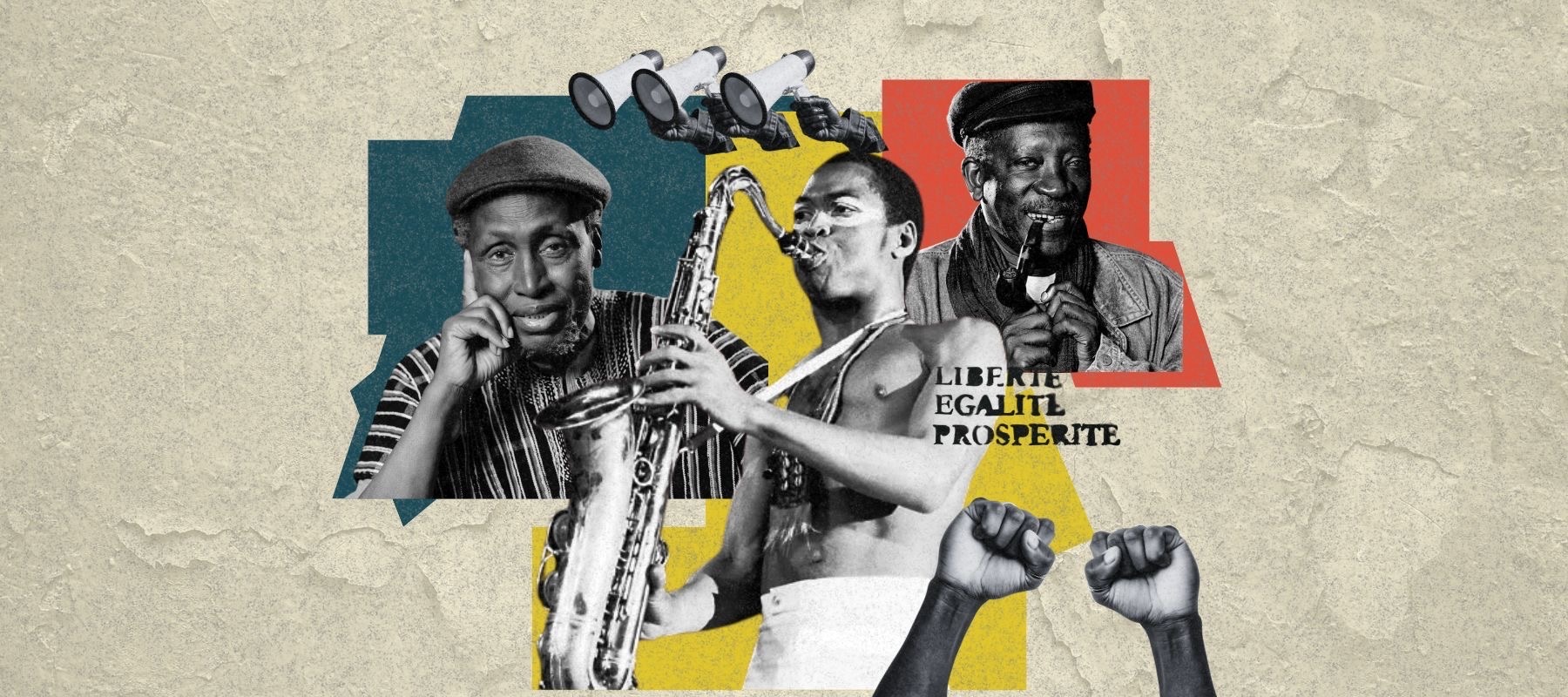
As expected, the news of Ngũgĩ wa Thiong’o’s passing on May 28 brought in a global wave of tributes, eulogies, and critical re-evaluations of his monumental contributions to African literature. Few intellectuals shaped the colonial African imagination as profoundly as Ngũgĩ. He was a man of sharp intellect. His writings, which continue to shape generations of thinkers and activists, fundamentally changed how African literature was conceived, pushing against the authority of the European canon and insisting that African languages must carry African stories despite censorship, imprisonment, and exile. Hence, for many, Ngũgĩ was both a literary giant and a Pan-African revolutionary, central to the global struggle against imperialism and cultural domination.
But to speak of revolution is to speak of power. Who has it, who is denied it, and on what terms it can be seized. Mukoma wa Ngũgĩ, Ngũgĩ’s son and an acclaimed writer and scholar, spoke publicly in 2020 of the violence inflicted upon his late mother. In a widely circulated post on X (formerly Twitter), Mukoma wrote, “My father @NgugiWaThiongo physically abused my late mother — he would beat her up. Some of my earliest memories are of me going to visit her at my grandmother’s where she would seek refuge. But with that said, it is the silencing of who she was that gets me. Ok — I have said it.”
My father @NgugiWaThiongo_ physically abused my late mother – he would beat her up. Some of my earliest memories are me going to visit her at my grandmother’s where she would seek refuge. But with that said it is the silencing of who she was that gets me. Ok- I have said it. pic.twitter.com/6iQ45ydI3K
— Mukoma Wa Ngugi (@MukomaWaNgugi) March 12, 2024
This was a political betrayal of the highest order. The anti-colonial struggle in Africa was a desperate, often brutal, fight for self-determination. It rightly identified and vehemently called out the systemic oppression of colonialism, white supremacy, and economic imperialism. Many of our most celebrated male revolutionaries — figures like Ngũgĩ wa Thiong’o himself, Wole Soyinka, Micere Githae Mugo, Dennis Brutus, Okot p’Bitek, Chinua Achebe, Ousmane Sembène, Mongo Beti — built the intellectual and political backbone for liberation movements. They spoke of freedom, equality, and the dignity of the African person. But the truth is that for some of these men, the revolution stopped at the front door. Their nationalism often constructed its vision of liberation around the idea of restoring a “damaged African manhood.” As the Nigerian-British feminist scholar and sociologist Amina Mama has argued, the colonial experience was framed as an emasculation of the African man by the white man. Consequently, liberation became synonymous with the reclamation of male authority. So even though they possessed a sophisticated, piercing analysis of power as it operated in the world: the power of the colonizer over the colonized, the capitalist over the worker; they failed, or refused, to apply that same analysis to the power of men over women. Molara Ogundipe wrote that the struggle for the African woman is against six mountains on her back: oppression from foreign powers, from traditional structures, from her race, from her class, from her gender, and from her own internalized deference.
A revolution that does not listen to and centre the voices of women is doomed to replicate old hierarchies. In Kwame Nkrumah’s Ghana, the empowerment of women was a key component of his modernization and state-building project. He established the National Council of Ghanaian Women and passed laws to expand women’s access to education and politics. But as Amina Mama argued, this was often a form of “state feminism,” a top-down edict that mobilized women for the goals of the party and the state, rather than a grassroots movement that foundationally challenged the patriarchal structures of daily life. The woman voter and the female party loyalist were assets for consolidating power, but the question of power dynamics within the family, the market, and the community was frequently left undisturbed. Women were granted a role in the new nation, but the terms of that role were largely dictated by a male leadership.
Similarly, Julius Nyerere’s Ujamaa (familyhood) socialism in Tanzania aimed for an egalitarian society. The 1971 Marriage Act was a progressive piece of legislation for its time, seeking to codify women’s rights within marriage. However, the very concept of Ujamaa was often built on an idealized, romantic vision of the traditional African family, a vision that conveniently overlooked the pre-existing patriarchal hierarchies within those traditions. The state promoted a vision of national unity that could be hostile to the “divisive” claims of feminism, subsuming women’s specific struggles into a generic, and implicitly male, national subject.
A man such as Ngũgĩ wa Thiong’o could write with unparalleled clarity about the psychic violence of colonialism but still allegedly reproduced that same logic of domination in his personal life over those he presumed weaker. He had the ability to see oppression everywhere except in his own home, in his own hands. In his authorized biography, Fela: This Bitch of a Life, Afrobeat legend Fela Anikulapo Kuti was quoted stating, “The best time to fuck a woman is when she is young. From twelve, thirteen, fourteen, fifteen.” This is the theoretical underpinning of a predatory patriarchy. Fela built a “Kalakuta Republic” to defy the Nigerian state, but within its walls, he reigned as an patriarch. His rebellion against state power did not translate into a rebellion against the male power he embodied, proving that his fight was not against oppression itself, but only against his oppression. To quote bell hooks from We Real Cool: “Oftentimes the sexism in black communities, though intense, is so common that no one takes violence against females seriously. Violent actions by a black male may be explained as his response to racism and economic oppression. In actuality there are powerful black males…who still act out violently toward women and children.”
There were a few revolutionary men who understood this connection, even if their own efforts were constrained by the deeply patriarchal societies they sought to transform. Thomas Sankara, in his brief, incandescent leadership of Burkina Faso, was perhaps the clearest. He saw the fight against patriarchy as indivisible from the anti-imperialist struggle. In a famous 1987 speech, he declared, “The revolution and women’s liberation go together. We do not talk of women’s emancipation as an act of charity or because of a surge of human compassion. It is a basic necessity for the revolution to triumph.” Sankara went beyond rhetoric, banning forced marriages and female genital mutilation, and actively promoting women to positions in his cabinet. His government was not perfect, but its premise was radical and correct: freedom is total, or it is a fraud.
The Senegalese filmmaker and writer Ousmane Sembène dedicated much of his career to this very theme. He used his art as a weapon not only against French neo-colonialism but against the internal colonisation of women. Sembène understood that tradition could be as oppressive as any foreign power and that true liberation required confronting both. Even Patrice Lumumba, whose political life was cut tragically short, gestured towards a more inclusive vision. His Mouvement National Congolais (MNC) party actively mobilised women, recognising their crucial role in the independence struggle. While he did not have the time to articulate a full-fledged feminist policy, his inclusive, mass-based politics suggested a trajectory different from the masculinist model that would later dominate many post-colonial states. But these figures remain the exceptions. The dominant story is one of a liberation movement that saw power only in its most public and racialised forms. These men could see the boot of the colonial master on their necks but could not see their own foot on the backs of their wives, sisters, and daughters. Angela Davis states, “No one is free until we are all free.”
How do we honor our revolutionaries when they carry such stains, especially when these stains are often trivialized due to a broader societal dismissal of women’s issues? To deny their contributions to anti-colonialism would be a distortion of history and a disservice to the global fight for self-determination. But to ignore their failings in the realm of gender justice would be to perpetuate a silence, implicitly condoning patriarchal practices and hindering future struggles for genuine liberation. We must unflinchingly critique their unexamined biases.
Any serious politics of liberation, as many African women thinkers have affirmed, must be built on an intersectional understanding of power. It must recognize that patriarchy, racism, capitalism, and imperialism are not separate struggles but interlocking systems of domination that feed and sustain one another. A man cannot be a true revolutionary if he is also a tyrant. What kind of revolutionary recognises power in one form and chooses to ignore it in another? The entire logic of colonialism is built on the idea that one group — armed, powerful, entitled — has the right to dominate another deemed weaker and less valuable. And Ngũgĩ very well recognised the violence of this empire. He knew the mechanics of oppression because he was a victim of them but when it served his power, he chose to wield those same tools. Ngũgĩ wa Thiong’o knew, as all male chauvinists know, that women are considered subhuman and their oppression carries no real consequences for their oppressors; neither does it disqualify them from whatever lauded status they hold. He weaponized this to terrorize Nyambura, pushing her to the point where she, a mother and a vital partner in his early intellectual journey, had to seek refuge and exile just as the postcolonial elites terrorized him into exile. People falter. But truly, how difficult is it not to be an oppressor when you’ve built a global reputation for being anti-oppression?