



Tune in to listen
Bounce FM

Olamidé is frictionless in every sense: released without a hiccup, seemingly written and recorded in a very expensive vacuum where the primary goal is the careful management of a legacy.
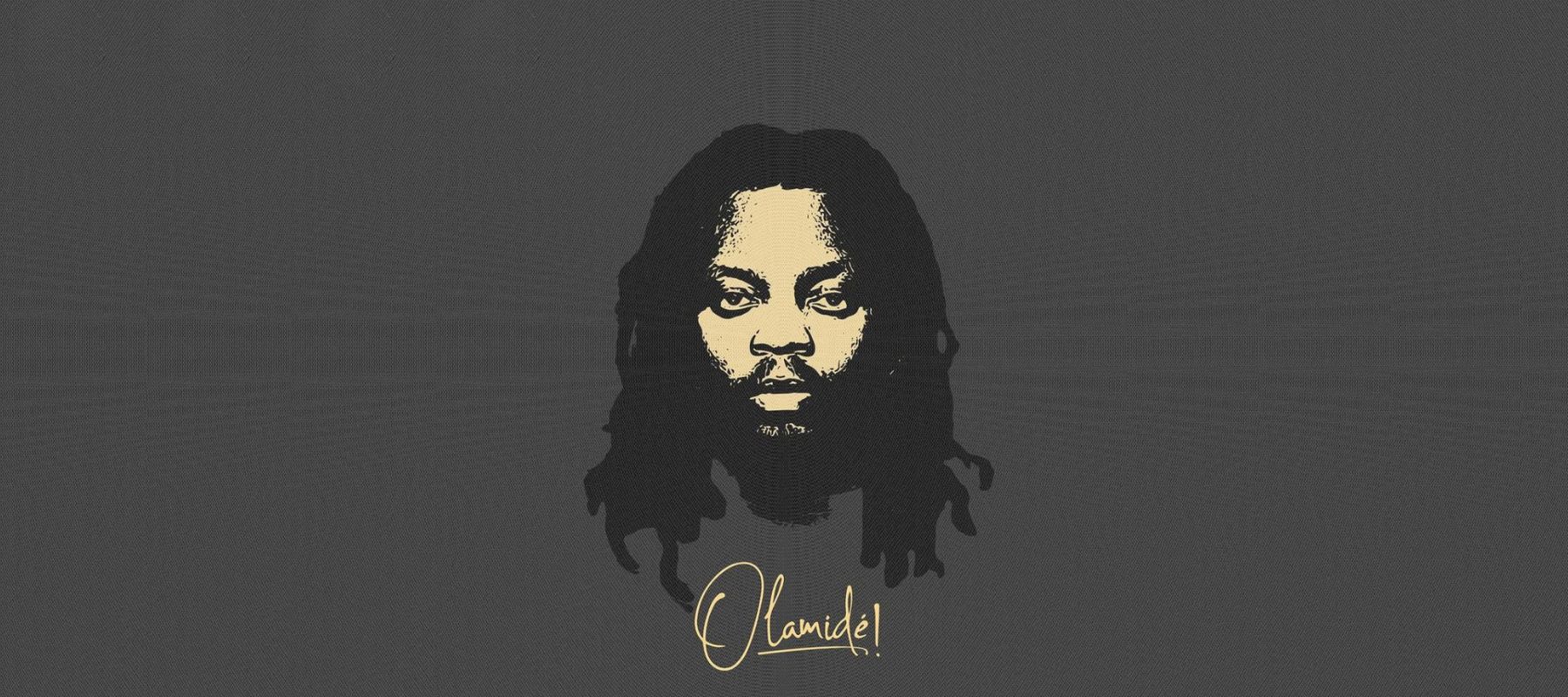
Olamidé — and, given its self-titling, one clearly meant to be a definitive statement — is a legacy project by design and by committee: no fewer than nine producers are credited; features are meticulously drawn from across the globe, from homegrown titans like Wizkid to an American deity in Dr. Dre, a Jamaican star in Popcaan, and a Nigerien curiosity in Fadí. At 17 tracks, the album is lean only in terms of individual song runtimes. In scope, it is anything but. The intro, “Prelude,” serves its perfunctory role, with the soporific, ethereal vocals of Fxrtune heralding the main event. It bleeds into “Hasibunallah,” a track where Olamide extols the virtues of his hustle over a smooth beat and spells out the album’s thesis.
Olamide’s legacy is secure, not only in his own voluminous catalog but in the careers he has midwifed through his YBNL Nation hit factory, most recently and spectacularly in the form of Asake, an artist who has distilled Olamide’s populist appeal into a world-conquering formula. The pressing artistic question, then, is no longer if Olamide can still command the center, but why he should still want to. Between his initial burst and his imperial phase, the Olamide of the early 2010s was a force of nature, a volcano of pure talent combined with a confrontational zest and street-level authenticity. Albums from that era were brilliant in their jagged urgency, capturing the id of the streets; their gravity such that his ad-libs would spawn a year’s worth of imitators. Subsequent works were frequently ingenious and idiosyncratic, a master artist bumping up against the mechanics of fame. The useful referent for this present era of Olamide is the late-period mogul, focused on consolidation. Thus, Olamidé is frictionless in every sense: released without a hiccup, seemingly written and recorded in a very expensive vacuum where the primary goal is the careful management of a legacy. By the time an artist reaches Olamide’s level, a certified OG with great albums behind him and several classics stamped in culture, the temptation to self-mythologise tends to smooth out the sharpness that made the earlier records so thrilling.
The much-anticipated reunion with Wizkid on “Kai” is a fruitful and enjoyable collaboration. They reunite on the magnificent “Billionaire’s Club” alongside Darkoo, a track that functions as a velvet-rope anthem where Olamide comfortably acknowledges his status: I’m cocky but humble before God / I no go let any man con dey form King Kong / Never give up, mo chop up / I don turn OG for this fucking dungeon.”
For all his well-documented street credentials and his braggadocious persona as a street-pop rapper, Olamide has always harbored a voracious romantic streak, a tough guy with a soft centre. It is a duality that has produced some of Afrobeats’ classic love songs, and with Olamidé, he proves that this well has not run dry. On “LuvaLuvah” and “Ruba,” he sheds the armour of the general to reveal the heart of the poet confessing, “Your body sex-cellency / Unapologetic about this feeling / Girl, I like the way you do / Too many facilities, girl, I lay them down for you.” Although Olamide’s loverboy persona is exposed on the P.Priime-produced “Duro,” the clean, crisp, ear-grabbing drum pattern that quickly labels it as a sizzler almost blinds you to it.
“99”, one of the album’s best cuts, is a House party. The indefatigable engine of Nigerian street-pop assembles a veritable summit where he is flanked by the subgenre’s two biggest current hitmakers, Asake and Seyi Vibez, and his longtime sonic partner Young Jonn. “Paris” is dedicated to the lone, stunning presence of the sweet-toned Nigerien singer Fadí, who delivers a breathtakingly sweet tune entirely in French.
Perhaps the biggest coup on the album is the unexpected guest spot of Dr. Dre on “Indika,” with Spinall, but the track is bafflingly inert. Dre’s verse reaches for bounce and relatability, offering up slinky lines but it is delivered with a detached coolness that barely picks up. The effort feels thin and Olamide shoulders most of the weight.
For anyone questioning if the old fire remains, the Semzi-produced “Hybrid” offers a cutting answer. The album is, by and large, a tame affair, but Olamide is far too astute to forget the bedrock of his empire. A vital, adrenalizing moment, “Hybrid” is one of Olamide’s rigorous performances as it sees him rhythimcally darting through the riding beats with a flicker of the old vivacity. “Lalakipo,” another throwback-style cut, functions the same way. Olamide’s grown, yes, but he knows exactly where the ground is beneath his feet.
He closes with the Boj-assisted, midtempo “Stronger,” where he appoints himself as an avuncular, almost paternalistic advisor to a young woman who seems about the good life. He delivers soft advice about living right, but the tone drifts between tender and slightly patronising, with flashes of respectability politics creeping in at the edges even as Boj’s choruses ensure that the song’s tone stays warm and melodic. It is nearly ambiguous whether he is satirizing this trope or sincerely endorsing it.
Olamidé is a satisfying listen. It is the work of an artist who has earned the right to do whatever he wants. And he chose to create a monument to his own success: impeccably curated and structurally sound.