



Tune in to listen
Bounce FM

Cultural Impact is the burgeoning thumbprint of a theory, creative piece, artistry, and reaction on a particular group of people that would burn as far and wide as ignitable.
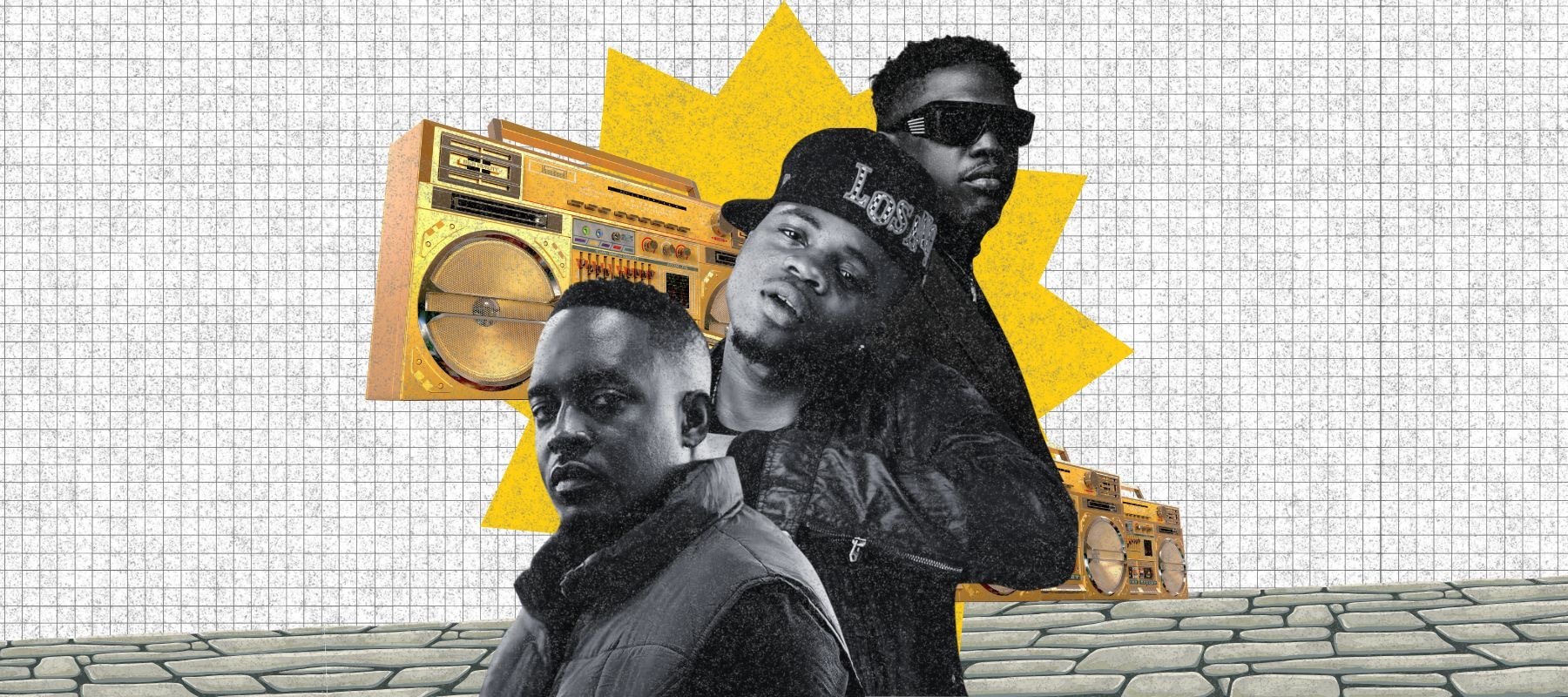
The Nigerian music X (formerly known as Twitter) space recently became frenzied after rapper ODUMODUBLCVK claimed in an interview that his hit single, “DECLAN RICE,” was the most impactful track in Nigerian hip-hop in the last twenty years. Some fans supported ODUMODUBLCVK’s torch-bearer proclamation, with their arguments centering on the track’s high chart standings and its use by the Premier League Football club Arsenal. While others (the majority) felt the rapper was being too audacious, even for his infamous tongue-in-cheek reputation. However, in an era where stats and virality seem to be all that matter, what is the true definition of cultural impact? And what particular hip-hop projects over time genuinely rule out ODUMODUBLVCK’s supremacy claims?
Cultural Impact is the burgeoning thumbprint of a theory, creative piece, artistry, and reaction on a particular group of people that would burn as far and wide as ignitable. It bleeds through people in the way they dress, the words they speak, their explanations of the past, and their predictions of the future. In the smallest and most significant ways, nothing remains the same after the effect of a cultural influence.
Cultural Impact is not Influence; don’t mix them up. Influence is more a subgenre of the latter. As essential and massive an influence as it could be, there would always be a laid-down act or carved-out route that it waters down. Impact is thicker than influence.
Ibrahim Salim Omari of the Sugar Hill Gang — that is impact. Almost single-handedly, he paved the way for a novel genre of music in Nigeria. Ibrahim Omari was a member of the pioneering U.S. rap group the Sugarhill Gang, which released the first-ever hip-hop album. He was exiled in Nigeria when he recorded what is considered the first rap single in the country, titled “I am an African,” even though he had spent most of his life before that abroad. Was he a culture vulture? Arguably. But he brought the fiery gift of hip-hop to this side of the world — the Hip-Hop Prometheus. And from then on, Ibrahim Omari changed the trajectory of our music. “I Am an African” wasn’t a hit, nor did it achieve commercial success, but it brought the realization that we could make the same hip-hop music that we admired from the West.
The hip-hop eras that followed in Nigeria were concurrent test runs. In the late 1990s and early 2000s, the country experienced its first wave of economic crises. Global oil prices dipped as low as the wells, and the inconsistency of governments and military regimes made life stuffy, so foreign organizations began to pull out, including recording companies like EMI, Sony, and Polygram. This exodus left a massive gap in the entertainment industry, and a rejuvenated form of rap in hip-hop came in to fill it. However, this period was not just about the music; they were fighting to showcase their craft and, at the same time, save their crumbling country. So, they created protest rap — although no one calls it that — and through their music, they fought against widespread oppression.
Eedris Abdulkareem’s “Jaga Jaga” was the loudest of these cries: “Nigeria jaga jaga / Everywhere scatter scatter /Poor man dey suffer suffer.” Before his solo career, Eedris had been a part of the Remedies boy band with Eddy Remedy and Tony Tetuila. Their hit track, “Sakomo,” played a pivotal role in defining Afropop as a contemporary genre. So, his molten impact with “Jaga Jaga” on the hip-hop industry wasn’t out of the blue.
The way Eedris refused to mince his words was wild at the time. So mental that then-President Olusegun Obasanjo publicly rebuked the song, banned it from being aired by radio stations, and had Eedris arrested at the anticlimax. But in the nightclubs, parks, small lamenting gatherings, and the hearts of the struggling Nigerians, “Jaga Jaga” still played on.
Over time, the hip-hop subject matter shifted away from being heavily political, and by the mid-2000s and early 2010s, it became more street-oriented, braggadocious, and less focused on social issues. These times were the genre’s peak. In the East, Mr Raw had already established the foundation for Igbo rap with successful tracks like the 2005 “Obodo” with Klint Da Drunk. The fusion of highlife and rap proved to be a potent formula, perfectly exemplified by the massive success of the late MC Loph’s remix of Osadebe’s “Osondi Owendi,” featuring Flavour.
Meanwhile, M.I.’s “Safe” with Djinee was euphoric for listeners and an introduction to the “tough guy” persona that young listeners wanted to embody. M.I.’s butterfly-esque flow on the beat and criticism of fake rappers made rap as attractive as it was in the West. Naeto C’s “Ki Ni Big Deal” was a contrast. Initiating “swagger-rap” by removing the need for excessive grit, it flooded the streets with the term “big deal” to date. Ice Prince’s “Oleku” rang through every award ceremony for decades.
Street-oriented Yoruba rap began to gain commercial traction as songs like 9ice’s “Gongo Aso,” Durella’s “My Life,” and X Project’s “Lori Le” started to gain mainstream attention. But, of course, DaGrin’s “Pon Pon Pon” elevated the genre, mapped out a blueprint for indigenous rap in Nigeria, and a freestyle over its iconic Sossick-produced beat became a rite of ascension for new rappers.
However, barely a year after his sophomore album, C.E.O., in 2009, we lost DaGrin. It seemed that hip-hop had lost its brightest spark while Afrobeats was raging across the nation. The only conclusion then was that hip-hop would either become irrelevant or remain a suspended import. But the thing with sparks is that when they go off, you’ll only find the forest on fire. Hip-hop didn’t die in the 2010s; it took over. Following the tragic void left by Dagrin’s passing, the seeds planted by the pioneers and watered by his success came into full bloom. Enter Olamide, the most culturally impactful hip-hop act Nigeria has ever seen.
Over the years, Olamide’s music has served as a timeline keynote in the Nigerian music scene. The “First of All” era was initiated from the 19th track on his 2012 YBNL album. “First of All” was a reference point, and it was a menace for school teachers to start lesson explanations with the phrase, as a national call-and-response had been created, “First of all, introduction,” or “go down low.”
The following year, he released “Baddest Guy Ever Liveth,” which further solidified his name in the cultural landscape. BGEL formulated the street superlative “Baddest,” and everybody added Olamide’s “Sneh” moniker to their names. The akimbo hand pose on the album’s cover art became so viral that almost every Facebook user attempted to recreate it. He created the “Shakiti Bobo” dance that is eponymous with the track from his Eyan Mayweather album, mentored some of the most prominent acts in hip-hop under his YBNL label, and controversially intertwined his name with the Headies Award in 2015.
Olamide’s impact cannot be overstated without mentioning his Eastern partner, Phyno, the most impactful mainstream Igbo rapper. With his “Alobam” track from his debut project, No Guts No Glory, Phyno shifted the region’s attention back to where it needed and deserved, and shone a mainstream light on rappers that followed, such as Zoro and Jeriq.
All of these are the actual definitions of cultural impacts. Acts that leave goosebumps when their memories are sparked and sit comfortably in our memories. In an era where virality, numbers, and global recognition are most highly valued, it has become easy for the concept of cultural impact to be misinterpreted and abused. Artists’ influence on the genre will continue to be adored. I love “Declan Rice,” the heights it reached, and how much it has projected the rap game, but it’s honestly comical to tag its influence as the greatest hip-hop cultural impact in the last 20 years.