




Tune in to listen
Bounce FM

These “magical rescues” — devoid of transparency, accountability, and operational detail — leave people with more questions than assurances.
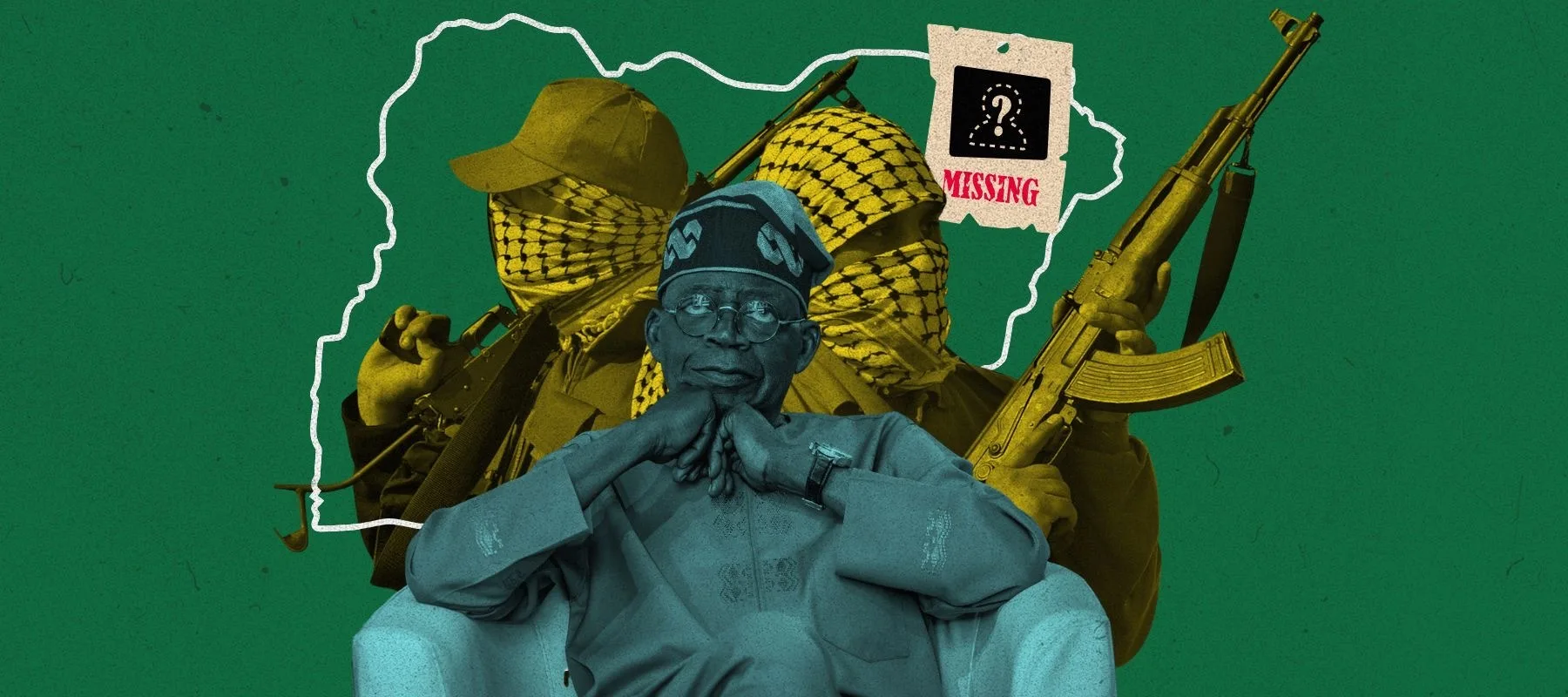
In his 1979 track, “Unknown Soldier,” Afrobeat pioneer Fela Anikulapo-Kuti sings: “Government magic! / Them go dabaru everything / Government magic / Them go turn green into white.” Nearly 50 years later, those lines — a cryptic warning about the Nigerian government deception — feel uncomfortably familiar in the country’s ongoing struggle with mass abductions.
Last Saturday, December 7, 2025, reports emerged that the federal government had secured the release of 100 schoolchildren abducted from St. Mary’s Private Catholic Primary and Secondary School in Papiri, Agwara LGA of Niger State. The children were freed two weeks after gunmen stormed the school on November 21, arriving on motorbikes at about 2:00 a.m. and kidnapping more than 200 students and teachers in a three-hour operation. While 100 students regained freedom, about 115 pupils and teachers remain in captivity.
In a statement on Sunday, President Bola Tinubu, through his spokesperson, Bayo Onanuga, praised security agencies for “securing the freedom” of the hostages. What was missing, however, was any explanation of how this freedom was secured. Neither the president nor Niger State Governor Mohammed Bago, who received the children, offered details about the circumstances leading to their release. As with many recent incidents, Nigerians were left to guess what transpired behind the scenes.
The pattern is not new. On Sunday, November 23, 2025, President Tinubu similarly announced the “rescue” of 38 worshippers abducted from the Christ Apostolic Church (CAC) in Eruku, Kwara State, on November 18. Yet again, no arrests were announced, and no operational details were provided. This silence fuelled public speculation that ransom had quietly changed hands, especially after the kidnappers reportedly demanded N100 million per victim.
Trying to clarify the situation on “Prime Time,” an Arise News programme, on November 24, Onanuga said the Department of State Services (DSS) and the military had “contacted” the bandits and persuaded them to release their captives unharmed. “The security agencies have a way of contacting these people. They know the consequences of not acquiescing to government demands. They know they could be pummelled,” he said.
Video: Bayo Onanuga explains how the scared bandits forgoed their ₦3.8bn ransom demands and released all 38 Eruku worshippers, after phone calls from FG.
pic.twitter.com/EzWvsbTkUq https://t.co/lyAQuFwG7r
— Trending Explained (@TrendingEx) November 25, 2025
But the explanation raised more questions than answers. Onanuga effectively told Nigerians that security agents simply warned the kidnappers and they complied out of fear. It strains credulity that armed criminal groups operating with near impunity across vast territories would voluntarily surrender their leverage without receiving something in return. If they were cornered by security forces or faced overwhelming pressure, the government provided no such evidence. Instead, it offered a vague narrative of quiet persuasion.
There are no good outcomes here: If the government paid ransom, it strengthens a lucrative kidnapping enterprise and invites further attacks. If it refused to pay but negotiated the captives’ release in exchange for letting the criminals walk free, then the perpetrators remain unpunished and available for the next operation. Either way, the insecurity “industry” — as former President Olusegun Obasanjo recently described it — stays thriving and Nigerians are the worse for it.
The deeper problem is that these “magical rescues” — devoid of transparency, accountability, and operational detail — leave people with more questions than assurances. In a country grappling with mass abductions as a recurring national trauma, the public does not only need to know that victims were freed; it also needs to know how. Secrecy may be justified in active operations, but a pattern of opaque outcomes muddies the line between tactical discretion and political convenience. When government officials offer vague claims of “non-kinetic engagement” or “strategic communication” with criminals, yet announce no arrests, seizures, or disruptions of the networks responsible, the implication is unsettling: kidnappers can abduct dozens, negotiate with state operatives, release a portion of their captives, and melt back into the bush without consequence.
This silence sends a message that the system is prepared to tolerate the continued existence of these armed groups, so long as the immediate hostage crisis is diffused. It is an approach that may save lives in the moment but leaves the broader threat untouched. Moreover, each unexplained release widens the credibility gap. Nigerians hear official denials of ransom payments, yet see no evidence of law-enforcement pressure that would compel kidnappers to surrender hostages for free. They hear assurances that bandits “know the consequences” of not agreeing to the requests of security officials, yet witness no sustained campaigns that diminish the groups’ operational capacity. In the absence of verifiable facts, speculation becomes the public’s only tool for making sense of events and speculation rarely favours the government.
The long-term implications are serious. If negotiations, whether accompanied by ransom or not, emerge as the default strategy, bandits gain confidence that kidnapping remains low-risk, high-reward terrain. If, alternatively, the government insists that releases are the fruit of shadowy but effective intelligence work, then the burden falls on the state to demonstrate that such engagements weaken — rather than embolden — the perpetrators. In both cases, the central concern is the same: rescues that do not weaken the architecture of criminality ultimately reinforce it.
Nigeria does not need “government magic.” It needs a coherent, transparent counter-kidnapping strategy that prioritises both immediate rescue and long-term deterrence. Until the government confronts the structural incentives that make mass abductions profitable and low-risk, every celebrated rescue will be only a reprieve. The kidnappers will regroup, ransom or no ransom, and the cycle will begin again, while the public remains stuck between relief for freed victims and dread for those who may be next.