


Tune in to listen
Bounce FM

It is unclear how Venezuelan opposition leaders, who largely supported the U.S., would react to Washington moving to govern their country.
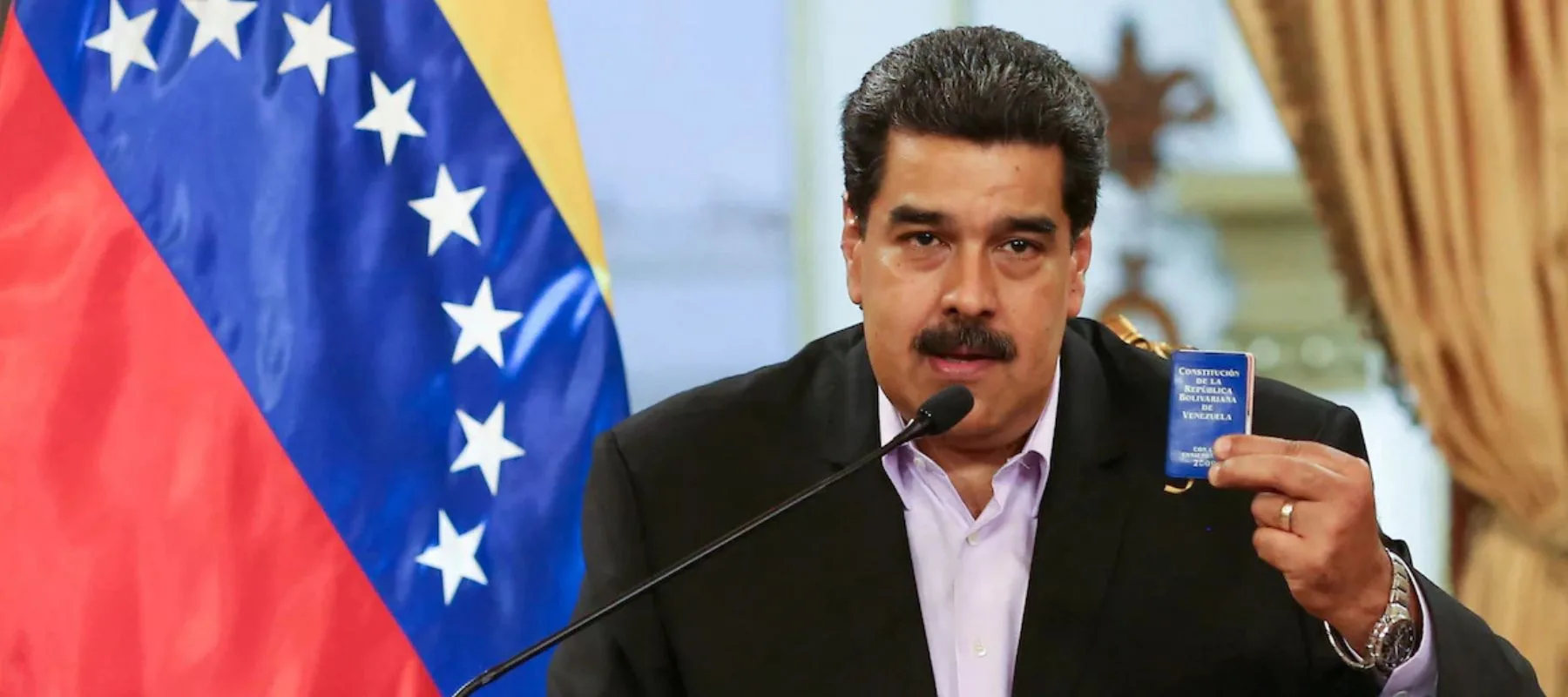
United States (US) President Donald Trump has announced that the US would temporarily take charge of Venezuela following what he described as a decisive military operation which resulted in the capture of Venezuelan President Nicolás Maduro and his wife, Cilia Flores, in the early hours of Saturday, January 3.
Trump first broke the news on Saturday morning on his Truth Social platform, writing that Maduro had been “captured in a very successful operation” and taken out of Caracas, the capital of Venezuela. The claim immediately triggered shock, confusion, condemnation and praise from various quarters, with several governments demanding clarification and Venezuelan authorities rejecting the announcement as an act of aggression.
"The United States of America has successfully carried out a large scale strike against Venezuela and its leader, President Nicolas Maduro, who has been, along with his wife, captured and flown out of the Country. This operation was done in conjunction with U.S. Law Enforcement.… pic.twitter.com/sFa5OC4ZrZ
— The White House (@WhiteHouse) January 3, 2026
Hours later, at a press conference on Saturday evening at his Mar-a-Lago resort in Florida, the US president offered further details, presenting the operation as a turning point in US–Venezuela relations.
“We have captured Nicolás Maduro,” Trump told reporters. “He is out of Venezuela, and he will face justice for the tremendous harm he has done to his people and for the crimes he has committed.”
He said the operation involved US military and law-enforcement assets and was carried out without American casualties. He portrayed it as a swift and overwhelming show of force. “This was a very precise operation,” he said. “No U.S. lives were lost, and our equipment was not damaged.”
In his most controversial remarks, Trump said the US would assume direct responsibility for governing Venezuela on an interim basis, pending what he called a “proper transition of power.” He did not give details on how the US will administer the country without a significant number of troops on the ground.
“We’re going to run the country for now,” he said. “We’re going to stabilise it, we’re going to fix it, and then we’re going to hand it back to the Venezuelan people when the time is right.”
He added that Washington would play a major role in reviving Venezuela’s oil industry, hinting at the involvement of US companies. “We will be very strongly involved in the oil sector,” Trump said, describing Venezuela’s energy infrastructure as “broken and mismanaged for years.”
Trump justified the action by citing longstanding U.S. accusations against Maduro, including drug trafficking and corruption, noting that the Venezuelan leader had previously been indicted in the US. “This is something that should have happened a long time ago,” he said.
The announcement has drawn sharp criticism from legal scholars and foreign governments, who argue that the use of force and any attempt to administer another sovereign state would violate international law.
However, opposition figures such as María Corina Machado, who recently won the Nobel Peace Prize, described this moment as an “hour of freedom.” In a statement on social media, she said opposition candidate Edmundo González Urrutia, whom the opposition says won the disputed July 2024 election, “must immediately assume his constitutional mandate” as president. Although the statement came before Trump’s conference saying the US will temporarily govern Venezuela, it contradicts the US president’s immediate goal. It is unclear how Machado, who had largely been supportive of the US pressure campaign in Venezuela, and other opposition leaders would react to Washington governing their country.
Venezuela’s government, which is reportedly now led by Maduro’s deputy, Delcy Rodríguez, earlier on Saturday demanded proof that Maduro is alive and in US custody, while reports from Caracas described explosions and power outages amid heightened military tension. Trump later posted a photo of Maduro, apparently in handcuffs in the custody of the US military, holding a bottle of water.
Nicolas Maduro on board the USS Iwo Jima. pic.twitter.com/omF2UpDJhA
— The White House (@WhiteHouse) January 3, 2026
Despite the backlash, the US president signalled that his country was prepared to escalate if necessary. “We’re not afraid of boots on the ground,” he said. “If more action is needed, we will do what is necessary.”
The US invasion comes nearly two weeks after the country struck terrorist targets in Nigeria. The strike came weeks after Trump threatened to launch air strikes on Nigeria without coordinating with the Nigerian government, although he eventually consulted Nigeria before carrying out the attack, according to the Ministry of Foreign Affairs.