



Tune in to listen
Bounce FM

Millions of people across the world have knowingly and unknowingly felt his impact on pop culture.
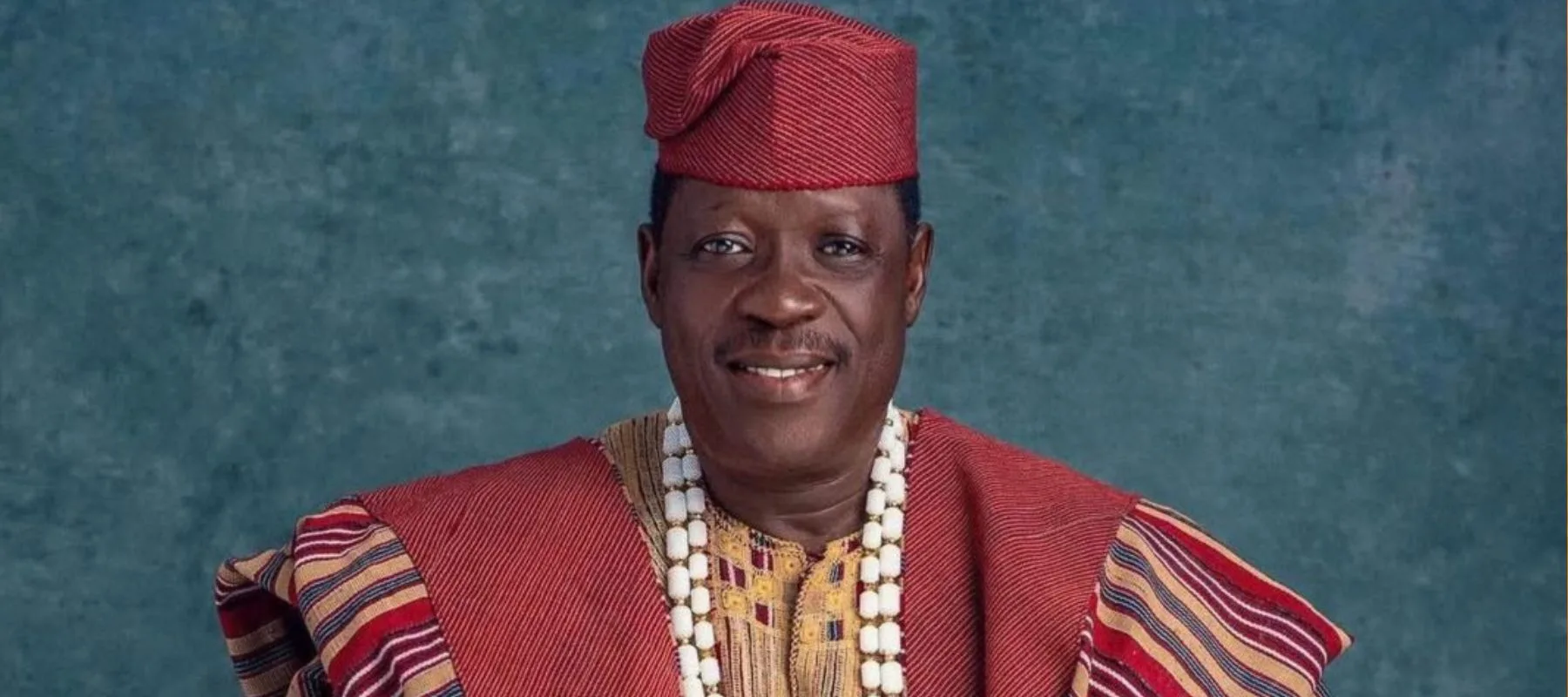
Legendary Nollywood actor, Taiwo Hassan, better known as Ogogo, passed away on Sunday, August 23, 2026. He was 66.
His death came less than a week after his daughters, Lima and Kira Taiwo, took to social media on Monday, August 17, to reveal that hospitals were refusing to continue treating their father, who they disclosed was battling stage-four cancer. Six days later, the film star, whose influence traversed generations, was gone, and his daughters’ earlier revelation did little to blunt the shock of his demise.
Ogogo, who dominated an endless run of Yoruba Nollywood films as one of the star men of the 1990s and 2000s, was buried in his hometown of Ilaro, Ogun State, on Monday, August 24, according to Islamic rites. The tributes that have followed tell the story of a man who was greater than an actor.
“You were a true pillar of Yoruba cinema, and your impact will live on in generations to come,” Nollywood star Femi Adebayo wrote of Ogogo, who featured in his multi-award-winning epic series Seven Doors in 2024. Funke Akindele, an alumnus of the Odunfa Caucus — a theatre group and training academy Ogogo formed in 1986 with other notable members, including Yinka Quadri, his close friend who was inconsolable at Monday’s burial, Abbey Lanre, and Razak Ajao (Araosan) — added: “Your impact on the film industry will never be forgotten. Thank you for the legacy you leave behind.”
Sir T… 💔💔💔💔
Some people leave behind memories. Some leave behind a legacy that time can never erase.
Thank you for the years, the stories, the lessons and the moments that made us fall in love with the craft.
You were a true pillar of Yoruba cinema, and your impact will…
— Femi Adebayo (@realfemiadebayo) August 23, 2026
hmmmmm sad!!! Rest in peace, sir T. Your impact on the film industry will never be forgotten. Thank you for the legacy you leave behind. 💔💔
— Funke Akindele (@funkeakindele) August 23, 2026
With an acting career that spanned 45 years, Ogogo was more than an actor; he had a magnetic on-screen personality and charisma that drew viewers in. His physical presence was a beauty standard in its own way. Women loved him. Men loved him too. Growing up in South-West Nigeria, it was not uncommon to hear older women compliment men with attractive physical builds with the phrase: “Ó sín gbonlè bi Ògògó” (He is as physically imposing as Ògògó). It was the ultimate compliment, and proof that Ogogo’s influence went far beyond the screen.
Growing up, whenever older Yoruba women around me said, “omokunrin to hanz,” Ogogo was always the example.
“O fine bi Ogogo”
Like four different generations of women fell in love with him. 🥹🥹
— Take the Disability Quiz in my bio 🙏🏽 (@misty_abisola) August 24, 2026
Millions of people across the world have knowingly and unknowingly felt his impact on pop culture. Ogogo appeared in hundreds of films, but his most memorable line on screen, arguably, is: “Gbogbo wa la ma je breakfast, àsikò tí oníkálùkù ma je ti è, ọ̀tọ̀ọ̀tọ̀ ni” (Everyone will eat breakfast. The time each person eats it is what differs). “Breakfast,” in this case, was a metaphor for life’s experiences: everyone comes to experience the same things, except at different times.
Rest on, legend. He gave us one of the biggest videos on this App. pic.twitter.com/CbSMLoBcWB
— Ridwan Oke (@RidwanuLlah) August 23, 2026
The clip of that line works for every situation. It works to get your parents off your back when they pester you about bringing a wife or husband home. It works to motivate someone when life’s pressure gets to them and they feel as if their mates are leaving them behind. That line is a lesson in patience. But since Ogogo delivered it, the meaning of the “breakfast” metaphor has expanded to mean heartbreak and disappointment. So, in this iteration, “She served him hot breakfast” does not literally mean a morning meal; it means someone has had their heart broken or more cruelly, shattered.
That was the inspiration behind Burna Boy’s 2022 smash hit “Last Last,” which was the fastest Afrobeats song in history to be certified platinum by the Recording Industry Association of America (RIAA), and which has over 600 million plays on Spotify and 361 million streams on YouTube. The song remains popular in the United States (US), United Kingdom (UK), and other foreign markets. Such was the power of Ogogo that a line he delivered in a Yoruba Nollywood film earned Burna Boy his biggest-ever song and saw American singer Toni Braxton, whose track “He Wasn’t Man Enough” was sampled, earn 60% publishing royalties off a song that became a global hit.
It was a level of pop culture influence unmatched by any other Nollywood actor.
On screen, he could be calm and crazy simultaneously, depending on what the situation called for, while making it look effortless. Watching him go from 0 to 100 in milliseconds was exciting. It was how he earned the catchphrase that remains a widespread slang in pop culture today: “Action po bi ogogo” (plenty of action like Ogogo), long before legendary rapper Olamide immortalised it in his 2016 hit “Owo Blow,” a nod to the title of Tade Ogidan’s 1996 crime trilogy that was Ogogo’s breakout project.
Continue to rest, Alhaji Taiwo Hassan (Ogogo) pic.twitter.com/nNSrW5oUcj
— Gbenga Afolayan (Ph.D) 🇳🇬 🇦🇺 (@GEAfolayan) August 25, 2026
In Owo Blow, Ogogo played the adult version of the eponymous Owo Blow, whose real name is Wole Owolabi and father is wrongfully imprisoned for trying to help traders. In his father’s absence, his family falls into poverty, forcing young Owolabi out of school. He tries legitimate work but eventually turns to pickpocketing, and later to armed robbery. In characteristic Ogogo fashion, this armed robber had a moral compass and disapproved of killing his gang’s victims.
Good night, Mr Taiwo Hassan (Ogogo) pic.twitter.com/qxIhPNJqM9
— Gbenga Afolayan (Ph.D) 🇳🇬 🇦🇺 (@GEAfolayan) August 23, 2026
The film ends with Owo Blow committing suicide. It was a social commentary on the consequences of injustice, corruption of the military era, and social vices. Ogogo’s remarkable portrayal of an armed-robber-turned-business-mogul saw him pip top stars such as Olu Jacobs and Adebayo Salami (Oga Bello) to the Best Yoruba Actor trophy at the 1997 edition of The Movie Awards (THEMA).
Owo Blow was such an important movie to me growing up. My mom loved it, had it on DVD. Whenever family or guests were around, there would be conversations and debates about Wole, his choices, poverty, corruption, and whether what he became was really just about individual…
— oluwatise (@maintishe) August 24, 2026
Born on October 31, 1959, in Ilaro, he arrived into a family of twins — his father and grandfather were both twins — and had a twin brother himself. In an intimate interview published in July 2025, he revealed that his mother gave birth to 13 children, including four sets of twins, but only three survived. Ogogo was the last surviving twin until his death on Sunday.
Hassan began his professional acting career in 1981 while working as an auto mechanic. He later spent about 13 years at the Lagos Water Corporation (LWC), combining the job with his interest in acting, before resigning in 1994 to concentrate on acting full-time, a year after he produced his first film, Wicked Boy, directed by Quadri, which formed part of the 1990s boom in home videos.
A trained boxer, he was never shy to display his fighting skills on screen and off it when he needed to. On screen, it was a regular sight to see him take on several men in a physical fight single-handedly. He was Nollywood’s action figure; a role he lived off screen as much as on it.
Action por bi ogogo
May his soul rest in Perfect Peace 🕊️ 💔 https://t.co/B8o8UHHhUM
— Big Dan (@DanielKarpella) August 23, 2026
In 2022, Ogogo showed that “action po bi Ogogo” transcended the screen. Street urchins who feel entitled to the wealth of celebrities are not scarce in Nigeria, as was obvious during the scenes that played out when American streamer IshowSpeed visited in January, and more recently outside the venue of the wedding ceremony of TikTok stars Peller and Jarvis. When Ogogo encountered a member of that nuisance group in his hometown of Ilaro in June 2022, he let them have a taste of his onscreen action. Recounting the experience, the actor said he was inspecting a project when a group of men accosted him for money, to which he gave what he could. But one of them, unimpressed, dragged Ogogo by his agbada and asked for more money, which he could not pay. The guy asked the former boxer to do his worst, and as Ogogo put it, the rest was history. “Remember, once a boxer, always a boxer,” he wrote in an Instagram post that was unwittingly funny and drew admiration from fans who liked seeing an unruly street urchin put in their place.
– “Why I decided to beat up a tout for dragging my Agbádá” – Actor – Taiwo Hassan explains pic.twitter.com/gKk23Eqnme
— Postsubman (@Postsubman) June 25, 2022
Ogogo was the perfect gentleman actor. Beyond shaping the childhood of a generation, the late actor, a Muslim, was a man of deep character and faith. Google “Mo fi títobi Ọlọ́run ṣe ẹlẹ́rí” (I call upon the greatness of God’s name as my witness) and one man’s name pops up: Taiwo Hassan (Ogogo). It was not because he coined the term; he popularised it on screen as a statement of honesty. When Ogogo uttered that line on screen, you could take whatever he said to the bank. That character influenced generations of people who watched an honest man at work.
@taaooma Qaudri VS Ogogo
His loss has touched millions of people deeply, and his charm and warmth will be dearly missed by countless fans in and outside Nigeria. But his legacy and influence will live on in other people’s actions, words, music, and film.