


Tune in to listen
Bounce FM

The dogged interest of some Nigerians in the Americans’ conservative tussle raises many questions.
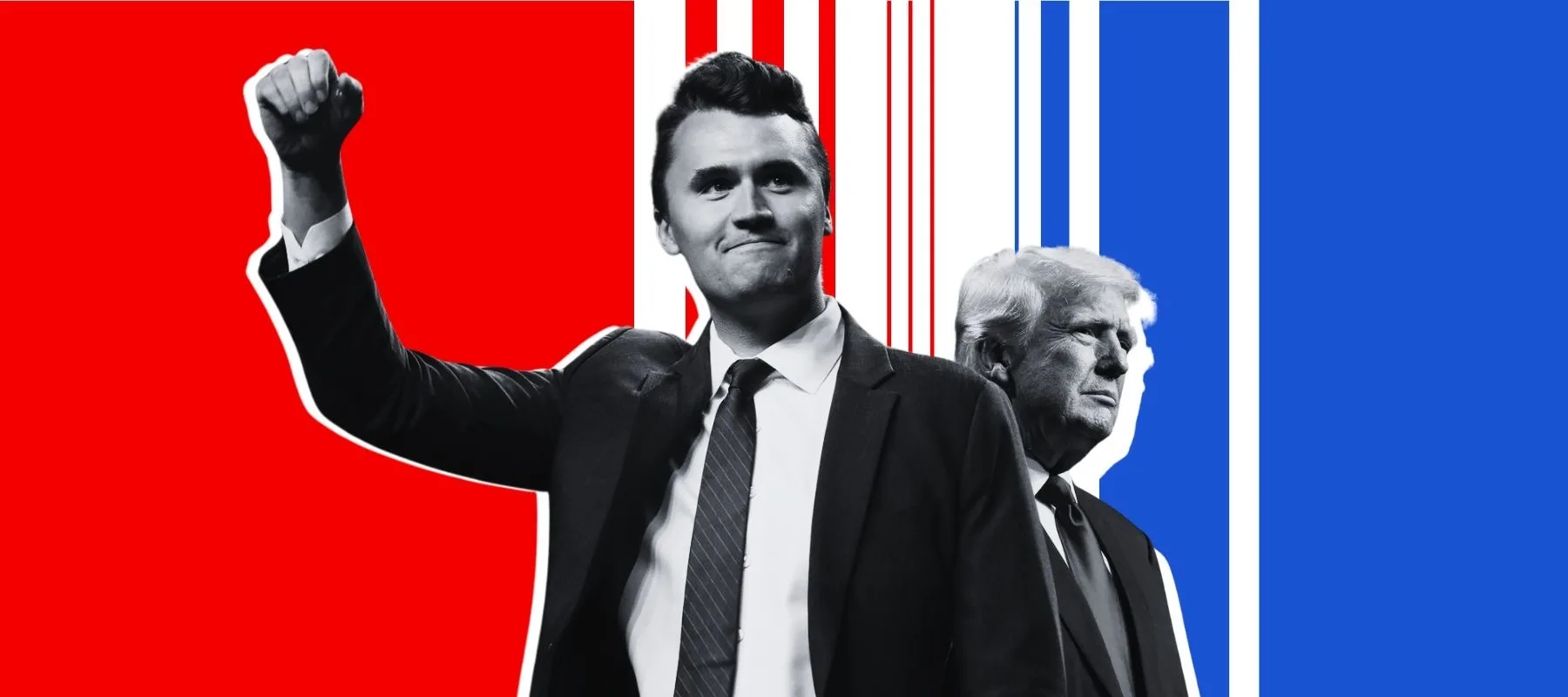
In the wake of Charlie Kirk’s assassination at Utah Valley University (UVU) on September 10, fault lines of politics, faith, and ideologies have been at their height, with an intense scrutiny of a legacy that transcends the United States of America. The activist was shot on the neck during an open-door campus discussion at UVU in what was his first stop of the season for his conservative organisation, Turning Point USA’s speaking and debate series themed “American Comeback.”
Charlie, 31, was pronounced dead a few hours later at a nearby hospital. From the moment the shooting footage broke on the internet to the announcement of his death, White House reactions, his memorial, and other ensuing developments, multinational lights were beamed on the life of Charlie Kirk, mainly from two opposing lenses: one that mourns the passing and celebrates the life of a zeitgeist American conservative and another that denounces the manner of his passing, but spares no praise for the life he lived.
In the USA, President Donald Trump paid tribute to Kirk, describing him as “the finest person” who was “like a son” to him. Considering the political bromance and dynamics between Kirk and Trump, you’d expect nothing less. The activist nurtured a gradual influence that saw him grow into the standard-bearer of Donald Trump’s Make America Great Again (MAGA) movement. Many ascribe his efforts to having brought conservative politics to some Black Americans, as evidenced by Trump winning about 8% of the Black vote in 2020 and an uptick to 15% in 2024. Additionally, Vice President JD Vance’s foray into politics bore the imprint of Kirk, who ultimately argued the case for Vance as Trump’s running mate for the 2024 presidential election, as revealed by Vance himself. Trump also partly credited Kirk and his organisation with his victory in 2024. This is largely why his unfortunate death bears significant consequences for the White House.
Charlie is more or less being cast as a martyr, his unfortunate murder spun into meanings beyond itself, even after the suspected assailant, Tyler Robinson, a 22-year-old man from Utah, was found to have no clear political affiliation and appeared to have acted alone. With the suspect now charged in court, Trump’s allies have not slowed down on fanning sweeping allegations against the left-wing groups. Attorney General Pam Bondi, Vance, and Trump have, in turn, invoked Kirk’s death to advance an agenda of clamping down on liberal groups, monitoring speech, revoking visas, and designating certain groups as terrorists over their differing views on the slain conservative.
It has been a contentious period in Trump’s America, and amidst it all, the dogged interest of some Nigerians in the Americans’ conservative tussle raises many questions. Kirk’s death has stirred waves of solidarity from several Nigerians, mainly Christians, who stand by his legacy and wish him rest in the afterlife. Pastor Blessed Uzochikwa and popular gospel singers Nathaniel Bassey and Victoria Orenze were among the Christian leaders who extolled the activist’s work of faith and broader legacy. Such tributes from the Nigerian Christian community are hardly a surprise, and to an extent, consistent with the ethos of a religion that upholds empathy and shuns glee at the death or misfortune of anyone, let alone one who identified with the same body. But with his often specious and radical opinions on race, religion, and politics — some of which allegedly denigrated Black people, immigrants, women, Muslims, and queer people, while also justifying colonialism, slavery, and bigotry — there is much going against the idea of making a martyr out of Kirk. And it raises questions as to why such a person is being celebrated by Nigerians, and how the manner of his unfortunate passing seems to have redeemed the life he lived.
It bears similarity to the paradox of a bigger conservative figure in Trump. For all of his blatant anti-Black or anti-African policies and ideologies, Trump has oddly always maintained a measured level of admiration amongst Nigerians. At the culmination of his first tenure as American president, perceptions about the Republican remained relatively stable in the country, while most European countries recorded a huge decline in his ratings, per Pew Research Centre. The data showed that 58% of Nigerians at the time had confidence in Trump, the fourth-highest total after the Philippines, Israel, and Kenya. Beyond data, the evidence of Trump’s admiration was visible in the country, particularly during his first tenure. His paintings and portraits enjoyed wide display, while the books he authored were also consumed at a high rate. More so, hundreds of men and women, dressed in Trump-branded attire, marched in a rally organised by Imo State’s Living Christ Mission in support of the Republican ahead of his second trial in 2020.
Trump has always enjoyed a reputation as a Christian nationalist and rode on that identity for his November 2024 victory. “I’m saved by God to make America great again,’’ he said after his near-death experience during his last campaign. However, generally, based on his first tenure’s disposition toward Africa, and the outlook of his second tenure so far, there isn’t much in Trump’s politics that justifies the paradoxical affinity from Nigerians.
Like Trump, like the late Kirk, one can deduce the source of this paradox as the conflation of right-wing conservatism with Christian symbolism. With Nigeria’s entrenched ultra-conservative values and resistance to matters like abortion, LGBTQ rights, and other liberal ideas, it is no surprise that many Nigerians would align with the American conservatives, even if their alleged crimes and ideologies go against the very foundations of their faith or cultural values. That, in and of itself, is a great indictment of Nigeria’s brand of faith and the socio-political contradictions that prevail. In their affinity with the paragons of white supremacist Christianity, a mainstream American orthodoxy that upholds their historical hegemonic values, Nigerian and African Christianity continue to limit themselves to a course that’s largely geared toward the preservation of white supremacy.