



Tune in to listen
Bounce FM

Movies of that era consistently showed that every shortcut carried a terrible price.
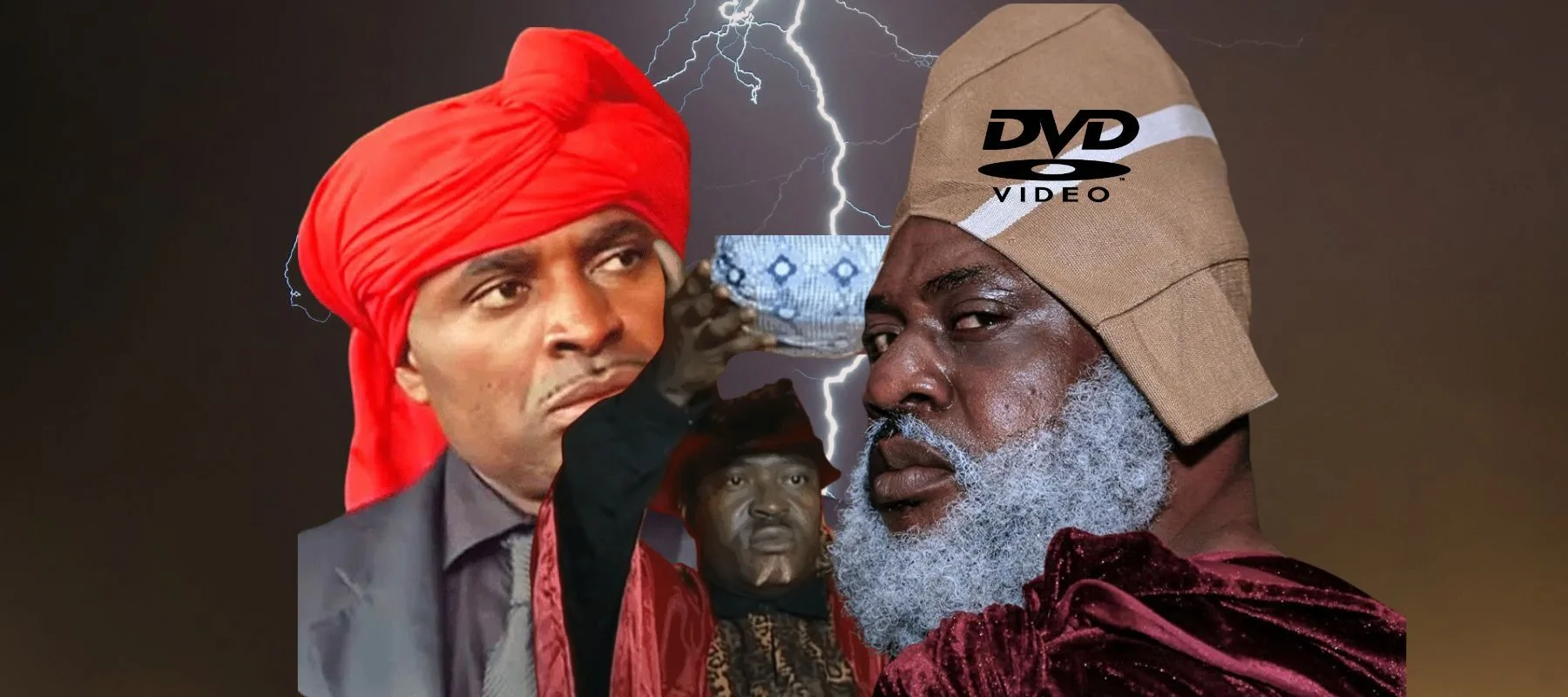
In recent weeks, old Nollywood videos have trended on social media, especially on TikTok and X. Most of these nostalgic clips are quite the humorous bunch. But beyond the laughter these clips elicit, some can also be unsettling, particularly when they touch on money rituals and other social vices.
Old Nollywood is goated 😂😂😂😭 pic.twitter.com/KOMgVphh6C
— funny_kante (@funny_kante) February 9, 2026
One film in that category is Entangled, featuring Kanayo O. Kanayo. Nicknamed Nwanyi Sacrifice (The Father of Sacrifices) for frequently playing ritualist roles, Kanayo stars as McDonald and Kenneth Okonkwo as Chris. In a scene that has generated mixed reactions, McDonald casually tells Chris that he would like to “make use” of Chris’s wife for seven days to clear his debt and help him avoid prison. Despite his initial resistance, the viral clip shows Chris eventually agreeing to the daring demand.
Old Nollywood will forever remain goated 😭😭 pic.twitter.com/CZiBRoFj02
— Attah Akor (@attah_akor) January 30, 2026
It is a classic clip that captures the absurd humour that defined what is often called “old Nollywood.” However, not everyone found it amusing. X user @SemudaraAbayomi wrote: “Old Nollywood is one of the many CURSE of Nigeria. They shaped the mindset of every adult you see now. Robbery, Ritual, Fraud, and every other ills you see today. It was glorified and 3-4 year olds that grew up watching it are now everywhere doing what they had ingested.”
Old Nollywood is one of the many CURSE of Nigeria.
They shaped the mindset of every adult you see now.
Robbery, Ritual, Fraud, and every other ills you see today. It was glorified and 3-4 year olds that grew up watching it are now everywhere doing what they had ingested… https://t.co/deZls8n9ce
— Bayomi | I’m hosting Baraza Lagos (@SemudaraAbayomi) January 31, 2026
But did they? Did “old Nollywood” truly glorify fraud, ritual, robbery, and other social ills? A review of films from the 1990s to the 2000s suggests a different reality. For example, Living in Bondage (1992), which defined the “money ritual” trope and is widely credited with launching the modern Nigerian film industry, tells the story of an impatient young man tired of his “miserable existence” who performs a ruinous ritual. Okeke (Okonkwo) eventually runs mad after his wife, Merit (Nnenna Nwabueze), whom he sacrificed, haunts him relentlessly. A former prostitute, Tina (Rita Nzelu), whom Andy once tried to sacrifice as a decoy, finds him and takes him to her church. After confessing to Merit’s murder at her gravesite, with his mother pleading for forgiveness, Andy is assured that his sins are forgiven. The film ends with Andy, now cured of his insanity, worshipping in church — a redemption arc showing spiritual salvation after complete ruin. One may disagree with the redemption arc, but it is difficult to describe the film as glorifying money ritual.
Another example is Blood Money: The Vulture Men (1997), directed by Chico Ejiro and starring Zack Orji and Kanayo. The film follows Mike Mouka (Orji), a desperate bank manager who reconnects with his wealthy schoolmate Collins (Kanayo), a police chief profiting from organ trafficking. Collins lures Mike into a secret cult called the Vultures, led by the “Great Vulture,” a spirit promising instant wealth. In a now-iconic scene, Collins asks: “All we do is take a little risk and make plenty of money. That’s all we do. Are you prepared to take a little risk?”
The clip is widely used on social media today, often to encourage risk-taking in business and entrepreneurship. But in the film’s narrative, that “little risk” leads Mike down a dark path. He kidnaps a mystical child, only to discover the boy is Collins’ son. When the Great Vulture demands a blood sacrifice, Mike offers his wife and mother instead of facing the consequences himself. The film’s second arc descends into horror: Mike, tormented by the vengeful spirit, begins collecting human heads, transforming from a desperate banker into a serial killer pursued by the police. He is eventually haunted, driven mad by his crimes, and turns into a vulture. The trajectory is clear: desperation leads to occult involvement, which leads to moral decay, psychological destruction, and damnation. There is no glamour in Mike’s ending — only terror and ruin.
Billionaires Club (2003) follows a similar pattern. Featuring Kanayo as Don, Pete Edochie as Billion, Clem Ohameze as Okwute, and Tony Umez as Zed, the film explores a secret society using occult powers to manipulate wealth and political influence. Members are bound by blood oaths and repeated sacrifices. The film became infamous for lines like “Sacrifice must be made”, often quoted today in memes. But the ending offers no celebration of this lifestyle: the society’s secrets are exposed, and the cult members meet their doom as the spirits of their victims return for vengeance. Zed returns to kill Billion and Don ends up in a dumpsite, insane. The film shows supernatural torment and earthly downfall — a classic “reap what you sow” conclusion.
The pattern extends beyond Igbo and English language films into Yoruba cinema. Owo Blow (1996), directed by Tade Ogidan and starring Femi Adebayo and Taiwo Hassan, popularly known as Ogogo, tells the story of Owolabi, whose father is wrongfully imprisoned for trying to help traders. The family falls into poverty, forcing young Owolabi out of school. He tries legitimate work but eventually turns to pickpocketing, and later to notorious armed robbery. The film ends with Owolabi committing suicide — an illustration of the Yoruba proverb “Iku ya ju Esin lo” (Death is preferable to disgrace). The suicide scene, which reportedly took 16 hours to shoot, was so devastating that petitions were written to the Federal Government to remove street children from Lagos before they became “another Wole Owolabi.” This was not glorification; it was a cautionary tale that sparked public debate.
Oyenusi (2014), based on real-life armed robber Ishola Oyenusi and starring Odunlade Adekola as the titular character, also ends with the criminal’s capture and execution. The real Oyenusi, who terrorised Lagos in the early 1970s, was executed by firing squad at Bar Beach before over 30,000 spectators on September 8, 1971. Before his death, he reportedly said: “I am biting the dust for the offense I have committed.” Both the real story and the film reinforced the same moral: crime does not pay.
Similarly, Alani Pamolekun (2015), also starring Adekola, features a feared bandit terrorising a city and frustrating law enforcement. The film follows authorities using every means to bring him down. Like other robbery films of the era, the message is the same: no matter how clever or powerful the criminal, justice eventually prevails.
Hence, the claim that “old Nollywood” glorified ritual, fraud, and armed robbery does not hold up under scrutiny. These films followed a consistent formula: desperation or greed leads to crime, brief success follows, and then devastating consequences arrive — through madness, death, arrest, or supernatural torment. The endings were rarely ambiguous. Andy goes mad and finds redemption. Mike becomes a hunted serial killer. The Billionaires Club members face vengeful spirits. Owolabi commits suicide. Oyenusi is executed. These are not glorifications of these vices — they are warnings.
What “old Nollywood” did was hold up a mirror to Nigerian society’s struggles: economic desperation, the lure of shortcuts to wealth, and the moral compromises people made under pressure. The films dramatised these issues and sometimes sensationalised them for entertainment. But they consistently showed that every shortcut carried a terrible price. The ritualist loses his sanity. The armed robber loses his life. The fraudster loses his freedom.
So, if anyone thought old Nollywood glorified these vices, they may have missed the moral lessons the films were trying to convey.