




Tune in to listen
Bounce FM

On this World Radio Day, it is worth recognising that radio’s relevance is not an accident of nostalgia.
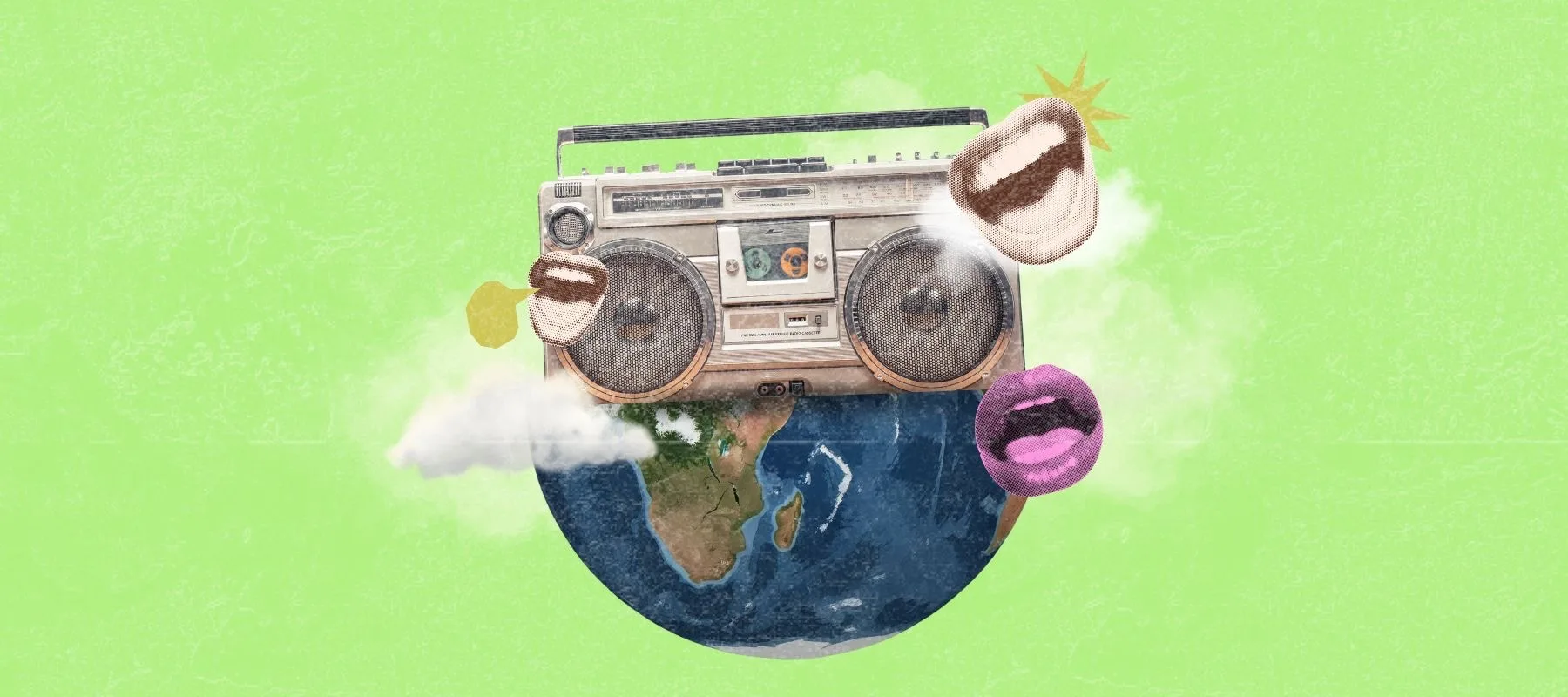
Since radio broadcasting began in December 1906, the world has witnessed relentless waves of innovation, from the arrival of television to the rise of digital platforms and audio alternatives such as podcasts. Each new technology was once predicted to replace radio. Yet, more than a century after the first broadcast, radio remains one of the most resilient and influential media in the world.
In Nigeria, radio arrived in 1933, when the first broadcast was made by the Radio Diffusion Service (RDS), now Radio Nigeria. The British colonial government in Lagos used the RDS to relay programmes from the British Broadcasting Corporation (BBC) to Nigerians. At the time, radio was not a personal device. Instead, the system operated as a wired public loudspeaker network. Loudspeakers were mounted in selected public spaces, and people gathered around them to listen to news and programmes from abroad.
For many Nigerians, it was their first connection to global events. Communities that had been largely disconnected from the outside world suddenly had access to international news, speeches, and cultural programmes. Radio quickly became a powerful tool for information, education, and influence, shaping public opinion and connecting people across distances.
Nearly a century later, radio remains a central part of our daily life. Innovation has not pushed it to the margins; instead, it has made it stronger and more accessible. Today, people listen on portable radios, home systems, smartphones, smart speakers and even basic feature phones. With traditional radio, you do not need Eko Electricity Distribution Company (EKEDC) supply, a data plan or a subscription. All you need is a radio set or a phone, with or without Internet.
Convenience is one of radio’s greatest strengths. It fits naturally into people’s routines without demanding their full attention. You can listen while driving through Lagos traffic, preparing meals, working in an office, selling in a market or relaxing at home. Radio does not require you to scroll, select or commit to a playlist or episode. It simply plays, providing a steady companion through the day.
This is where podcasts, despite their popularity, still fall short. Podcasts require stable internet access, data and storage space. Listeners must search for episodes, download files and often commit to fixed content that ends when the episode ends. In a country where internet access can be uneven and data expensive, these requirements exclude many people. Radio, by contrast, delivers consistently without asking for data, downloads, or subscriptions.
Accessibility is the second pillar of radio’s enduring power. A basic radio set is affordable and widely available. Remember those portable ₦200 Palito’s?
Were you there ? Gen Z can’t relate. pic.twitter.com/ZcBXZ6hOnq
— Dammy Esquire., (@Dammi_Esq) February 9, 2026
Radio works in urban centres and rural communities alike. For millions of Nigerians, especially in rural areas, radio remains the most reliable source of news, public health information, government announcements and entertainment. It meets people where they are, regardless of income level, literacy or location.
Radio also has a unique advantage in real-time broadcasting. When something happens, radio responds immediately. Breaking news, traffic updates, election results, sports commentary and emergency announcements reach listeners as events unfold. The voices on air provide context, explanation and emotion, helping audiences make sense of what is happening in the moment.
Podcasts, on the other hand, are usually recorded, edited and released later. They are valuable for in-depth analysis and storytelling, but they do not capture the urgency and shared immediacy of live broadcasting. A podcast episode ends after two hours in most cases; radio keeps going 24/7 in many cases. It offers a continuous flow of music, talk shows, interviews, comedy and news that adapts to the day’s events.
This live nature also creates a sense of community. Call-in shows, listener messages, live debates and interactive programmes allow audiences to participate in real time. Listeners hear their voices, opinions and experiences reflected on air. When thousands of people tune in to the same programme at the same time, they share a collective experience that pre-recorded content struggles to replicate.
Entertainment is another area where radio remains unrivalled. Radio combines music, storytelling, humour, celebrity interviews, social commentary, and curated programming in a dynamic mix. Presenters develop distinct personalities and loyal audiences. Stations build identities that reflect the culture and rhythm of their communities. At Bounce 89.1FM , for instance, the blend of music, pop culture, and live interaction reflects the city’s energy, offering a soundtrack to urban life and a platform for young voices and trending conversations.
Crucially, radio has not resisted change. It has adapted. Many stations now stream online, publish content on social media, produce video shows and repurpose programmes as podcasts. Many modern stations like Bounce 89.1FM extend their conversations beyond the FM band, engaging audiences through digital platforms while keeping the core experience simple and immediate.
This ability to evolve is one reason radio has survived every prediction of its death. Television did not kill radio. The internet did not kill radio. Podcasts have not killed radio. Instead, radio has absorbed elements of each innovation while retaining its unique identity. It remains a low-cost, high-impact medium that delivers information and entertainment with minimal barriers.
On another World Radio Day today, February 13, 2026, it is worth recognising that radio’s relevance is not an accident of nostalgia. It is the result of practical strengths that new technologies cannot replace. Radio is convenient, accessible and immediate. It reaches everyone, everywhere, and keeps broadcasting regardless of data plans, device storage or subscription tiers.
More than 100 years after the first broadcast, radio remains powerful, not despite innovation, but because it continues to do what it has always done best: connect people through sound, stories, and shared experience. As long as there are voices to be heard and stories to be told, radio will remain a vital and enduring medium in an ever-changing technological world.