



Tune in to listen
Bounce FM

After decades away from Grand Prix racing, the German manufacturer will return as both a constructor and power unit supplier under the Audi Revolut F1.
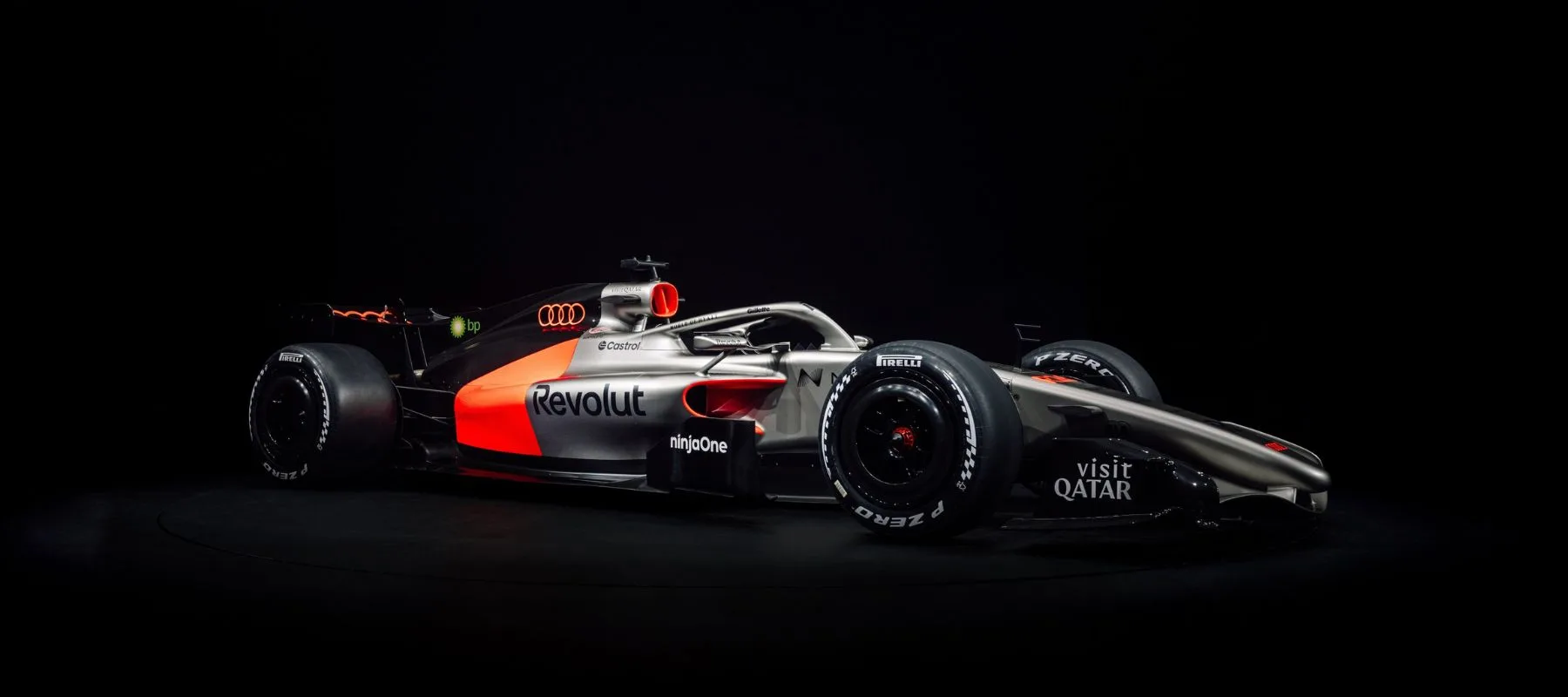
Audi’s confirmed entry into Formula One from the 2026 season is not a nostalgic revival of past motorsport glory—it is a calculated, forward-looking investment in where the sport is heading.
After decades away from Grand Prix racing, the German manufacturer will return as both a constructor and power unit supplier under the Audi Revolut F1 Team banner, following its acquisition of Sauber Motorsport. This move positions Audi at the heart of Formula One’s most significant regulatory reset in a generation, one defined by sustainability, electrification, and cost-controlled competition.
Historically, Audi’s relationship with motorsport has been defined by technical leadership rather than participation for its own sake. From Auto Union’s pre-war Grand Prix dominance to Audi Sport’s era-defining success at Le Mans, the brand has consistently entered competition with a clear engineering purpose. Formula One’s 2026 regulations—placing increased emphasis on hybrid efficiency, electrical power output, and sustainable fuels—align directly with Audi’s long-term automotive strategy.
Operationally, Audi’s F1 programme reflects a deliberately global structure. Chassis development will remain in Hinwil, Switzerland, building on Sauber’s decades of F1 experience. Power unit development is centered in Bavaria, while a growing technical hub in the United Kingdom’s Motorsport Valley ensures proximity to elite engineering talent and supply chains. The result is a multi-national operation designed to compete at scale.
Crucially, Audi’s leadership appointments underline its intent to build methodically rather than chase immediate results. Team CEO Andreas Seidl brings extensive Formula One management experience, having previously overseen competitive restructuring at McLaren. His approach—focused on organisational clarity, performance culture, and long-term competitiveness—signals patience and realism. Supporting him is Oliver Hoffmann, whose background in technical development bridges Audi’s road-car innovation with motorsport application, a connection that will be increasingly relevant in F1’s next era.
Expectations around Audi’s competitive impact are understandably high, particularly given comparisons to Mercedes’ dominance following the 2014 regulatory overhaul. However, Formula One in 2026 is a markedly different environment. Cost caps, tighter performance convergence, and a more competitive midfield make sustained dominance more difficult to engineer.
Audi’s ambition, therefore, appears less about immediate supremacy and more about establishing long-term relevance. Early seasons will likely focus on power unit reliability, systems integration, and organisational cohesion rather than outright championship contention. Yet if Audi executes effectively, it has the technical depth and institutional discipline to emerge as a consistent front-running force within the decade.
Ultimately, Audi’s return to Formula One reflects a broader shift in the sport itself. As Formula One positions sustainability, innovation, and global relevance at its core, Audi’s entry reinforces the championship’s credibility as a proving ground for the future of performance engineering.