




Tune in to listen
Bounce FM

Nigerian crude is not insulated from global pricing just because it is produced locally.
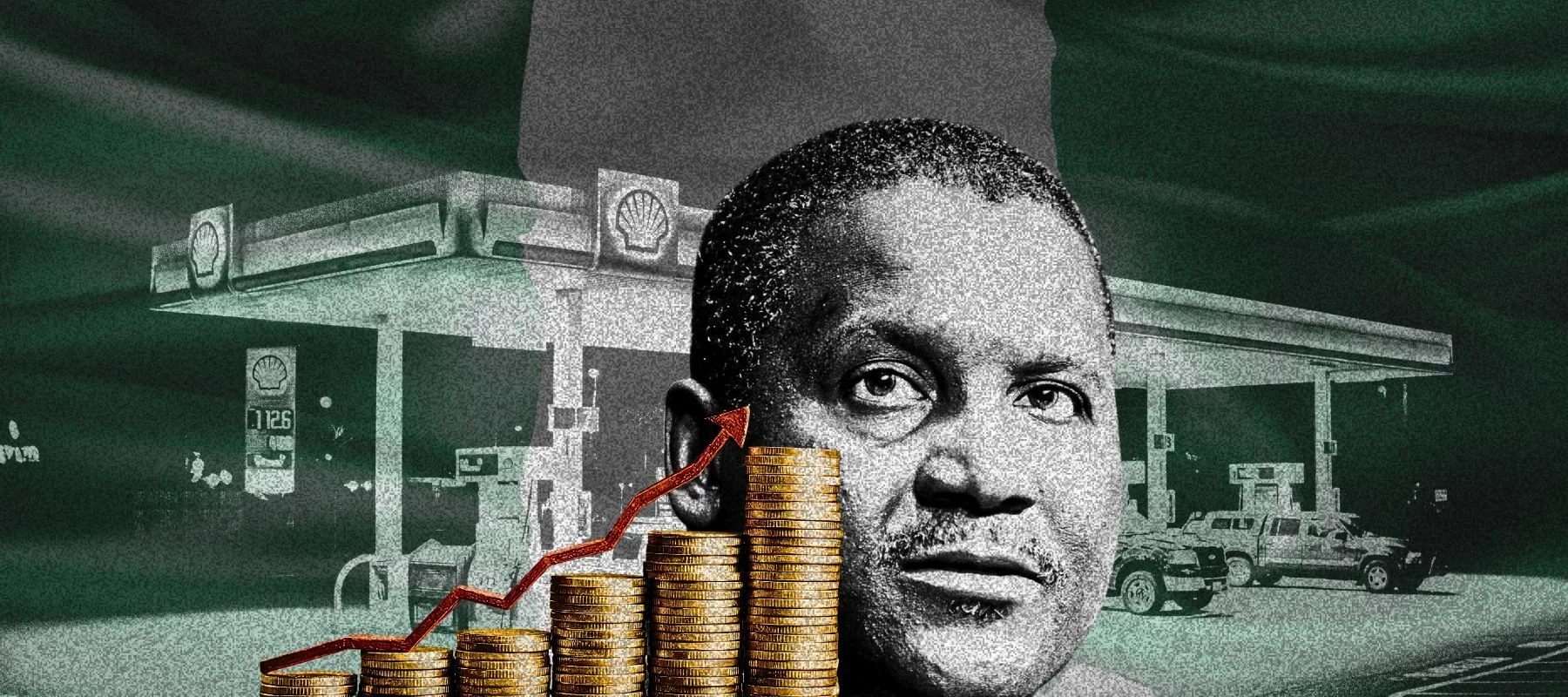
Petrol is selling for up to ₦1,300 per litre across Nigeria.
Are we still going to adjust to this or it's about time we say enough is enough.
I never imagined I would ever buy petrol for #1300. pic.twitter.com/WPHiOEUkAM— GT Atas (@GodstimeAtas) March 9, 2026
That has confused many people. After all, the country now has the massive Dangote Refinery refining fuel locally using Nigerian crude. Shouldn’t that make petrol cheaper?
Not exactly. Once you understand how oil markets actually work, the price begins to make sense.
Sort of. Under the federal government’s naira-for-crude arrangement with the Nigerian National Petroleum Company (NNPC) Limited, the refinery can pay for some crude in naira instead of dollars. But the price of that crude is still tied to international benchmarks.
As the refinery’s own statement puts it, it sources “all its crude at prevailing international market prices, whether locally or from foreign suppliers.” So when global crude prices shoot up — which they have, dramatically, in recent weeks — Dangote’s costs go up too. Every naira-denominated purchase is still benchmarked to whatever Brent crude is doing on the London market that day.
And there’s another problem: those NNPC cargoes only cover about five shipments a month. The refinery needs 13. For the other eight, it goes to the open market; paying in dollars, at whatever the exchange rate is on that day.
The dollar and the exchange rate are major parts of the problem. Crude oil is priced in dollars globally. The refinery buys it in dollars (or converts naira to dollars at market rates). Equipment, freight, insurance, financing are dollar-denominated. In an environment where the naira has lost significant value, every dollar spent on running the refinery costs more in naira terms.
Freight alone tells the story. Dangote’s MD, David Bird, disclosed that tanker shipping costs surged from about $800,000 to roughly $3.5 million per shipment practically overnight as the Middle East conflict escalated. That cost gets added to the price of every litre that comes out of the refinery.
This is the most legitimate grievance and the most misunderstood part of how oil markets work. Nigerian crude is not insulated from global pricing just because it is produced locally. Crude oil is a global commodity, and it is priced using international benchmarks like Brent. Whether a barrel of oil is pumped in Warri or Saudi Arabia, it trades at roughly the same global price.
In fact, Nigerian crude costs more than the Brent benchmark — between $3 and $6 per barrel above it — before you even add freight. When Brent spiked from the mid-$60s to near $120 within a week, Nigerian crude spiked with it.
Dangote Refinery Reaffirms Commitment to National Energy Stability Amid Global Market Volatility
Dangote Petroleum Refinery & Petrochemicals reassures Nigerians of its unwavering commitment to serving as a stabilising force amid recent shocks in the international oil market.… pic.twitter.com/6MtQMx0rcr
— Dangote Group (@DangoteGroup) March 5, 2026
Exporting the oil, meanwhile, earns the government more dollars. That creates its own incentive to keep sending crude abroad rather than directing it to domestic refining at below-market terms.
Because crude was cheaper then. The refinery has been fairly transparent about the arithmetic: when ex-depot was ₦774 per litre, crude was landing at around $68 per barrel. Now it is landing between $88 and $91 per barrel.
The refinery says it actually absorbed 20 per cent of the cost increase rather than passing it all on, which is what brought the price to ₦1,175 (and later down to ₦1,075 on Tuesday, March 10, as crude retreated from its peak) rather than something higher.
Since the removal of the petrol subsidy in 2023, fuel prices have been deregulated, meaning the government no longer fixes what you pay. The pump price now tracks what marketers paid at the depot, plus their own margins, plus the cost of moving fuel from Lagos to wherever you are. So even when Dangote cuts its price, your filling station may still be selling old, more expensive stock for a few days before the reduction reaches you.
The refinery’s core argument is that Nigerians are not in queues right now because it exists. Countries that depend on fuel imports are scrambling. Refineries have shut down elsewhere. China has banned its own petrol exports, and global supply is tightening. Nigeria, because it has Dangote, has fuel available. That matters.
But available fuel and affordable fuel are not the same thing. Right now, most Nigerians are living in the gap between those two realities. With oil back above $100 on Thursday, March 12, that gap may get even wider as the Middle East conflict rages on.