


Tune in to listen
Bounce FM

The consequences have moved well beyond social media.
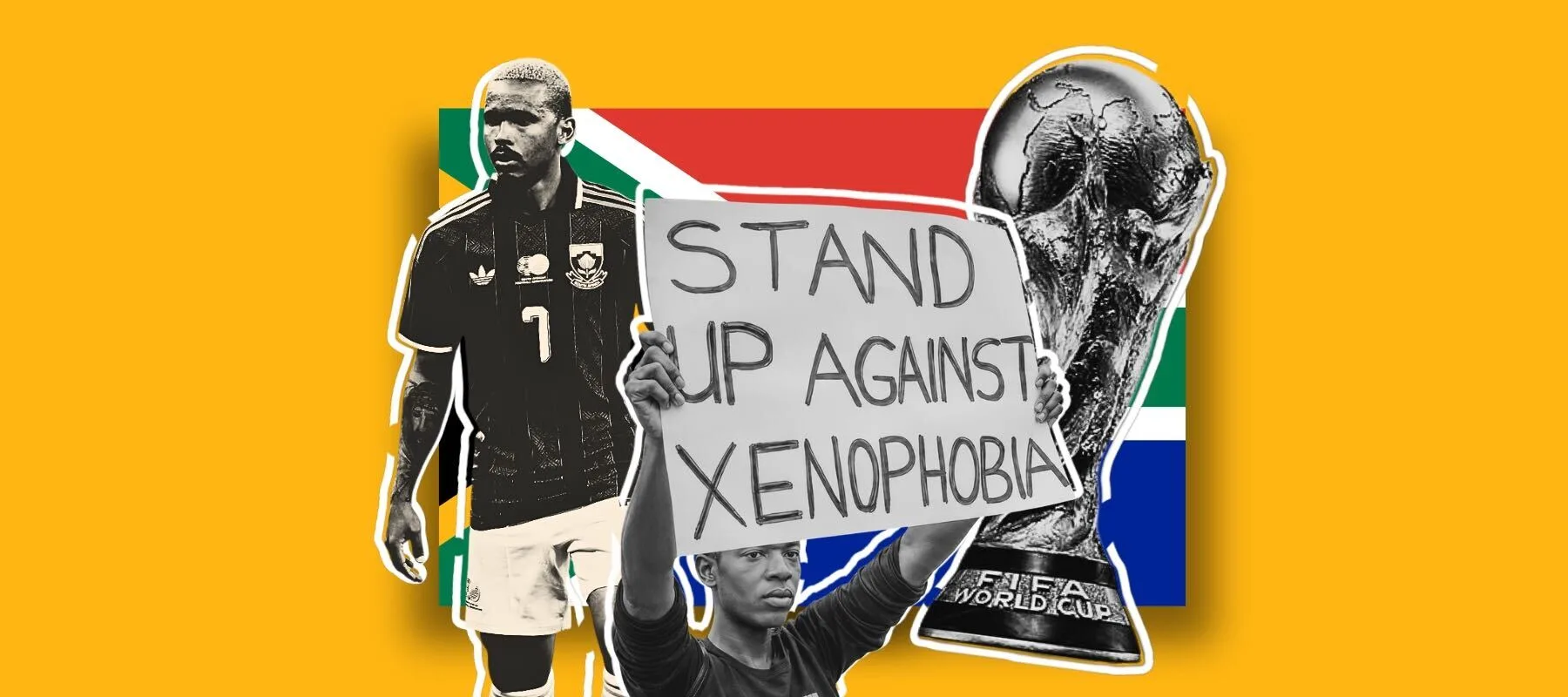
For a second consecutive 2026 World Cup match last Thursday, June 18, large sections of African social media were rooting against South Africa. In a tournament that has seen Africans back other African countries in solidarity, the Bafana Bafana have not received similar sympathies in response to the rampant and ongoing xenophobic attacks on African immigrants in that country. Rooting against them has provided an outlet for Africans of various nationalities, including Nigerians, to register their anger on the biggest stage in global sports.
Dear South Africa, it’s YOUR JOB to support your National team. We do not want to take that away from you too.
— Pere Egbi ✊🏾 (@PereEgbi) June 18, 2026
These reactions are a long way off from Nigeria and 27 other African countries boycotting the 1976 Olympics Games in Montreal, Canada, in protest of the International Olympic Committee (IOC) refusing to kick New Zealand out of the Olympic Games after the country’s rugby team took a controversial tour of apartheid South Africa on the eve of the Olympics. Montreal lost a million dollars in seat refunds in the first two days of the Olympics. It was African solidarity at its best.
Fifty years later, it is South Africa that ironically finds itself on the receiving end of continental resentment, a painful reversal that speaks to how severely its domestic conduct has damaged its standing across Africa.
The damage did not begin with the World Cup. Since April 2026, a wave of anti-immigrant violence driven by a citizen-led movement called March and March has swept through parts of Johannesburg, Pretoria and Durban, targeting African and Asian foreign nationals. But the violence does not emerge from a vacuum. It is being stoked by political actors who have found in migrants a convenient scapegoat for South Africa’s stubborn unemployment crisis and a government that has been too slow to push back. Mpho Makhubela of the Kopanang Africa Against Xenophobia coalition has noted the opportunistic nature of these groups, arguing that “vigilante groups feed off the country’s frustrations and socioeconomic rights regression, unemployment, and lack of efforts to address the equity gaps.” A coalition of South African civil society organisations including Equal Education, SECTION27, Kopanang Africa Against Xenophobia and Lawyers for Human Rights has unequivocally condemned the violence, but their voices have struggled to cut through the noise of a political moment that has made anti-immigrant sentiment electorally useful.
The cost has been both human and material. Two Nigerians died in separate incidents involving South African security personnel in April. Amaramiro Emmanuel was allegedly beaten by soldiers of the South African National Defence Force in Port Elizabeth and Ekpenyong Andrew’s body was found at the Pretoria Central Mortuary. Some immigrants have also been robbed of their sources of living. A Ghanaian woman, who said she was raised in South Africa, told Reuters that she was left homeless after her Durban salon was looted in anti-migrant violence in May. It is this anger that the World Cup has given a stage.
In the opener against Mexico on Friday, June 12, many African fans changed their profile pictures to Mexican flags and adopted Spanish-sounding names as a form of support for the North American country over South Africa.
Dear Mexico,
Please Don’t pity South Africa, beat them like they are coming to take your women and jobs.
Yours Sincerely,
53 African countries— Ọládélé 🇳🇬👑 (@Theoladeledada) June 10, 2026
In the buildup to the second match, Bafana Bafana captain Ronwen Williams tried to douse the flames. He urged Africans to support each other “in good and bad moments” and to “leave politics to politicians.” It was a neat soundbite, and a missed opportunity. Williams asked for continental solidarity while carefully sidestepping the reason it had waned: the attacks, the looted shops, the deaths.
FIFA WORLD CUP | In response to the online criticism and backlash, Bafana Bafana captain Ronwen Williams has urged football fans to unite in the globe, saying, "Let's leave politics to politicians and play football." pic.twitter.com/yZe9po3GpT
— SABC News (@SABCNews) June 17, 2026
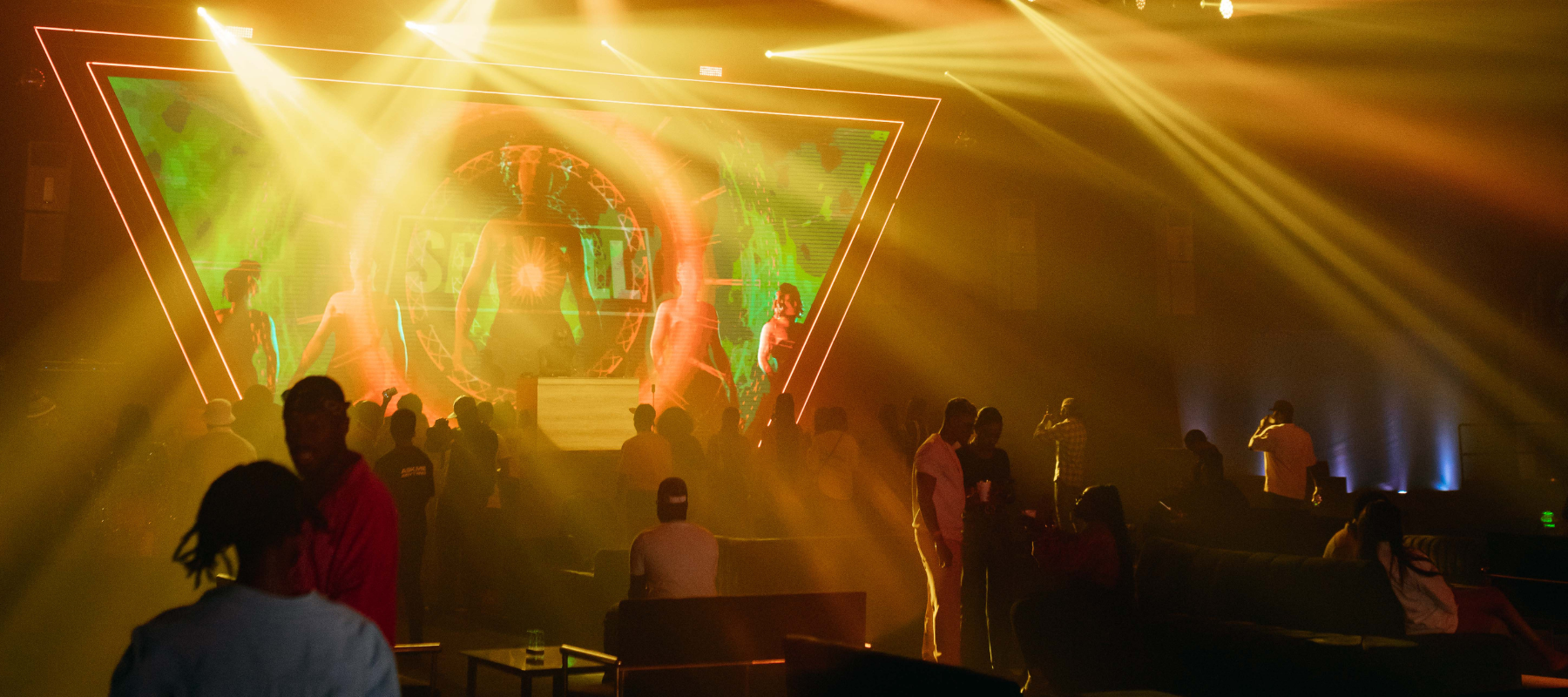
The consequences have moved well beyond social media. Justice Minister Mmamoloko Kubayi revealed that the majority of South African artists who perform on the continent are seeing their gigs cancelled, with one artist informing her that all her scheduled continental performances had been wiped out entirely. Amapiano, South Africa’s biggest cultural export of the past decade, built its continental footprint in Nigerian clubs and Ghanaian concert halls. That goodwill is now being threatened.
WATCH | Justice Minister Mmamoloko Kubayi says one of South Africa's artists has informed her that all of her performances on the continent have been cancelled due to the country's ongoing migration challenges. She urged communities to reject vigilantism. pic.twitter.com/D58EZz0POl
— SABC News (@SABCNews) June 14, 2026
On Nigerian social media, a campaign to boycott South African content has been gathering momentum, with many Nigerians calling on their compatriots to shun South African music, films and television series as a form of protest against the xenophobic attacks. The campaign found a test case in The Polygamist, a newly released South African drama series on Netflix. Many Nigerians expressed frustration that the series had climbed to number one on Netflix Nigeria despite the boycott calls. The campaign is an attempt to translate outrage into economic consequence and it is operating on the same logic that is cancelling South African artists’ gigs across the continent.
Dear Nigerians,
Skipping that South African film costs you nothing.
It’s the easiest protest you’ll ever make, a way to stand for the Nigerians being disenfranchised over there.
— Wolfie 🐺 (@TheIgboWolf) June 17, 2026
Nigeria’s government, for its part, has moved from diplomatic language to something closer to a warning. On Thursday, June 18, Minister of Foreign Affairs, Bianca Odumegwu-Ojukwu, issued what amounted to a thinly-veiled ultimatum. “There are over 120 South African companies operating in Nigeria. Nobody is asking them to provide proof of identity. Nobody is asking South African staff working there whether they are South Africans or Nigerians, and nobody is taking over their shops or businesses. But this is happening to Nigerians in South Africa. So, I think that at some point, we really have to review the options available to us,” she said. She named MTN, MultiChoice, Stanbic and Protea as examples of South African brands with significant Nigerian exposure.
Africans don’t hate us South Africans as a whole. They hate xenophobia and South Africans who are xenophobic. Xenophobia is hate crime, you should hate it too. https://t.co/0bEiyFlGSW
— Thuso van Zyl 🇿🇦 (@Thuso1Africa) June 19, 2026
The deeper problem for South Africa is one of trajectory. Before the World Cup, its xenophobia problem was largely a continental conversation; an African grievance that the wider world paid passing attention to, if any. The tournament has changed that. With billions watching, the diplomatic fallout, the cancelled gigs, the social media campaigns and the anti-Bafana sentiment have introduced South Africa’s crisis to audiences elsewhere who had no prior knowledge of it. Unless South Africa confronts the structural causes of what is happening — economic exclusion, political opportunism and social scapegoating — the cycle is likely to recur, and each recurrence will deepen the damage.