


Tune in to listen
Bounce FM

There are jacks of all trades, and then there’s Demi Banwo, master of all.
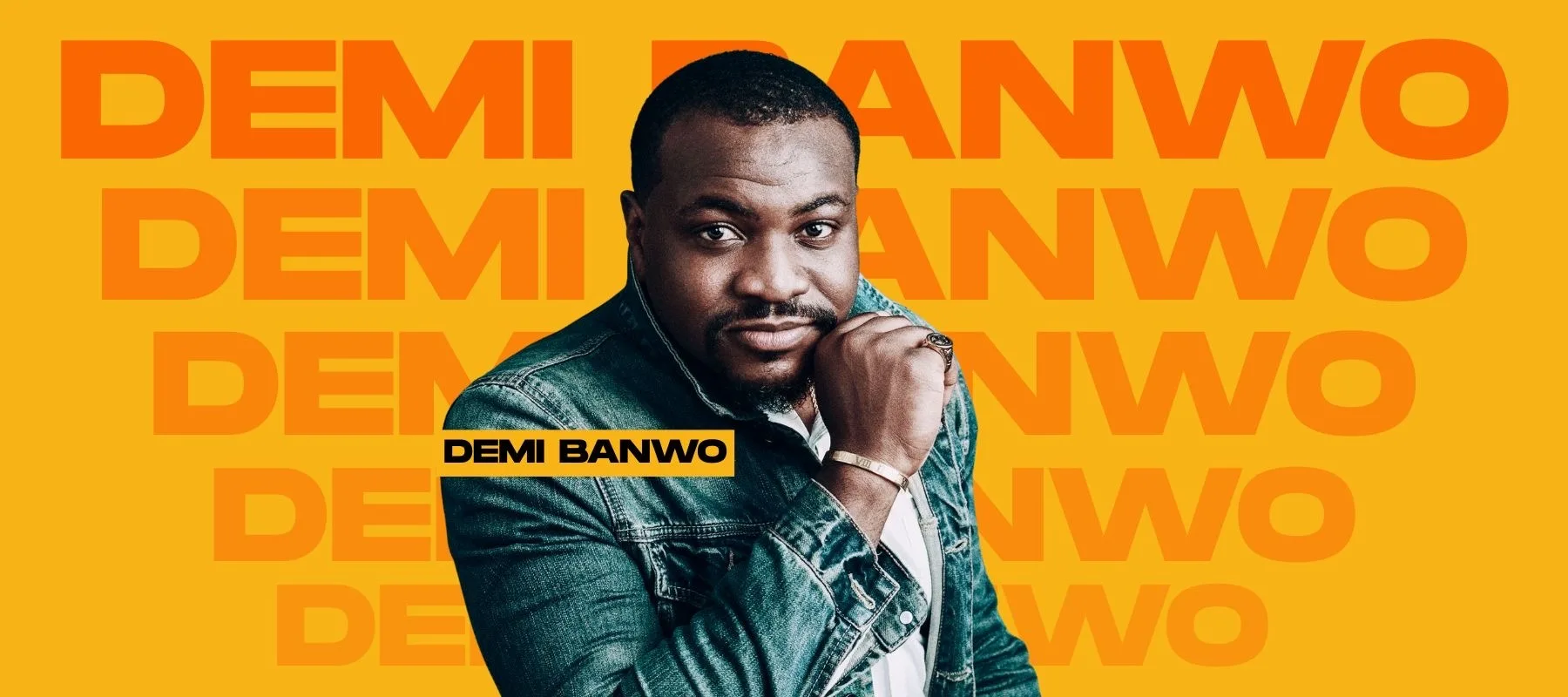
There are jacks of all trades, and then there’s Demi Banwo, master of all. This Sunday, August 2, the actor, filmmaker, and producer returns to the airwaves on Bounce 89.1FM, picking up where he left off years ago, this time behind the microphone of Motherland Radio, the station’s 1 p.m. to 6 p.m. programme.
You don’t immediately think of radio when you think of Demi, at least not over the past five years, during which he’s had his hands deep in film: actor and executive producer on Gangs of Lagos; appearances in Gidi Up, Blood Sisters, and Chief Daddy. And more recently, starring alongside Tobi Bakre in The Other Side of the Bridge, which he also produced, among several other projects in between. Demi has been fully invested in filmmaking. Now, he’s adding radio back to his ever-expanding creative portfolio.
“My creativity is always looking for different ways to express itself,” he tells BSide of his return to radio with Bounce FM. “Yesterday, it was film; today, I’m managing talent and baking; and tomorrow, I’m on radio. I’m one of those people who just keeps moving and getting stuff done. I’ve spent so much time in film and its environs recently, and I think it’s high time I welcomed a breath of something different. And honestly, I genuinely missed being on the radio.”
Demi’s creativity may have found its most potent expression in film in recent years, but he’s no stranger to radio. During Bounce Radio’s early days as a digital-only platform, he was one of the station’s early presenters, helping lay the foundation it would later build on when it fully transitioned to the airwaves in October 2024, cementing its place as the go-to station for music and culture since then.
He anchored Back to the Future, a time-travel show that linked generations through music by bringing the sounds of the eighties and nineties into today’s popular mix. Even before his first stint with Bounce in 2020, Demi had already cut his radio teeth during an internship at Cool FM and later during his NYSC at Smooth FM in 2012. Those experiences shaped his comfort behind the microphone. Now, he returns to familiar terrain with Sunday’s Motherland Radio on 89.1FM.
Motherland Radio is a far cry from Demi’s earlier show on Bounce. It is a programme that cuts to the heart of Africa: its people, creativity, traditions, and ever-evolving cultural identity. It’s an immersive experience that takes listeners on a journey across the continent, exploring the stories, customs, and traditions that continue to shape contemporary African identity and reimagine African narratives.
Now to be hosted by Demi, Motherland is essentially, in the presenter’s words, “a one-stop shop for African culture and the elements that make up African culture. Think of it as a travel show around Africa, but on Bounce Radio.”
As much as the show builds on his earlier experience with Bounce, it is certainly a different challenge from the creative terrain he has occupied in recent years. The obvious question, then, is how he intends to draw on those experiences for the task at hand.
“I believe that everything feeds into itself, and that’s really the plan for what I’m planning on doing here: feeding all my experiences and all my creative sensibilities into each other,” he says. “Building one off the other and letting each experience strengthen the next. I think that’s really how my experiences play into the type of presenter I’ll be this time. It gives me a much wider perspective on things.”
With a show as expansive as Motherland Radio, Banwo’s greatest qualification may well be the breadth of his own experiences. Between earning a bachelor’s degree at North Carolina State University and a master’s in acting from ArtsEd London, alongside nearly 15 years across media, film, and the creative industries, he has amassed the kind of lived experience that seems tailor-made for a programme built on the many expressions of African culture.
“I think they make me a more well-rounded presenter because I can talk about a lot more now. One of the things that’s really heavy on my mind is bringing together the different elements of the things I’ve done,’’ he attested.
“If I’m talking to a filmmaker on the show, being a filmmaker myself means there are nuances I’m able to explore that a regular presenter might not. The same goes for food. As someone who bakes and cooks, I’m able to have a much deeper conversation because I understand those nuances too. There’s simply a wealth of experience, a wealth of life, that I’m looking forward to maximising.”