


Tune in to listen
Bounce FM

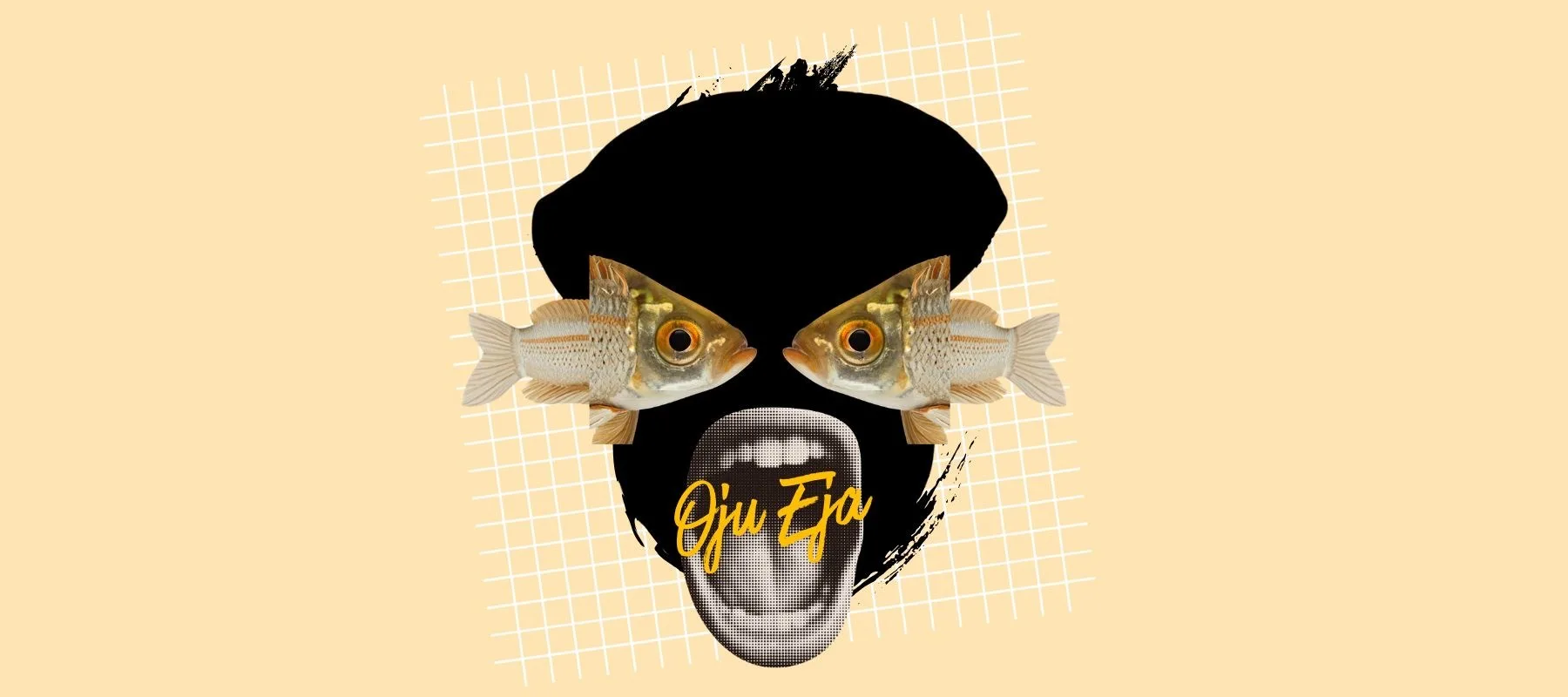
We fund the Olodo Economy daily, often without realising it, sometimes without caring.
After a four-year hiatus from music, Nigerian rapper YCee recently sat down with The Afropolitan Podcast‘s Eche Emole and Chika Emole to discuss what life out of the public eye has been like. The “Jagaban” crooner was quite honest and vulnerable: he revealed a bipolar disorder diagnosis in 2020 at the height of Covid that led to stints in the hospital and meds that messed with his creativity. He recalled returning from London to a below-par mental health system in Lagos that did him no favours. The artiste also spoke about performing through a mental health episode in Benue State. Then, he turned to Afrobeats, discussing the golden era of the genre and the erosion of album listening culture. He even addressed his painful fallout with his old record label, Tinny Entertainment.
But it was not these issues that sparked widespread reactions online and offline when the episode was released last Wednesday, June 24, 2026. It was YCee’s declaration of the existence of a “Peller Culture” and “Olodo Uprising” (or uprising of dullards), which he claims forces everyone to accommodate unintelligent and ignorant people to avoid offending them, causing this group to pervade society. The “Juice” singer said the so-called uprising was a direct consequence of “a massive attack on the educational system in Nigeria.”
“No shade to peller, I have nothing against the dude personally , you know, get your coins.
but it’s not a good look..”
Ycee on 🎥The Afropolitan Podcast pic.twitter.com/ovReUnFw3n
— Afropolitan 🅰️🌶 (@afropolitan) June 26, 2026
And YCee is absolutely spot on. Nigeria no longer celebrates and platforms excellence as it once did. Growing up, young Nigerians woke up to educational TV shows on Saturdays. TV shows such as Milo Last Kid Standing, Binta & Friends, and Nnena & Friends entertained and educated children. And Tales by Moonlight told stories of positive values; hard work, competence, and honesty. Today, nearly all of those shows are gone from TV. A few like Cowbellpedia still exist, quietly, but educational TV has been reduced to a footnote in a schedule dominated by entertainment. Incidentally, it was only last week that reports emerged that the International Mathematical Olympiad (IOM), one of the most prestigious academic competitions in the world, had delisted Nigerian students from participation after the Federal Government failed to fund the country’s involvement for four consecutive years. Nigeria can attend this year’s finals in Shanghai only as an observer. This is what deprioritising excellence looks like in practice.
Nigeria has now been delisted from the International Maths Olympiad, whose finals are happening in Shanghai, China, this July.
It is one of the most prestigious academic competitions in the world.
Nigeria can now only participate as an observer nation, while other countries can…
— Alex Onyia (@winexviv) June 24, 2026
Today in Rome, I could see different government delegates from other countries, including China and Singapore, right here to support their students for International STEM Olympiad.
No single government delegate from Nigeria.
Is this how much our government abhors education?
— Alex Onyia (@winexviv) July 2, 2026
YCee’s mention of a “Peller Culture” understandably touched a nerve because it felt like scapegoating a single person: popular TikToker Peller. It was unsurprising that Peller and his girlfriend had a visceral reaction to the singer’s charge. Reacting to YCee’s comments, Peller asked to be left alone, criticising YCee as “wicked” for singling him out. “As government no give us work now, wetin you expect us to do? Why are they attacking us?” Peller’s girlfriend who cosplays as a robot, Jarvis, wondered.
“Since Ycee don blow, the giveaway wey i don do, Ycee never do half of it and he is calling me Olodo”
— Peller comes for Ycee again 🙆🏾♂️ pic.twitter.com/0ApOm3eUI0
— SKB (@seyikanbai) June 27, 2026
“I'm a graduate myself. Since the government didn't provide jobs for us, what exactly did you expect people to do? You can't expect individuals with high intelligence to end up cleaning toilets. Some, unfortunately, are pushed into cr!mes like kidn@pping and årmed røbbery.”… https://t.co/N7H9dMu25c pic.twitter.com/lITH8lX55Q
— CHUKS 🍥 (@ChuksEricE) June 25, 2026
To be fair to YCee, he was not scapegoating Peller; he was holding up Peller as a product of the culture he has observed. But there is no Olodo Uprising without an Olodo Economy powering it. Since the conversation started, many people on social media have been quick to agree with YCee for making the diagnosis, but we need to look inward because our reward system incentivises the very behaviours we supposedly detest. The Olodo Uprising is not necessarily about whether someone speaks perfect English or has a university degree — although those things matter too — it is about what a society chooses to reward.
There is an Olodo Uprising because saying the most obscene and outrageous things sells. If attention consistently earns more than competence, more people will naturally chase attention. That is not simply a creator problem or an algorithm problem; it is a cultural incentive problem. Asking women to turn their bums to the camera for men’s entertainment brings clicks. Filming yourself driving at a pole in a fake suicide attempt brings attention. Luring Master’s Degree holders with fake job offers and then mocking them for their education brings eyeballs.
Peller and his 20 master’s degree holders applying for a cameraman job with 500k monthly pay! Omoh, even girls dey there too 👀🧎🏿♂️ pic.twitter.com/tnE8WRVHDH
— TENIOLA (@Teeniiola) July 11, 2025
Certainly, the Olodo Economy did not build itself. It runs on a currency the audience supplies: attention. Every view, every share, every outrage-click is a coin inadvertently contributed to this economy. The algorithm did not impose these creators on Nigeria; the country’s collective engagement promoted them. But the audience alone did not build this economy: institutions have fully participated. TV stations that pulled educational programming to fill airtime with what sold. Blogs that discovered outrage drives traffic faster than insight. Politicians who grant audience to the loudest creators because it gets them attention. And perhaps most consequentially, brands — companies with marketing budgets — that write cheques to social media creators who mock education because the numbers on the analytics dashboard looked good. We fund the Olodo Economy daily, often without realising it, sometimes without caring. Even YCee, who called attention to this culture, is a willing participant in it. After his appearance on The Afropolitan Podcast, his next destination was the show of another patriarch of the culture he derided.
“I literally recorded that interview and that night i went to Carterefe’s stream. I don’t have anything on streamers or Tiktokers, we were just talking about lyrical content. They said I shouldn’t have mentioned Peller’s name, I don’t care, I said what I said”
– YCEE on Cool FM pic.twitter.com/Czfc2Ww1ER
— OLAMIDE 🌸💖 (@Olamide0fficial) June 30, 2026
This is why the problem sits deeper than any single creator or any single platform. A generation of young Nigerians is being handed a very clear cost-benefit analysis by the culture around them: intelligence is optional, spectacle is mandatory. Competence might earn you a plaque at a ceremony a few people attended. Chaos earns you a lucrative brand deal. The graduate who spent five years mastering a discipline watches someone who trades in absurdity collect endorsements that dwarf her annual salary. The signal being transmitted is brutally efficient: school na scam, education is not a ladder.
And finally, YCee is correct that the Olodo Economy is only sustainable for a short period. Attention is a volatile currency. It inflates fast, devalues faster, and the moment a louder noise arrives, yesterday’s clown becomes invisible. The creators who have built careers on spectacle rather than substance will discover, sooner or later, that a clown show has no second act. But the deeper damage is not to them, it is to the society that watched and forgot to ask what it was building. A culture that mocks the value of education, that turns the graduate into a punchline and the dropout into an icon, is not simply entertaining itself. It is quietly defunding its own future. Nations that have built durable prosperity — actual, compounding national capacity — did so by making education aspirational. By ensuring that the smartest people in the room were also, eventually, the most rewarded. Nigeria cannot hide from that logic indefinitely. The Olodo Economy is not just a content problem; it is a development problem wearing a funny wig. And development problems, unlike viral videos, do not disappear when you scroll past them.
Every developed nation first became an education superpower before becoming an economic superpower.
Education is not another sector.
Education is the operating system of a nation.
Everything else runs on it.
— Alex Onyia (@winexviv) July 3, 2026