


Tune in to listen
Bounce FM

All of this matters more than ever because the numbers demand it, with 69 percent of new voter registrations belonging to young people.
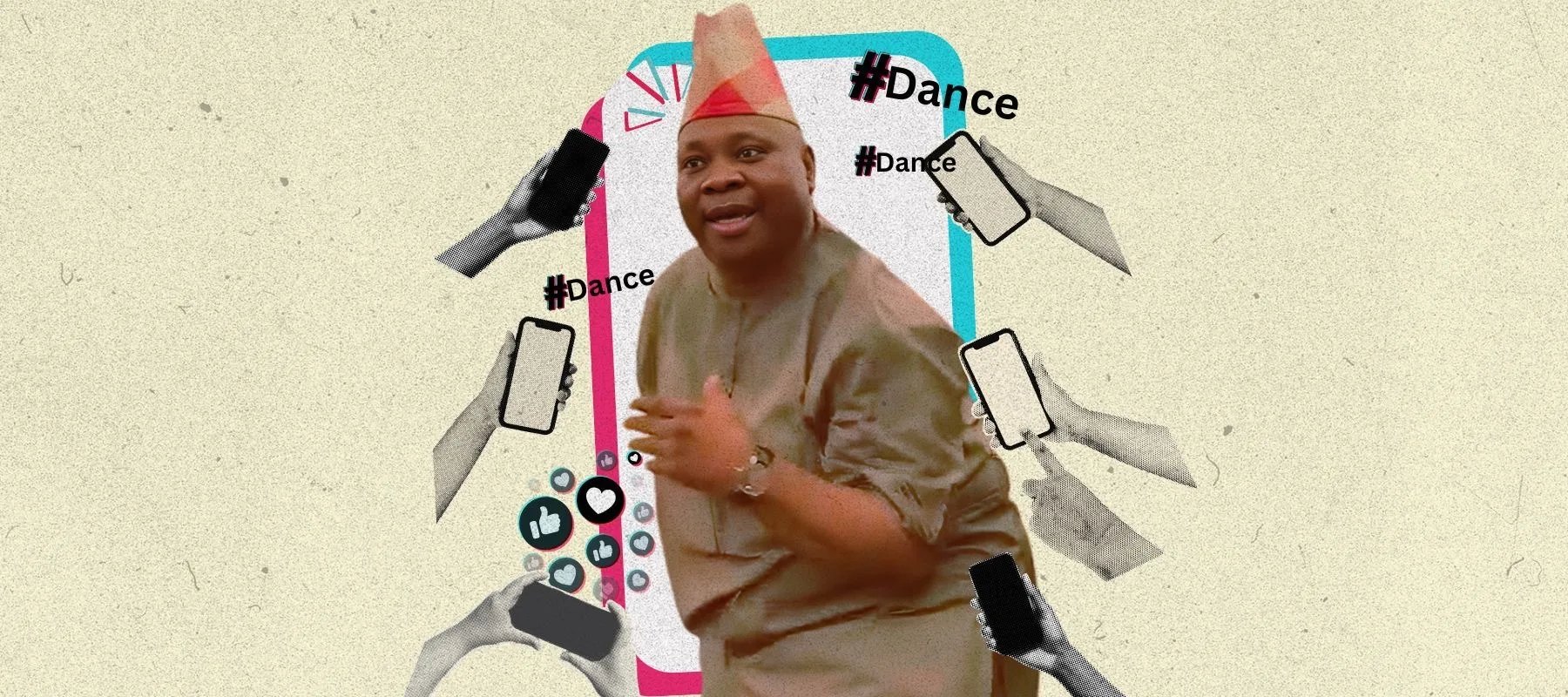
There is a video on TikTok of President Bola Tinubu in a blue jumpsuit and his trademark infinity-themed cap, dancing to Tyla’s “CHANEL.” It has over 750,000 likes. There is another of his 2023 rival and potential future opponent, Peter Obi, moving impressively to “Money Constant,” the 2025 collaboration by DJ Maphorisa, DJ Tunez, Wizkid, and Mavo. And one of former Vice-President Atiku Abubakar cheerfully conceding the presidential ticket of the African Democratic Congress (ADC) mid-conversation to Obi, before both men break into a dance. None of these things happened. But millions of Nigerians watched, laughed, shared, and felt something. That feeling is the whole point.
@tchello_ai Bola Tinibu – Nigeria You guys asked so much haha. #challenge #fyp #trending #dance #tyla
Ahead of 2027, Nigerian politics is no longer just about who has the best manifesto or the biggest war chest. It is about who controls attention. And in 2026, attention lives on TikTok, on meme pages, in influencer comment sections, and in group chats of young Nigerians who have largely checked out of traditional political discourse but remain intensely online. Politicians and their media teams know this. What is unfolding is not accidental. It is a strategy.
The AI-generated dancing videos are a symptom, not the story. The real story is that political campaigns are being restructured around the logic of culture marketing: identify what your target audience finds cool, credible, or funny, then manufacture proximity to those things. Make the politician a character that fits into the cultural moment rather than one that stands apart from it. Make them, in the language of the young social media users, an “Idan.” The word — Yoruba for “magic,” now street shorthand for a boss — did not accidentally migrate from music into political commentary.
*🎥:* Idan gangan President Bola Ahmed Tinubu receives in audience, the Buhari Organization led by Senator Tanko Almakura Former Governor of Nassarawa state and H.E Masari, former Governor of Katsina state at the Aso Villa Banquet Hall.#VillaToday pic.twitter.com/9JX3N8WSDF
— The Voltron 🇳🇬 (@The_Voltronseer) September 2, 2025
When supporters describe their preferred candidate as an Idan, they are not making a governance argument. They are making a vibe argument: this person has aura; this person is built different. And in an information environment where aura travels faster than policy, that is not trivial.
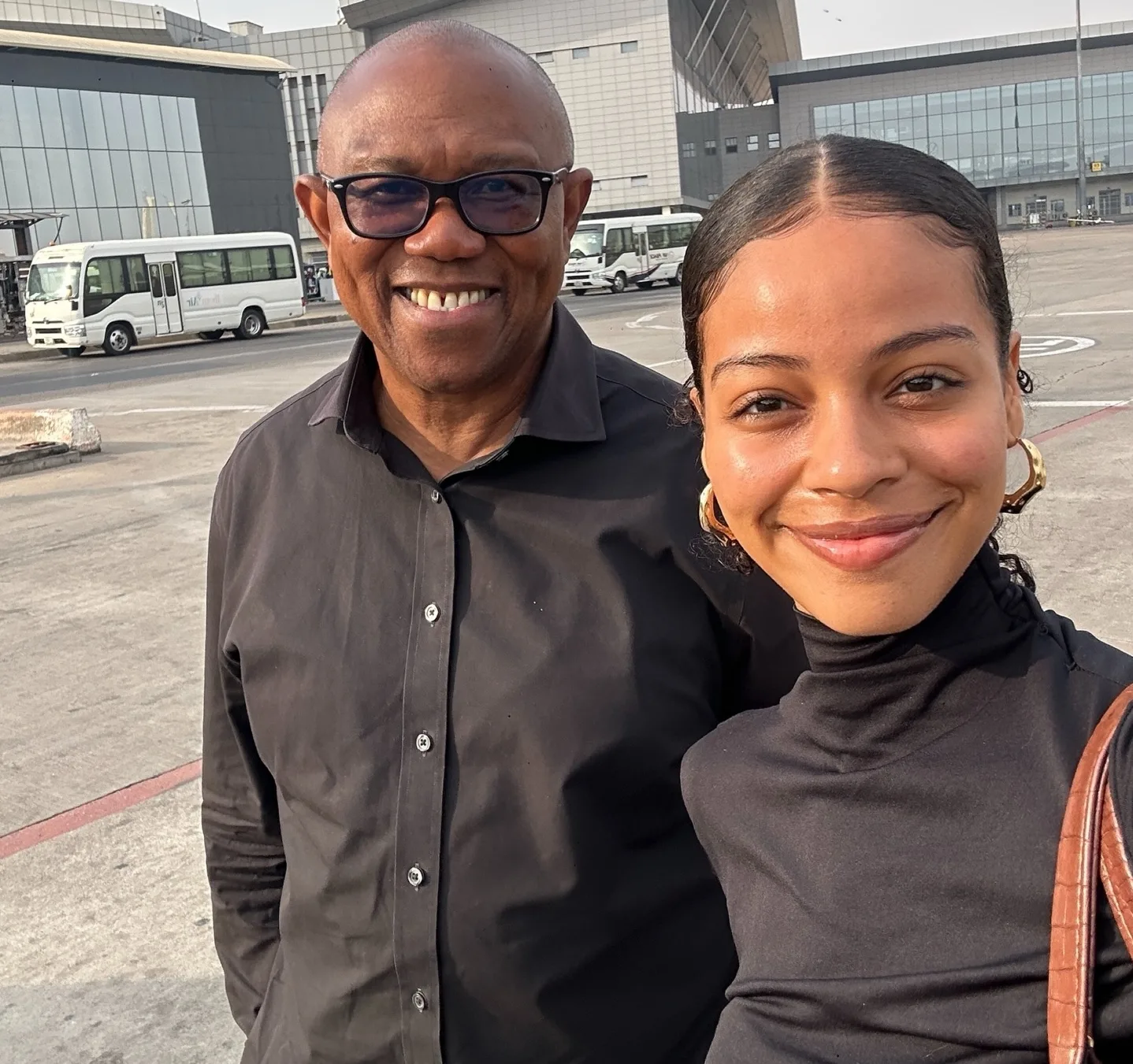
But manufactured coolness does not spread itself. It needs infrastructure, and in the run-up to 2027, that infrastructure is the influencer ecosystem: a loose but powerful network of content creators, skit makers, TikTok accounts, and Twitter personalities with hundreds of thousands of followers who have become the most effective distributors of political messaging to young Nigerians. Some are paid. Some are ideologically aligned. Many are both. And recruitment for the 2027 campaign has already started as content creator, Kevin Chinedu Arua, popularly known as Governor Amuneke, who was approached, revealed in an Instagram post on Wednesday, February 18.
And this is not new. Ahead of the 2023 election, a BBC investigation by its Global Disinformation Team revealed that political parties were secretly paying influencers to spread disinformation about opponents. Whistle-blowers described it as an industry, with influencers paid up to ₦20 million, offered government contracts, board appointments, and lavish gifts. Situation rooms monitored how disinformation performed in real time. One politician was unapologetic: “It is a game. Somebody had to win, and God help me, I will not be on the losing side.” That was 2023. The machinery has not disappeared. It has been upgraded.
Collectively, these influencers function as political gatekeepers, deciding which politicians get to be humanised and which remain stiff, out-of-touch relics. Gone are the days when a politician needed a newspaper cover or primetime TV slot to shape perception. Now they need the right influencer reel, the right meme edit, the right X thread. Access to young voters increasingly runs through these digital intermediaries, and smart campaigns are investing accordingly.
Alongside this sits another deliberate strategy: the performance of youth-coded identity and what social media would call “steeze.” That effortless coolness that can only be projected. When then vice-presidential candidate Kashim Shettima showed up to the Nigerian Bar Association (NBA) conference in a loose suit and gym sneakers, the internet erupted. He claimed it was a deliberate snub to a hostile group. Whether or not that was true, what followed was a TikTok trend — the #Shettimachallenge — in which young Nigerians mimicked his look and inadvertently made him cool. Bad publicity transformed into cultural capital. Just like that, a 55-year-old politician had steeze.
@beautyomen1
That moment revealed something important: you do not need to be young or relatable to be perceived as such. You need one moment, one image, one clip young people can remix. Memeability does the rest. Politicians have taken note. Styling choices, pop culture references, willingness to appear adjacent to viral content. None of this is accidental. It is youth-coding as political technology, signalling cultural fluency to an electorate increasingly measuring credibility in cultural rather than institutional terms.
There is another layer. Some AI-generated content — the dancing videos, absurd edits — function as political satire. By leaning into it, or at least not aggressively pushing back, politicians deploy a clever play: if you appear in on the joke, you seem self-aware. And to a generation raised on Internet culture, self-awareness reads as relatability.
This is particularly useful as a distraction tool. It is hard to hold a politician accountable when the dominant image in your feed is a funny, charming character dancing to your favourite song. TikTok edits humanise. The cumulative effect is a growing distance between politicians and their actual records. Over 300 Nigerians have been killed in February alone. The cost of living remains punishing. But your algorithm serves you a video of the president looking cool in Europe, rapping Central Cee. The cognitive dissonance is the point.
All of this matters more in 2027 than ever because the numbers demand it. Young people aged 18–35 made up 40 percent of Nigeria’s 93 million registered voters in 2023. Ahead of 2027, 69 percent of new voter registrations belong to young people. This is the demographic every serious campaign must win, or at least neutralise.
#CVR Update: Phase II, Week Six (as at 13th February 2026)
A total of 1,228,648 Nigerians have completed voter registration:
✓ 673,124 online pre-registration
✓ 555,524 physical completionGender:
✓ Female – 696,891 (57%)
✓ Male – 531,757 (43%)Age Group:
✓ Youth (18–34)… pic.twitter.com/A0SJTPhRVZ— INEC Nigeria (@inecnigeria) February 19, 2026
And this demographic does not consume politics the way their parents do. They are not watching rallies or reading newspapers. They are scrolling. They are in comment sections. They are forming opinions in real time, in response to content that entertains first and informs second.
Surely, 2027 will not be the first Nigerian election shaped by social media. But it may be the first where vibes are not just a byproduct of campaigning but a deliberately engineered campaign tool in their own right. The danger is not that politicians are chasing vibes. The danger is that voters might reward them for it.