



Tune in to listen
Bounce FM

Every day, the consequences of this faux rebranding show up on the streets.
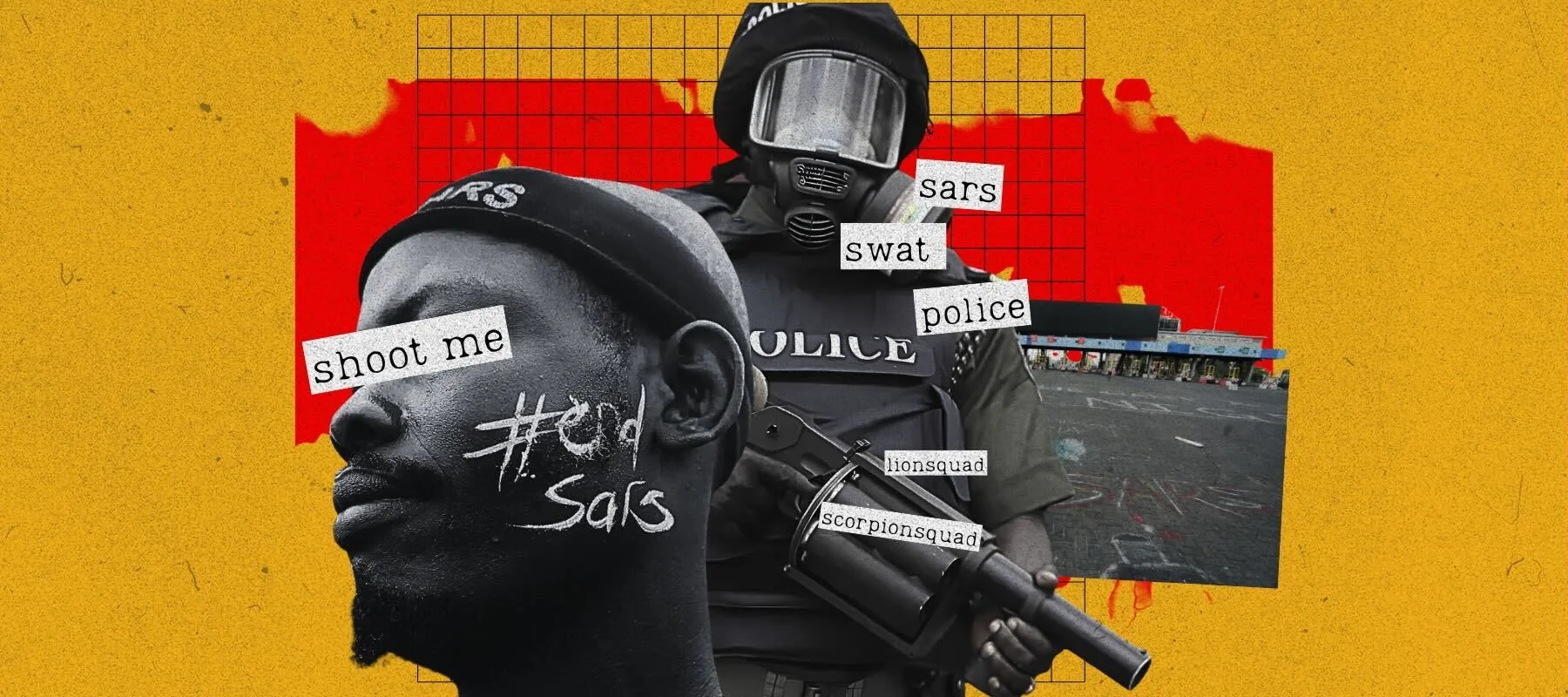
In October 2020, the Nigerian government disbanded the notorious Special Anti-Robbery Squad (SARS) and promised an end to police abuse after weeks of protests. Six years later, that promise remains unfulfilled. Nigerians are still subjected to frequent extortion, death threats, and police violence.
Today, October 20, 2026, marks the sixth anniversary of the day that came to define the government’s response to the #EndSARS protests. On October 20, 2020, Nigerian soldiers opened fire without warning on unarmed protesters at the Lekki Toll Gate in Lagos. The Nigerian Army claimed soldiers only fired into the air with blanks. blanks into the air. However, multiple media outlets verified videos of graphic injuries and bleeding people. More than a year later, the Lagos State Judicial Panel of Inquiry and Restitution stated on page 294 of its final report that the assault could in context be considered a “massacre.”
Whenever they say "where are their friends, where are their families", this is your answer!
PORTRAITS OF BLOOD (II): Names, Photos, Videos… How Lekki #EndSARS Protesters Were Massacred https://t.co/3fqaJBxBem
— 'Fisayo Soyombo (@fisayosoyombo) October 20, 2026
The nationwide protests were meant to herald genuine accountability. When Buhari announced the disbandment of SARS on October 11, 2020, protesters saw it for what it was; a mere nomenclature change. So, they continued to march. They issued a five-point demand that included emphasising the need for an independent body to prosecute police misconduct, alongside psychological evaluations and retraining for all disbanded SARS operatives before they could be redeployed.
At the time, the government offered sweeping public commitments. On October 13, 2020, then-Inspector-General of Police Mohammed Adamu announced that former SARS operatives would undergo medical and psychological examinations. Two days later, on October 15, the National Human Rights Commission (NHRC) agreed to establish an independent investigation panel. Eventually, several state governments, including Lagos and the Federal Capital Territory (FCT), set up judicial panels that recommended severe penalties for officers implicated in brutality and extrajudicial killings.
But there remains a glaring gap between the government’s announcements and actual accountability. To date, there is no public evidence that the promised psychological evaluations ever took place before the Nigeria Police Force quietly redistributed former SARS operatives into other tactical squads. Furthermore, despite the explicit recommendations made by the state judicial panels, there is no public record of the NPF holding implicated officers accountable or enforcing the recommended penalties.
The consequences of this failure show up on the streets daily. This month alone, the Police Complaint Response Unit (CRU) publicly responded to multiple cases of officers operating like armed robbers. On October 4, the unit had to step in after officers extorted ₦200,000 from a citizen simply for being on the road. Two days later, in Ekiti, officers threatened to “finish” a biker over “incomplete papers” after he refused to pay a ₦20,000 bribe.
Kindly inform the complainant to call us now on 08057000002 please.
— POLICE COMPLAINT (@PoliceNG_CRU) October 4, 2026
“If You’re Not Careful, We Will Finish You Here.” ~ Moment a Nigerian Police Officer Threatened a Biker In Ekiti Over His Refusal To Pay ₦20,000. 👀 pic.twitter.com/JlLHXx6Nko
— Somto Okonkwo (@General_Somto) October 6, 2026
Others have suffered a far worse fate. About six months ago, on April 26, 2026, Assistant Superintendent of Police (ASP) Nuhu Usman shot 28-year-old Mene Ogidi at close range while Ogidi was restrained. Ogidi was accused of illegal weapons possession, but that was no justification for a summary street execution. It was quintessential SARS brutality carried out by an officer bearing a different title. It then did not surprise many that barely ten days later, another young Nigerian, Aboy Odili, had been shot by an errant police officer.
This culture persists because the federal government continues to resist wholesale reform. Successive IGPs arrive with promises that lead nowhere. Current IGP Tunji Disu took office declaring that “the era of impunity is over.” On February 25, 2026, Disu told journalists: “I will ensure that I train them and encourage them to ensure they follow human rights. I will ensure that they know that I will try to follow a regime of zero tolerance to corruption.”
"My top priority is to let my men know citizens are the boss. I will take the welfare of my men into consideration because people who are motivated put in their best. My men will know impunity is over and there will be zero corruption." — acting IGP Tunji Disu
📹: Arise News pic.twitter.com/TIlAIel1EP
— TheCable (@thecableng) February 25, 2026
Yet, nine months later, his officers’ actions contradicted those promises on the very anniversary of the Lekki shooting. On Tuesday, October 20, 2026, police fired teargas at peaceful citizens holding a wreath-laying memorial for #EndSARS victims.
On Tuesday, October 20, 2026, police fired teargas at peaceful citizens holding a wreath-laying memorial for #EndSARS victims. Among those assaulted at the toll gate were Gbadebo Rhodes-Vivour, governorship candidate of the African Democratic Congress (ADC) in Lagos; Funso Doherty, gubernatorial candidate of the Nigeria Democratic Congress (NDC); along with journalists and everyday residents. As of the time of publishing, the police have offered no statement or explanation to justify the assault on civilians gathered peacefully to honor victims of police violence.
#Endsars Anniversary: Police Fire Tear Gas At Opposition, Activists, Journalists
A memorial gathering at the Lekki Toll Gate in Lagos has turned chaotic, as police fired tear gas at opposition politicians, activists and journalists marking the sixth anniversary of the #EndSARS… pic.twitter.com/iWXVHvd6Y3
— ARISE NEWS (@ARISEtv) October 20, 2026
The memorial incident proves once again that disbanding SARS was purely a cosmetic exercise. When the government gets serious, it will carry out a deep-clean of the force, dismiss irreformable personnel, and finally enforce the 2020 panel recommendations. True reform also means paying decent wages and overhauling decrepit barracks so officers themselves are treated with dignity.