


Tune in to listen
Bounce FM

Beyond the fervour around Traoré’s messianic appeal, what do Africa’s history of coups and current realities signal about the future of his junta?
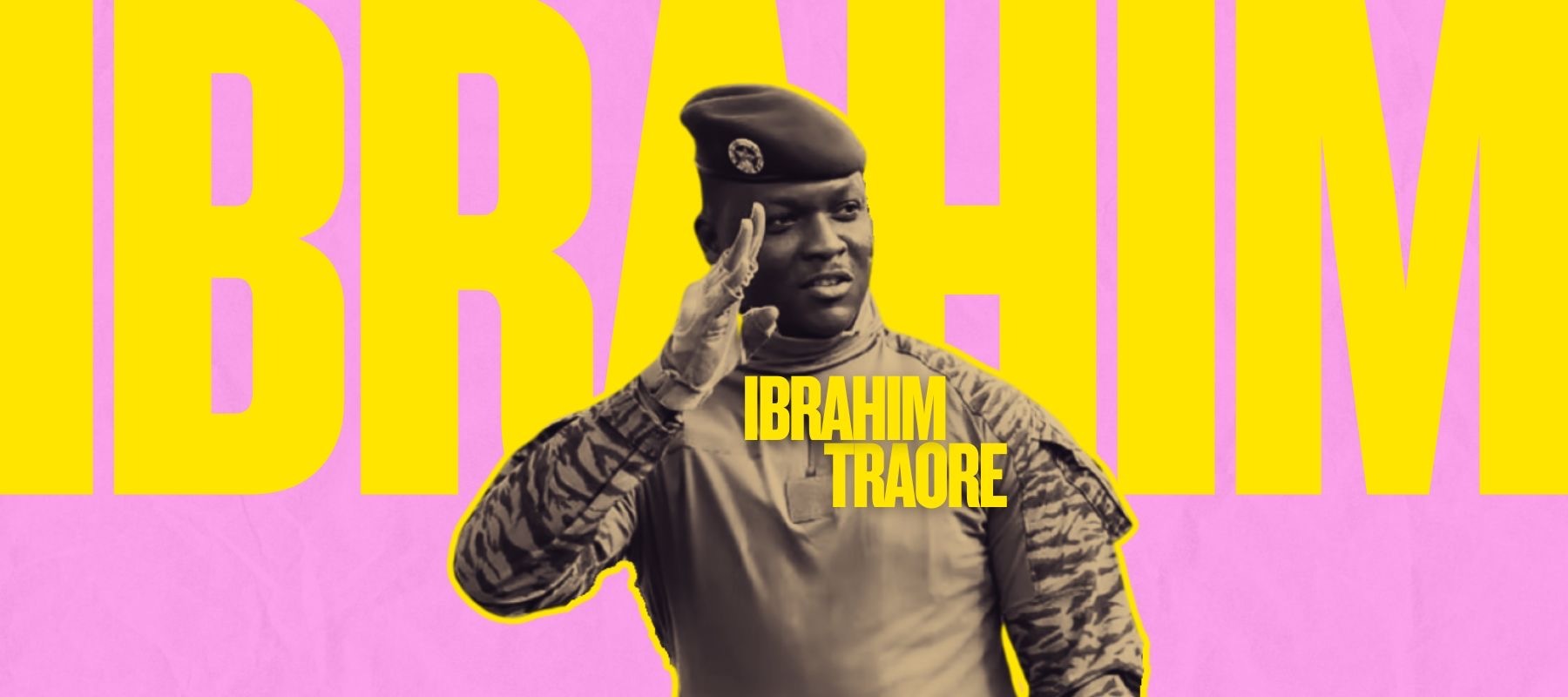
Burkina Faso’s president, Captain Ibrahim Traoré, has become a subject of admiration and reverence from citizens at home and across Africa for various and often contrasting reasons. Since he was declared as transitional president in October 2022 after leading the coup d’état that ousted Lieutenant-Colonel Paul Henri Damiba, the same man he helped install months earlier, Traoré ’s ascent has come to represent more than another of Africa’s ritual military takeovers for many of his supporters who sees a generational revolt that’s long overdue on the continent.
Proxily addressing a weary Burkinabè public that had just witnessed its second coup in nine months, the then 34-year-old Traoré had to punch above his weight to prove he was worthy despite his scant résumé. At the time the world’s youngest leader, he was not merely stepping forward as the face of new leadership but as a glimmer of hope for a former French colony buckling under insurgency, economic meltdown and all-around despair. He justified the ousting of Damiba, who was seven years his senior and two ranks above him in the military chain of command, as a necessary last resort after repeated failed efforts to get him to confront the country’s deepening security crisis.
If his promises of security, economic turnaround and a break from insidious neocolonial dependence were not convincing enough, some of his subsequent actions have done the job. The putschist leader has nationalised two gold mines formerly owned by London-based firms and began constructing the country’s first gold refineries and reserves. These moves aimed to consolidate control over natural resources in a country where over 60 percent of the population languishes in abject poverty, and they have been pivotal to raising domestic revenue since he took control of the country. According to a report by the World Bank, despite higher inflation in the West African country, there’s a 1.8 percent drop in the extreme poverty rate, which fell to 24.9 percent. The fiscal deficit improved from 6.5 percent of GDP in 2023 to 5.6 percent in 2024, thanks to reduced expenditures and strong revenue mobilisation.
Perhaps his most resounding gesture internationally has been the severance of ties with France at a time when some of Africa’s biggest nations like Nigeria continue to align themselves with the former colonial power, widely accused of undue influence on the continent and even linked to the deaths of at least 22 African presidents since 1963, including Burkina Faso’s own Thomas Sankara.
Traoré’s image is further amplified by his charismatic presence and a carefully crafted pan-Africanist persona, much of which is driven by overzealous supporters. From PR-friendly football matches with African legends to deepfakes of global celebrities like R Kelly, Justin Bieber and Beyoncé supposedly endorsing him, alongside a series of recurring foiled coup attempts whose seriousness remains doubtful, his public perception carries some weight. These add to an almost mythic aura to his growing comparison with Sankara, the iconic Burkinabè revolutionary who also rose to power in his early thirties through a coup and whose legacy endures decades after his assassination. For a country with a median age of just 17.7 years, and a continent increasingly dissatisfied with democracy, Traoré’s position as Africa’s most popular, if not favourite, president seems nearly cemented as things stand.
This is not unexpected since some African leaders have been valorised for far less and often under less encouraging circumstances. But beneath the fervour surrounding Traoré’s messianic appeal and the model leader he’s come to represent for some Africans, what has been different three years after he took control of Burkina Faso, especially with his tenure now extended until 2029?
To understand better is to juggle our perceptions of coups in their holistic meanings and intentions, as well as the continent’s long-standing dance with military takeovers and what the figure of Traoré has come to represent since he took over power in Burkina Faso.
Military coups in Africa have historically been a reactionary resort to correct systems gone wrong, economic decline, autocracy, or a cocktail of other destabilising challenges, often perpetuated by elected state leaders or military personnel who did little to change the very structure they set out to upend. Despite the popular local justification for some of these takeovers, foreign influence has also played a substantial role in coups across the continent, often to advance Western interests long after supposedly granting independence. There are claims that the US Central Intelligence Agency (CIA) oversaw the overthrow of Ghana’s Kwame Nkrumah in 1966, given his perceived threat to their geopolitical interests. France has also been accused of exploiting its former colonies, interfering politically while aligning with leaders who orchestrate constitutional coups to extend their tenures or preside over failing democracies.
Whether masterminded abroad or from within, Africa has seen no fewer than 200 military takeover attempts between the 1960s and 2012. Though there was a lull in the years that followed, coups have resurged since 2020, with over 10 attempts recorded in West and Central Africa. Francophone countries like Guinea-Bissau, Mali, Niger, and Burkina Faso are leading this wave. The root of instability in these former French colonies largely stems from alleged interference by France, accused of exploiting natural resources and propping up democratic leaders who are either engineering constitutional coups to prolong their stay or grossly displaying incompetence. These conditions have made some of these coups populist projects, or at least having the appearance of popular support, with citizens increasingly welcoming the idea of putschist leaders since democratically elected ones are failing them.
Due to underdeveloped governance structures and weak institutions that do little to resolve national challenges or protect against authoritarian drift, military takeovers have thrived in these fragile states. Unlike countries like South Africa with formidable institutions for resisting autocracy or swiftly transitioning back to democracy, coups in parts of West and Central Africa expose the absence of such protections. And in that void, leaders like Ibrahim Traoré find their stage.
July 2024 was supposed to mark Burkina Faso’s return to civilian government, per Traoré’s pledge to have tackled the country’s insurgency within two to three months and restore civilian rule within 21 months. However, what followed at the culmination of his first stint was an extension of his military administration for another five years, which was justified by the same unresolved insecurity that originally inspired his takeover. It was also noted that if the security situation improved, a transitional election could be held earlier, though Traoré would maintain the right to contest.
This is an all too familiar playbook, and it now buckles to a growing trend. Other junta leaders such as Mali’s Colonel Assimi Goïta and Niger’s General Abdourahmane Tchiani have also extended their transitional timelines by five years in 2024 and 2025 respectively after seizing power under the similar justification to their Burkina Faso’s brother. In the aftermath, these regimes collectively severed ties with ECOWAS and formed the Alliance of Sahel States, a tripartite bloc focused on combating the insurgency crisis in the region.
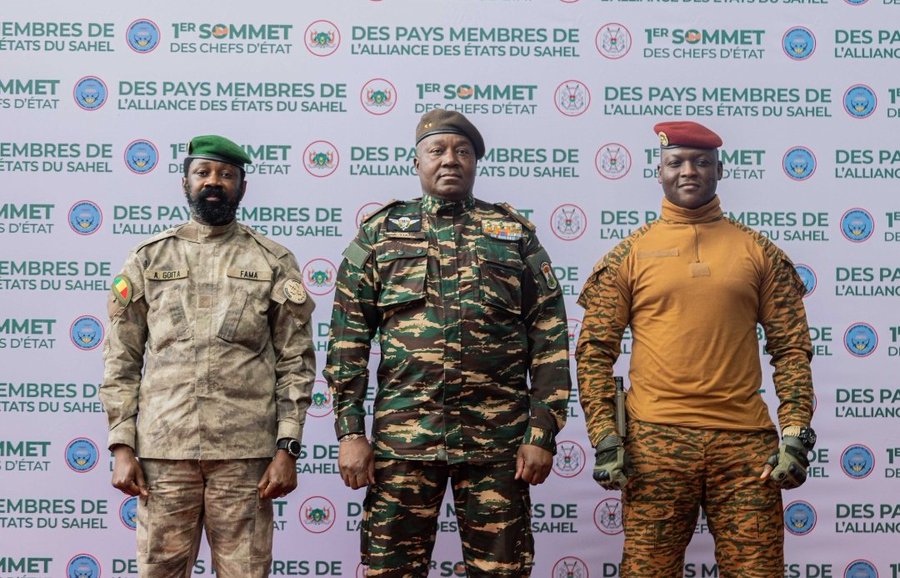
Despite the alliances between these putschist leaders, they have done little to improve the situations they based their mandates on. According to the Global Terrorism Index (GTI), Burkina Faso is currently the country most impacted by terrorism worldwide. Its Sahelian allies Mali and Niger follow closely in fourth and fifth positions respectively.
Beyond the army’s inability to reclaim control, there are also disturbing reports of human rights abuses and widespread military brutality. A damning report from Human Rights Watch (HRW) reveals that over 130 ethnic Fulani civilians were killed by Burkinabe forces in the Boucle du Mouhoun region in May 2025. Earlier in April, more than 200 villagers, including 56 children, were massacred in two villages, allegedly as part of a military campaign targeting civilians accused of collaborating with Islamist militants.
The media have also been under siege under Traoré’s leadership. Several media, particularly foreign outlets, have been temporarily suspended or indefinitely banned from serving the region, often over their reporting on the civilian massacres, in what the government deemed as “discrediting the army.” There have also been alleged cases of journalists disappearing and ultimately being forcibly conscripted under a controversial general mobilisation decree signed into law in 2023.
All of these haven’t escaped scrutiny, especially from international bodies, with the latest coming in April when the commander of U.S. Africa Command, General Michael Langley, accused Traoré of misusing Burkina Faso’s gold reserves to strengthen his grip on power rather than to benefit the population. While the accusation and a subsequent announcement of another foiled coup attempt against Traoré sparked a pro-government rally in the capital, Ouagadougou, Traoré’s next public statement only heightened concerns about his intentions.
Speaking at a flag-raising ceremony at the Koulouba Palace, he said: “If we have to say it loud and clear here, we are not in a democracy, we are in a popular, progressive revolution.” He questioned the role of free expression, suggesting that it leads to “a society of disorder,” and argued that “it is impossible to name a country that has developed in democracy.”
If Traoré’s words are to be taken at face value, they reflect a long-standing flaw among many pseudo-revolutionary figures on the continent: an obstinate hold on power they neither won democratically nor wielded with enough competence to warrant continuation. Traoré and his Sahel junta peers appear to be treading the familiar path of African strongmen who seized power with promises of reform only to resist all forms of transition while descending into ideological bankruptcy. Equatorial Guinea’s Teodoro Obiang Nguema Mbasogo, Uganda’s Yoweri Museveni and the late Robert Mugabe of Zimbabwe are archetypes of Africa’s longest-serving rulers who usurped power and held it for decades at the detriment of the citizenry.
Essentially, with the current movement, while there have been some arguably positive moves under Traoré’s watch, there have also been disturbing patterns: less popular, yet no less significant. And given the trajectory he and his counterparts seem to be charting, perhaps it’s high time these movements were recognised for what they are: the collapse of democracy, which is often the citizenry’s best shot at representation, flawed as it is. The trio could still course-correct, but with no clear timelines, no institutional checks, and a citizenry still caught in idolisation at a critical juncture, neither they nor the continent stand to benefit in the long run.