


Tune in to listen
Bounce FM

Because power is economic, social, psychological, and institutional, an abuser often leverages these different forms to maintain dominance.
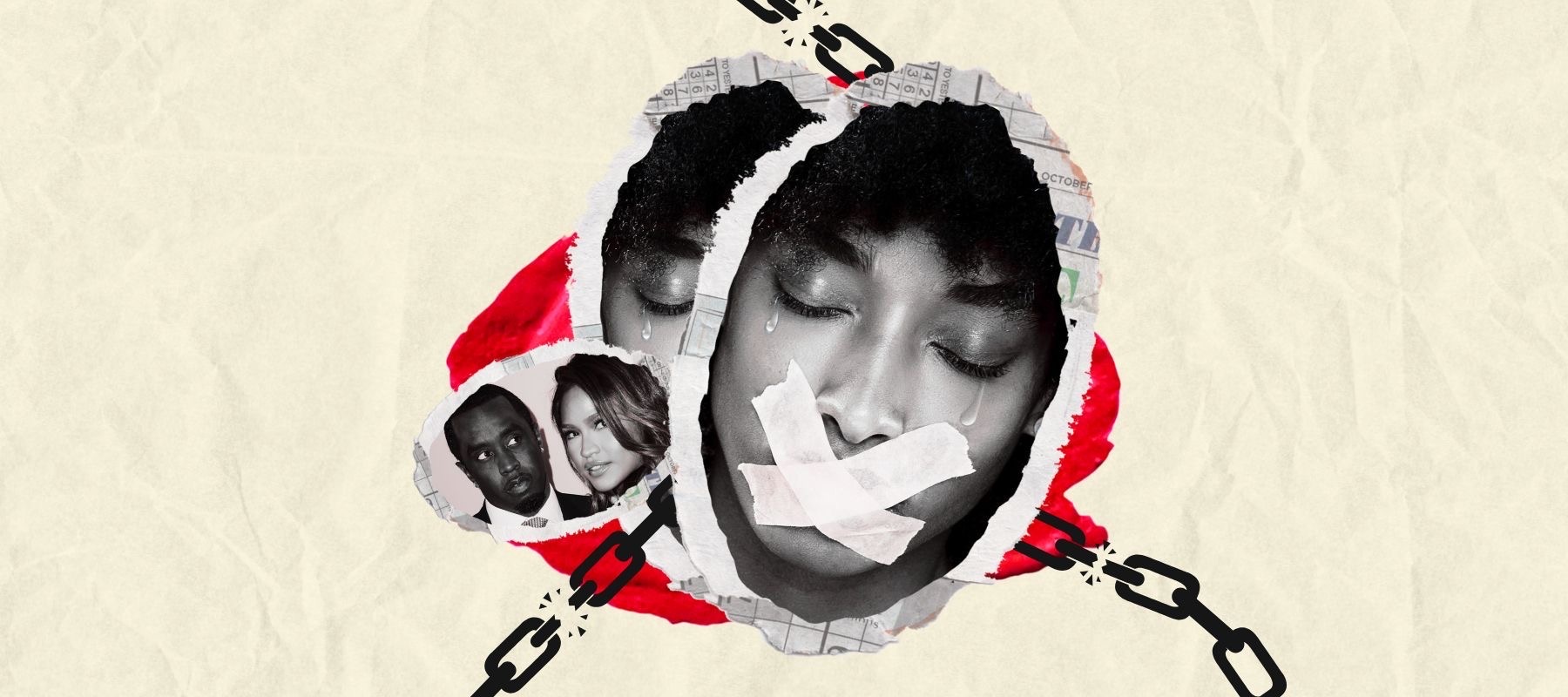
There’s a global conversation right now as Sean “Diddy” Combs stands trial in Manhattan for serious federal charges, including sex trafficking and racketeering. This comes after multiple lawsuits where plaintiffs allege that he exploited his position to drug, assault, rape, intimidate, and silence them.
Cassie Ventura, particularly, shared gut-wrenching details of years of violence, control, and manipulation. In response, Diddy’s team is admitting to some abuse but calling it “mutual violence.”
View this post on Instagram
We’ve seen this tactic before. It’s the same playbook Johnny Depp used in the Depp-Heard case, where he reframed his abuse against Amber Heard as a two-sided conflict to dodge accountability. But “mutual abuse” isn’t a thing.
Prolonged abuse in intimate relationships usually involves a pattern of deliberately harmful behaviour used to exert control over another person. At the core of abuse is an imbalance of power. Because power is economic, social, psychological, and institutional, an abuser often leverages these different forms to maintain dominance. This can take many forms. Physical and verbal abuse are often visible and easier to recognise. However, psychological, emotional, and financial abuse are harder to detect. These forms of control often take place behind closed doors and operate gradually, eroding a person’s independence, self-worth, and sense of safety over time. It is also important to draw a clear distinction between conflict and abuse. Conflict is a normal part of relationships and can occur between people with equal footing. Abuse, on the other hand, is a strategy of control. It is repeated, intentional, and designed to diminish the other person’s autonomy. Mutual abuse, then, cannot exist because it is impossible for two people in an abusive relationship to have exactly the same amount of power.
Patriarchy, as bell hooks defined, is a political-social system that insists males are inherently superior, and it supports the domination and control of women. Within this framework, the idea that two people can wield equal power in a relationship — especially when one is male and one is female — is, at best, naïve and, at worst, a deliberate erasure of systemic oppression. One partner may hold financial control, greater physical strength, or more social credibility. That person uses their power to dominate, manipulate, or punish. The other person may act out in fear, desperation, or self-defence, but that is not the same as initiating control. A single outburst does not compare to a pattern of sustained manipulation or harm. A survivor’s reaction does not make them a perpetrator. It does not help that women are also often expected to respond to abuse in very narrow ways. If they remain quiet, they are asked why they stayed. If they speak up or show anger, they are called unstable or aggressive. If they retaliate, they are labelled violent. The range of “acceptable” victim behaviour is so limited that many women are disbelieved simply for surviving in ‘imperfect’ ways.
In many African societies, structural inequality makes the power imbalance even more pronounced. Cultural expectations often pressure individuals to remain in harmful relationships for the sake of family unity, financial dependence, or community reputation. In such environments, a woman’s reactive behaviors may be interpreted through a patriarchal lens as defiance or provocation, further justifying the man’s abuse.
In relationships involving public figures, the myth becomes even more effective. Powerful men have always been protected by networks of influence, wealth, and public goodwill. With their wealth and status, they are able to shape narratives quickly, most times painting themselves as victims of unstable or vindictive women. In November 2023, when Casandra Ventura (Cassie) sued Sean “Diddy” Combs, her lawsuit detailed rape, beatings, trafficking, and manipulation stretching over more than a decade. She was 19 when their relationship began. He was nearly twice her age (37) and one of the most powerful figures in American music. The detailed accounts of orchestrated sexual encounters, physical assaults “too many to count,” and systematic control over her life and career expose a relationship defined by a severe power imbalance. Arguments that might arise suggesting any “mutuality” in this context ignore the coercive environment, the alleged trafficking elements, and the sheer disparity in age, experience, and power between Combs and Ventura. His position as her label head, mentor figure, and partner provided him with levers of control that she simply did not possess over him.
The age gap, career disparity, and racialised gender dynamics were all part of the ecosystem that enabled the abuse. Cassie’s youth, economic vulnerability, and professional dependence on Combs made her very susceptible to Diddy’s control. Considering this reveals just how nonsensical the “mutual abuse” label is. Abuse is not a fair fight. It is not a relationship where both parties contribute equally to unhealthy dynamics. It is a deliberate imposition of one person’s will and control over another, often through violence, threats, and manipulation. This is not denying that women can commit violence or that relationships can become harmful on both sides. But those instances are rare, and they must be understood within a broader frame. Violence cannot be separated from the power that structures it. Who can easily leave? Who is readily believed? Who holds the primary power in the relationship? Does the harm escalate or de-escalate the threat for the person causing it? Who has something/more to lose? These are the questions that determine whether harm is about survival or control.