



Tune in to listen
Bounce FM

For millions in Sudan and Congo, war has been here. The genocide in Sudan, particularly, has created one of the most urgent humanitarian disasters of our time.
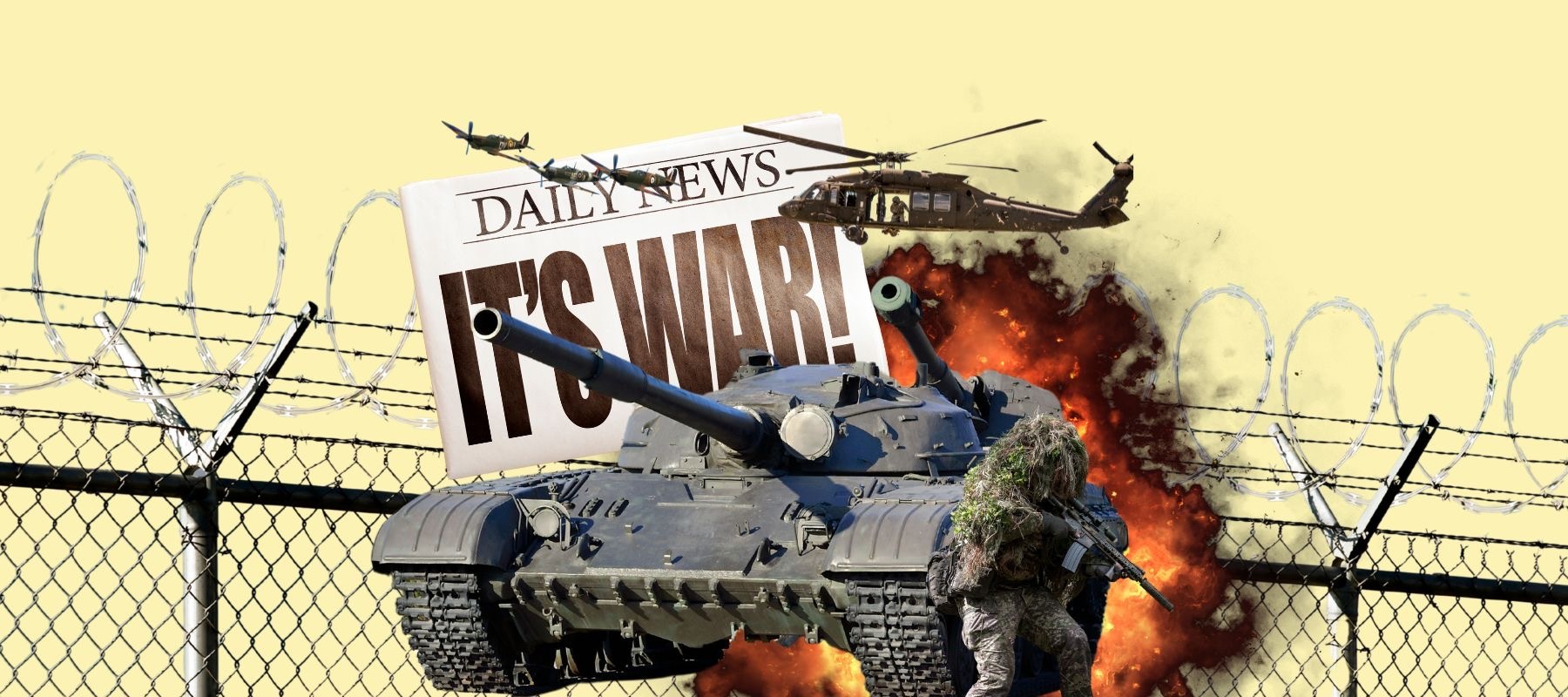
In June 2025, U.S. President Donald Trump ordered military strikes on three Iranian nuclear sites: Natanz, Isfahan, and Fordow. These bombings were a major turning point in the Israel–Iran crisis, which had been escalating since Hamas’ October 2023 attack on Israel. That incident triggered Israel’s overwhelming retaliation on Gaza and set off a chain reaction: airstrikes on Lebanon, attacks on Iranian proxies in Syria, and finally, the U.S. stepping in with bombs designed to collapse underground bunkers.
— Donald J. Trump (@realDonaldTrump) June 21, 2025
The United States has historically been Israel’s closest and most steadfast ally, a partnership rooted in shared values, strategic interests, and robust diplomatic and economic ties. This alliance is visibly manifested in the substantial financial and military aid that flows from Washington to Jerusalem. As part of a 2016 agreement, the U.S. committed to providing Israel with $3.8 billion annually in military aid from 2019 to 2028. However, in the year following the October 2023 attacks, an additional $17.9 billion in military aid was provided, the highest annual total ever, including significant funds for missile defense and replenishing arms. In Fiscal Year 2023, Israel was a top recipient of US foreign aid, receiving billions of dollars, overwhelmingly dedicated to its military. These funds are used to maintain the occupation of Palestinian land, enforce the blockade of Gaza, and suppress Palestinian resistance. Checkpoints fragment the West Bank, entire neighborhoods in East Jerusalem are demolished, and Gaza remains an open-air prison continually bombed and blockaded. Palestinians face arbitrary detention, restrictions on movement, administrative law courts, and denial of basic rights. Meanwhile, the U.S. shields Israel diplomatically, vetoing numerous United Nations resolutions condemning its actions.
While billions are poured into Israel’s war machine, America’s aid to African nations facing humanitarian crises is a fraction of that total. The Democratic Republic of Congo, locked in cycles of violence largely fueled by external interference and global demand for its mineral wealth, receives a pittance in humanitarian aid by comarison. In 2023 alone, Congo’s humanitarian needs exceeded $2 billion. In 2024, sub-Saharan Africa received $12.7 billion from USAID, but under the Trump administration, over 34% of these funds ($4.3 billion) were abruptly cut, halting more than 5,300 development projects across the continent including health, education, gender equality, and governance initiatives. Essential malaria prevention programs risk nearly half of the $800 million PMI budget, potentially bringing an extra 13 million cases and over 100,000 deaths in 2025 HIV-prevention efforts saw a 90-day freeze, jeopardizing PrEP access for over 6 million Africans, a move that could lead to thousands of new daily infections. Meanwhile, food rations in Kenya’s Kakuma refugee camp were halved due to slashed U.S. funding.
Both the United States and Israel are imperial actors and their footprints are global. First, Israel’s occupation of Palestine is a system of apartheid, upheld through illegal settlements, mass surveillance, checkpoints, and targeted bombings. Second, the U.S. controls the largest military footprint in Africa through AFRICOM, where over 29 bases operate across the continent for safeguarding Western access to oil, cobalt, and shipping routes. Third, Israel armed apartheid South Africa long after the rest of the world imposed sanctions, showing its willingness to stand with racial violence if it aligns with its interests. Africa has always been seen as a place to stabilize just enough to extract resources, never enough to allow full self-determination. Even Egypt, one of Africa’s largest and most militarily powerful nations, is forced into complicity with Israel’s brutal siege of Gaza. Why? Because Egypt receives over $1 billion annually in American military aid, much of it tied to its willingness to help enforce Israel’s interests on its borders, including controlling the flow of Palestinian refugees. Morocco, Sudan, Chad, and Uganda, all have been pushed, bribed, or threatened into normalizing relations with Israel through a combination of debt forgiveness, arms deals, or access to American markets.
African leaders have responded to the U.S.–Israel airstrikes. South Africa, part of BRICS, formally condemned attacks on Iran’s nuclear installations as violations of international law and demanded de-escalation. President Cyril Ramaphosa and Foreign Minister Naledi Pandor also denounced Israel’s military actions in Gaza, comparing them to apartheid-era crimes and pushing for humanitarian relief and justice at the ICJ. Sudan and Mauritania issued explicit condemnations of Israel’s bombardments, with Mauritania seeing public protests outside the U.S. embassy. The African Union called for maximum restraint and a return to diplomacy amid escalating violence. Other nations find themselves walking a tightrope. Nigeria, Kenya, and Benin have issued restrained statements that urge de-escalation while stopping short of explicit condemnation. Many of these governments depend on international aid and diplomatic relationships with the U.S. or Israel. Meanwhile, countries with closer financial or security ties to Israel, such as Morocco, Rwanda, Côte d’Ivoire, Cameroon, Kenya, and Ethiopia, have largely remained silent.
Then there is the broader question raised by Western commentary: Are we on the brink of World War III? With Trump’s Iran bombings, speculation has swirled that all-out war is imminent. But for millions of Africans, war has been here. In Sudan, the war between the Sudanese Armed Forces and the Rapid Support Forces has created one of the most urgent humanitarian disasters of our time. Since April 2023, more than 150,000 people have been killed. Over 12 million have been displaced, and more than 30 million are in need of humanitarian assistance, including 16 million children. Entire communities, especially in Darfur, have been subjected to systematic ethnic cleansing. The Masalit people, in particular, have been targeted, massacred in broad daylight. The UN estimates that between 10,000 and 15,000 were killed in El Geneina alone, in what they are now unequivocally calling genocide.
In the Democratic Republic of Congo, the numbers are even more heartbreaking. Since the late 1990s, over 6 million people have died in a grinding conflict driven by a lethal mix of foreign interference, resource extraction, and ethnic militias. In the first months of 2025 alone, more than 7,000 have been killed, with nearly half a million newly displaced. In Ituri and North Kivu, armed groups continue to terrorize civilians, burning villages, abducting children, raping women, and looting health centers. These are genocides, prolonged by global indifference and the structural violence of extractive politics. The people living through them don’t have the luxury of waiting for a “world war” to be declared. Their world is already at war. Weapons of mass destruction in Israel or Iran may raise alarms in Western capitals only when they threaten their interests. African genocide, by contrast, fails to penetrate that global calculation unless it affects supply chains, migration patterns, or resource access.