


Tune in to listen
Bounce FM

Kunmie speaks about the run that has defined his career so far, the influences behind his sound, the experiences influencing his artistry and much more.
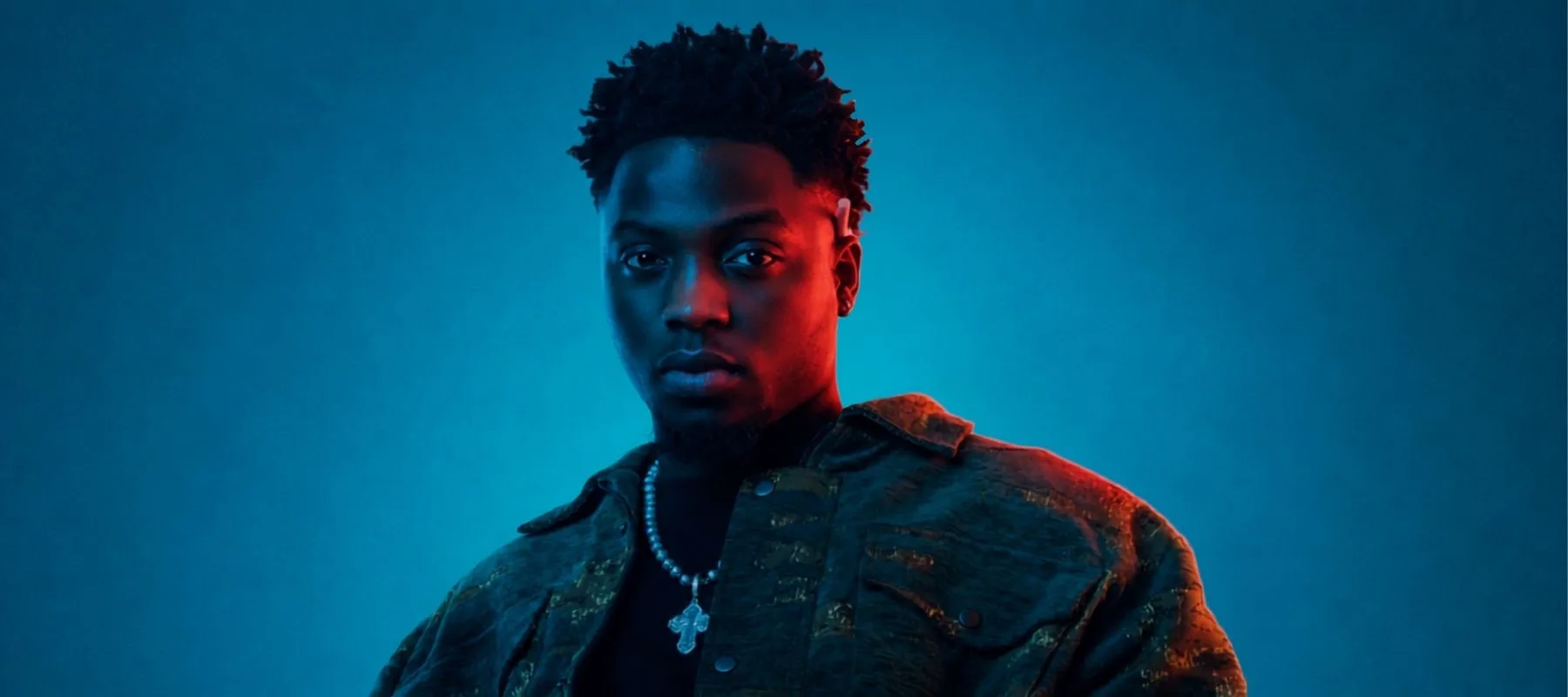
Kunmie is a believer: in his art, his craft, his ability, and his gut. That conviction has been at the heart of his rise since his breakout moment last February with “Arike,” a viral soulful track that struck chords globally and locally, earning widespread acclaim. Over a year later, he has delivered another contender for song of the summer, “Gorgeous,’’ this time with Grammy-nominated artist Lojay.
Kunmie (born Oluwabukunmi Ariyibi) may still be relatively new on the block. Still, he commands undeniable mastery of his artistry, wielding his silky vocals and melancholic warmth to create a unique sound that draws inspiration from a sundry of influences, including Afrobeats, R&B, and contemporary African pop music. The fusion of these elements was on full display in his latest rendition with Lojay, which has garnered over 10 million global streams. It’s a complementary reflection of the stellar sophomore year he’s having in the mainstream following the release of “Solace,” “Solace II” with Joeboy, “Julie,” and “Confession” earlier in the year.
“I don’t make songs to achieve something numbers-wise,” the Lagos-born and bred artist tells BSide during a recent virtual call. “I write them because they’re good. I’m a huge fan of my work, so I make music that I’d like to listen to.”
With his debut EP, Before We Became Strangers, that much was evident. Anchored by “Arike” and featuring standouts such as “Majekaja” and “I Admit,” the project introduced an artist with a clear sense of self and the world around him. However, the weight of expectations, as well as the pressure to maintain the momentum he has gathered, inevitably lurks. But Kunmie isn’t giving much away, at least not until his debut full-length project.
“There’s a song on my [forthcoming] album that literally talks about it, but you just have to wait,” he says with an unequivocal conviction. “You have to wait to listen to the album. You’ll understand perfectly the headspace that I was in, and you’ll understand how I came out of that.”
For now, he opens up about the run that has defined his career so far, the influences behind his sound, the experiences influencing his artistry and much more.
This interview has been slightly edited for clarity.
It’s been over two months since you released “Gorgeous” and it’s still doing quite well. What was the goal you had in mind when making the song, and has it achieved that so far?
The entire purpose of that song was built around my experience. I made the music because I saw somebody who constantly doubted how they looked in the mirror, and I just wanted to make a song that felt like a confidence boost. It’s not every day you’re going to feel sexy, so it’s almost like a reminder that, regardless of the imperfections you might be struggling with, there’s still that innate confidence that you’re gorgeous.
I kind of just made that song, and I became more aware of what it could do in terms of impact after we were done making it. I wasn’t really thinking about anything when I was making the song. I just wanted to make a good song. But when I was done and I shared it with some people, I saw how it made them feel, and I just wanted to share that with the world.
How has the audience’s reaction surprised you so far?
I wouldn’t say it surprised me. It’s almost like when you see the fruition of what you worked towards. It’s always nice because I get regular DMs from people telling me how much the song boosts their confidence, how it makes them feel sexy on a random day, or how it’s helped them feel more comfortable in their own skin despite struggling with a body disorder or thereabouts.
Messages like that will always mean more to me than even numbers because that’s a real-life impact. People will not forget how you made them feel. So, I won’t say it surprised me, but it’s just been a good feeling to know that people listen to the songs and feel that way.
Lojay’s delivery on the record is natural. How did that collaboration come together, and what convinced you he was the right artist for the song?
I don’t think there was any meeting I had with my team or any serious thought process as to sending the song to Lojay. I was introduced to Lojay by Kizz Daniel. They were both on the call, then Kizz added me to the call and mentioned how Lojay and I reminded him of himself, and that he would love for us to make music together.
I linked up with Lojay the next day at an event, and we just talked about making music. I told him that when I have an idea, I’d send him something. Then I recorded “Gorgeous” and sent it to him. Funnily enough, before I did, I’d already sent him one he initially liked. But “Gorgeous” came and he decided to go with that instead.
Oh, brilliant. Your collaborator choices have always been on point. Before Lojay, you did it with Simi and Mabel on the “Arike” remix, and Joeboy on “Solace II,” and they all delivered. What’s your philosophy when deciding whom to share a record with?
I think, first of all, one thing is that I don’t overthink it. I think that’s one thing my album shows. I always try to bring them into my world. It’s not like we’re just catching a specific vibe. I probably caught something, and I’m just trying to let them know, “This is the vision that I have. If you do this and this and this, I think it will be crazy.”
The people that I work with are willing to rub minds with me because I think that’s what collaboration is about. It’s just two creatives coming together to make art. It’s like two painters painting on the same wall. Nobody’s trying to outshine the other.
If it requires me to just say two lines, and that’s what the song requires, I would go and do those two lines. If it requires me to sing for a long period of time, I would do that too. I think it’s just about that seamless need to put the art first and put ego aside. That’s why, whenever I collaborate, I’ve always found a way to make it make a lot of sense.
View this post on Instagram
“Arike” was your breakout track and one of last year’s biggest songs. Did it pressure you in any way?
To be honest, I’ve spoken about it, but there’s a song on my album that literally talks about it, so you just have to wait and listen to the album. You’ll understand perfectly the headspace that I was in and how I came out of it. I know it sounds weird, and I know it doesn’t sound artistic or professional, but I don’t care about numbers. It’s hypocritical to say, but when I say I don’t care about numbers, it’s because, first of all, I realise that numbers and success don’t come outrightly from you as an artist. It also comes from God being kind to you.
It’s not like I think “Arike” is my best song. I don’t think it was the best writing or anything like that. I just think it aligned, and there’ll be so many more moments like that. I’ve never in my life tried to recreate “Arike.” That’s why, if you listen to “Arike” and then listen to my other songs, they might be the same genre, but you can’t see a replication of techniques.
I know for a fact that there will be so many more moments like that; I just have to focus on making the art very good, and I leave the rest to God. I just throw it out there, and whatever happens, happens. I don’t try to replicate any good thing.
If you say you’re not big on numbers, what are those things you’re big on, essentially, with your music?
When I say I’m not big on numbers, don’t get me wrong. Success is great; I’m not going to talk down on success. Every good thing I have right now, how my family is proud and all that, still comes from the success.
But for me, when I’m creating music and thinking about the songs that I write, I don’t make them trying to achieve something numbers-wise. I write them because they’re good. I’m a huge fan of my work, so I make music that I’d like to listen to.”
I feel like my taste is very high, and I’m somewhat of a perfectionist. I feel like if I make the music really good, the average person should also be able to perceive it as really good.
As long as I know in my heart that what I’ve done is very good, that’s enough for me. I think what I pursue more is how I can take my art to a better level. How can I increase the level? I want to be able to compare myself with the best artists in the world. I want to be able to put my art right beside theirs, and it wouldn’t feel like there’s so much difference in quality.
That’s what I care about. I don’t really care about, “Is it number one?” If that happens, that’s cool. But even when “Arike” was number one, I don’t think I felt anything crazy. It was just nice. It was genuinely just nice. I think for me, impact is what matters. When people come to you and tell you, “The reason I listen to your music is because I lost my mum, and the only song that gives me comfort is ‘Solace,'” that’s enough. I don’t know how to expatiate on that, but that, for me, is gold.
I know what it’s like to be in that position. If I met the artist whose music comforted me during that time, I know how I would hug them. I know how I would feel. So I relate to how people feel when they meet me in person. That’s what I care about the most.
How does this ideology fit with your team, so to speak?
I think, to some degree, quite well. But when I say I don’t care about these things, people think I have no idea what’s going on or that I don’t consider them. I do consider them because, at the end of the day, it’s art that is being marketed.
I understand that. That’s why sometimes I make compromises. But I think they let me have a lot of creative control. They don’t come to my sessions telling me, “Do the beat like this,” or, “Use this producer.” No. I do everything. Even the way I arrange my songs and my album, I did it myself.
It’s just for them to listen to it and say, “Okay, this is what I think. I think you can do this better. I think you can do that better.” I have that creative freedom, and at the end of the day, they understand what we’re trying to do.
A lot of the time, when everything makes sense, people are like, “Okay, you’re not crazy.” But I’ve just been very particular about making sure that my music is so ridiculously incredible. That’s what I care about. I really want to make it so that, trust me, I think the album will do that. I think people will understand that, “Oh, this guy is crazy.” I feel like that’s what the album will do because it will show range and how much intentionality I put into my craft.
I’m already thinking about the next one after this. I mean, just after this one. All I do with my life is make music, man. I don’t really do any other things.
Let’s talk about your soulful sound. What’s that connection between your music and your life?
My music is more about moments in my life. I’d say it’s more of my way of documenting my life. I remember exactly what was going on with me and around me when I was making all of my tracks.
With “Solace,” for instance, I was in the tiny room I used to live in when I had just moved to the Island. I remember how congested it was and how fast things were moving. I wanted to find solace, and there you have the track. So, I’d say it’s a way for me to document my days.
Do you think there are things that people, more specifically the Nigerian audience, misunderstand about you or your music?
Ah, yes o. And I think I understand it. As I say to my friends, it takes a lot more songs for people to truly understand an artist. For instance, when people listen to “Solace” and tell me it’s a love song, it’s very weird to me, and it can be artistically upsetting. I think the technique in the writing of that song is something that very few people caught on to. So I’m like, you know what, just keep doing it, and people will eventually understand.
Whenever I drop music, it’s always like, “Oh, it’s a love song,” but even “Arike” isn’t a love song. A lot of my songs aren’t love songs. It’s a weird angle, but I think certain sounds feel familiar to the idea of what a love song should sound like.
I think that’s where the misconception sprouts from. But I especially never really liked that. I can count my love songs on my fingers, and I don’t think there are more than two songs. But yeah, what do I know?