



Tune in to listen
Bounce FM

The central feature of the agreement is a phased withdrawal of Rwandan forces, estimated at between 7,000 and 12,000 troops, from eastern Congo over approximately 90 days.
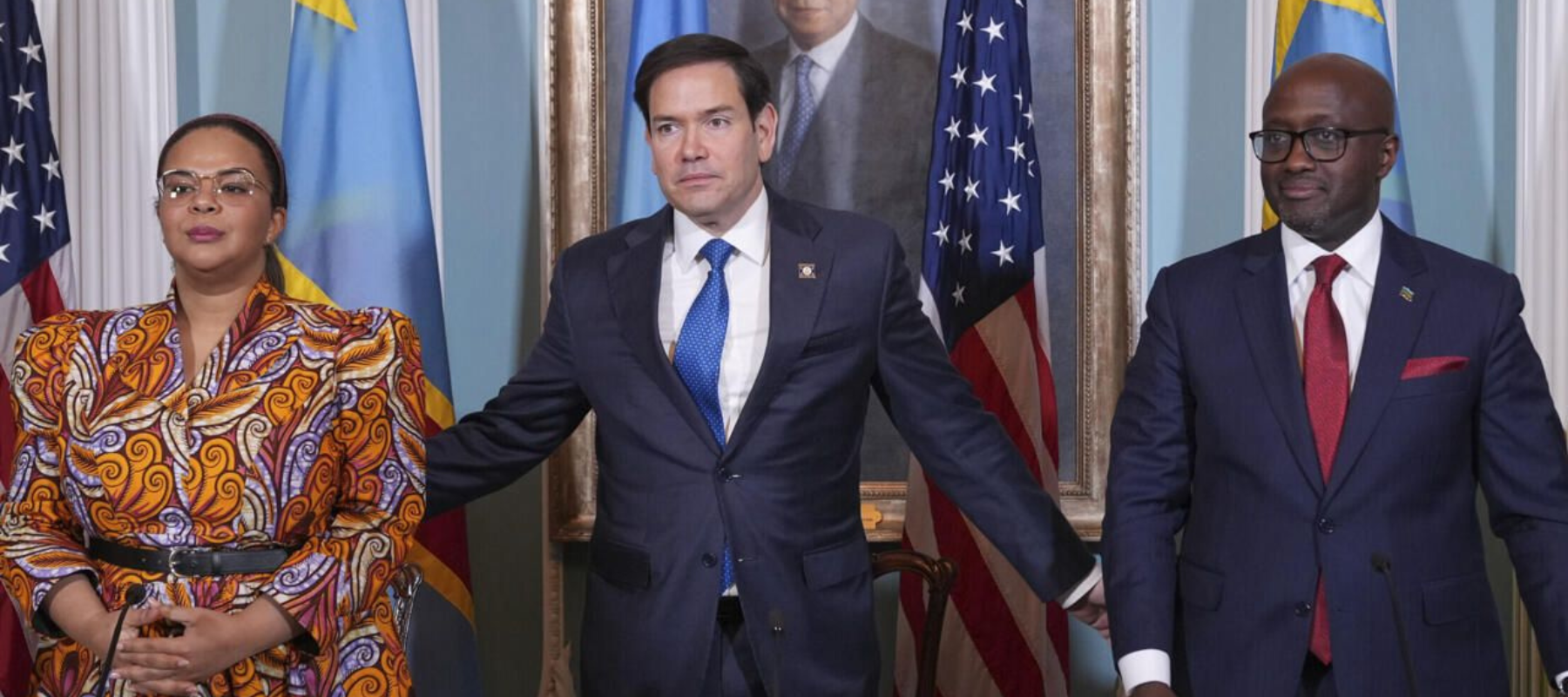
On June 27, 2025, the Democratic Republic of Congo (DRC) and Rwanda signed a U.S.-brokered peace agreement in Washington, D.C., aimed at ending decades of brutal conflict in eastern Congo. The peace deal was signed in the U.S. State Department’s Treaty Room and later celebrated by President Trump in the Oval Office. Both Congo’s Foreign Minister Thérèse Kayikwamba Wagner and Rwanda’s Olivier Nduhungirehe participated in official ceremonies alongside Secretary Rubio and senior U.S. advisers. President Trump described it as “one of the worst wars anyone’s ever seen” and claimed it would not only end violence but also secure mineral rights for the U.S., a move many argue prioritizes geopolitics over justice.
President Trump welcomed the Foreign Ministers of Rwanda and the Democratic Republic of Congo to the Oval Office to sign a historic peace agreement, ending a 30-year conflict.
"Today, the violence & destruction come to an end, & the entire region begins a new chapter of hope." pic.twitter.com/20P2SMBQiR
— The White House (@WhiteHouse) June 27, 2025
The central feature of the agreement is a phased withdrawal of Rwandan forces, estimated at between 7,000 and 12,000 troops, from eastern Congo over approximately 90 days, contingent on joint action against the FDLR (Democratic Forces for the Liberation of Rwanda) militia. In April, Kinshasa had insisted on an immediate pullout, but that demand was softened to enable progress. Eastern Congo has been embroiled in conflict since the 1990s, claiming millions of lives and displacing millions more. Rebel groups like M23, allegedly supported by Rwanda, have seized key cities and mining areas in recent months. To build mutual confidence and prevent future violations, Congo and Rwanda must establish a Joint Security Coordination Mechanism within 30 days.
This mechanism, observed by U.S. and Qatari personnel, will oversee troop disengagement, information-sharing, and compliance on hostilities and support for non-state armed groups. Despite this diplomatic breakthrough, the peace deal does not yet include M23, which remains outside the agreement and has refused to disarm. International analysts also point to the agreement’s lack of explicit justice measures for war crimes, raising doubts about its long-term viability. Moreover, previous accords in the region have failed to hold, prompting both foreign ministers to urge sustained U.S. engagement and enforcement.
A major component is disarmament, demobilization, and conditional reintegration. Under the P-DDRCS framework, former fighters will be vetted individually and considered for integration into the Congolese Armed Forces only if they meet strict criteria: no serious human rights violations, physical fitness, discipline, and loyalty to the state. Humanitarian access and the return of displaced populations are explicitly addressed. Both governments pledged to work with the United Nations and NGOs to facilitate secure returns for refugees and internally displaced persons and ensure continued aid delivery. They also reaffirmed their commitment to respect each other’s sovereignty, cease hostile actions, and halt any military interference or support to rebel forces. An economic framework is slated to be unveiled within 90 days. This Regional Economic Integration Framework will promote transparent cross-border trade, mineral value chains, and partnerships with U.S. firms. It aims to “de-risk” the supply of strategic minerals such as cobalt, lithium, tantalum, copper, and gold while attracting Western investment and curbing China’s regional influence.
Looking forward, the success of this peace deal will hinge on strict implementation of troop withdrawals, effective joint security operations, inclusive dialogue with all armed actors (particularly M23), and a genuine balance between economic investment and the needs of affected communities. The signing in Washington is an important step, but sustaining peace across borders and mines will require sustained diplomatic attention, technical support, and humanitarian commitments.