


Tune in to listen
Bounce FM

Ahead of the opening, UzoArt spoke with BSide about her vision for the exhibition, the challenges of creating outside traditional institutions, and the possibilities she hopes it will spark
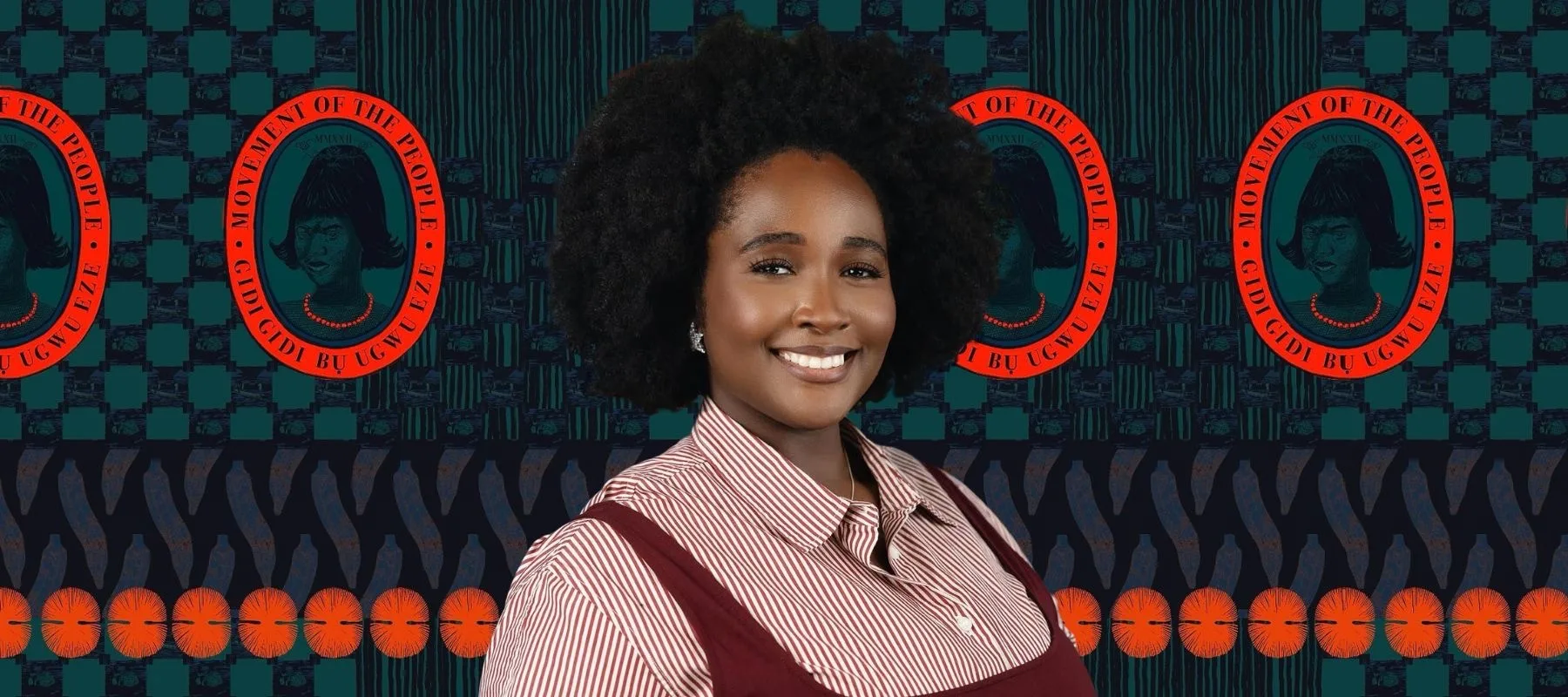
Nigerian-born, New York-based artist Uzo Njoku — who works under the name UzoArt — wants to solve a problem. Although Nigeria’s art scene has long been energized by an abundance of talent, it is often a closed loop of exclusivity, a system that leaves a vast majority of the population on the outside looking in. Lagos now hosts one of Africa’s most visible art fairs and produces art collected by museums worldwide. Still, access remains limited. This is compounded by a brain drain problem that sees immense talent flourish abroad while the infrastructure at home fails to provide adequate support. Hence, UzoArt is keen to build a new way of imagining what art in Nigeria can be. In November, she will open An Owambe Exhibition, her first solo exhibition in Lagos conceived as a homecoming, a corrective and an intervention into how art is shared and sustained at home.
Uzo’s vision has always extended beyond herself. She often speaks in the language of “we,” situating her practice within a wider generation of young Nigerian visionaries determined to redefine what is possible. After a rewarding group show in New York, she felt a pull to return home and try something different. Disillusioned by what she saw as local galleries “doing the bare minimum” for Nigerian artists, she decided to create and execute a better alternative.
View this post on Instagram
It’s a layered vision, and bringing it to life in Lagos has been a monumental undertaking. She has overseen every element of the exhibition, from logistics and administration to financing the show entirely through commissioned works — a grueling, sleepless sprint. But these are the labours of love that foreground this work’s imperative: to provide a model of what a supportive, artist-centric, and community-focused art event can look like.
Ahead of the opening, UzoArt spoke with BSide about her vision for the exhibition, the challenges of creating outside traditional institutions, and the possibilities she hopes An Owambe Exhibition will spark.
This interview has been lightly edited for brevity and clarity.
What is the most important thing about being human that you believe your art is relentlessly trying to answer?
My goal is to bring people together through art and to create spaces that are open to everyone, without bias. I try to remove barriers like class or cost, so people can participate without worrying about paying [too much] for access. For me, art is about building community, and I want it to be accessible even to those who might not be able to afford traditional works. That’s why I also create wearable art and products, so that art can be part of everyday life and reach people in their homes, not just in galleries.
Who are some artists you’ve truly studied and are your biggest influences?
I’m more influenced by artists’ lifestyles than their works. The first artist I looked to is David Hockney. I like how, throughout his career, he never limited himself to one style. You can see the evolution in his works. It showed me that I don’t always have to stick to one thing; I can ebb and flow, too.
Another artist who stood out to me is Alexander Calder. He created mobiles, which many people now recognise as the hanging toys placed above a baby’s crib, though his original versions were fine art pieces. What I liked about him was the entertainment. He would put on circus puppet performances in his home and bring together all kinds of people — his art friends, his work friends, people from different classes. He had a proper career as an artist but also this big entertainment component. That’s why when I do events, I go all in because, why not?
Another artist I’ve looked to is Njideka Akunyili Crosby. I first discovered her in college when I was studying statistics before I switched to art. No one really explained how to make a career out of this, so I would go online, look up different artists, and read their CVs. What I liked about her was that she started out pre-med before pivoting to art. Seeing her journey made it clear that it was possible to move from STEM into art, and that gave me confidence to make that switch myself.
Your work feels almost literary at times. I love the cover art of Olamide’s “Kai.” Beyond the visual arts, which writers, musicians, or thinkers have most shaped the way you see and make art?
That “Kai” cover was actually my first pop art influence. It was inspired by the video of Sean Paul’s “I’m Still In Love With You,” so that was really my first time doing something like that. Before then, I’d only made a playful meme, but that doesn’t really count. I usually try to stay away from that style, but ”Kai” was the first time I really leaned into it.
In terms of who I look to for inspiration, I would say my contemporaries. I see myself as Alté. I’m around the same age as many of the people in the Alté music space, and they are pioneers in their own right. They built something that didn’t exist when they started. Back then, Afrobeats was everywhere, but no one wanted to hear the kind of music they were making. Even the word “Alté” feels too generic for what they do, because when you break it down, they’re pulling from jazz, rock, and so many other sounds, it’s just African music expressed in different ways. What’s powerful is that they didn’t just create music, they also created platforms directly out of that Alté movement. What they’ve achieved since starting out is inspiring, especially when you see how Gen Z has embraced and consumed their work.
The same is true for visual artists in this new wave. While I make products, there are others pioneering digital art, illustration, and other forms of creativity. Across music, art, and literature, people are creating something new and carving out spaces that didn’t exist before. It’s amazing to see how much has progressed in such a short time.
You mentioned that you work across painting, digital media, murals, and even wearable art. What subjects or themes keep returning to you, no matter the medium?
Black joy. I don’t really do political work. I feel like that’s not my job. My job is to create an escape for people, because you never know what someone might be going through. I try to build that escape through Black joy by showing a better possibility for people to look at, whether it’s through the composition, the subject, or the colours I use.
What does it mean to you to be exhibiting in Lagos for the first time, and how has preparing here differed from your past exhibitions in the U.S.?
I exhibited in a group show in New York and it really struck me that I needed to come back and do it better. I realised I wanted to focus more on galleries in Lagos, because I felt many of them were not doing enough for artists back home, they were just doing the bare minimum. So I took on everything myself. I started planning this show two years ago, and I’ve self-funded everything. It’s serious work, but I wanted to show how a proper exhibition should be run, how to bring the community in, not just for the opening night but throughout the entire run of the exhibition, especially in a country like Nigeria where it’s all Black artists and creatives. One challenge here is the brain drain. So much talent leaves and doesn’t come back. Nigerians excel abroad; you’ll find us across Ivy League schools in the US, doing incredibly well. But at home, the system doesn’t do enough to support us, and that needs to change. That’s part of why I’m doing this. I don’t like seeing art residencies in Nigeria mostly filled with international artists while local artists get overlooked. Like I said, it’s serious work but I’m excited about the turnout.
It’s a no-brainer that creating something this ambitious requires lots of sacrifice. What did this exhibition demand from you?
My time, my money, a lot. I took on way more commissions than I usually do, and in very tight windows, just to make ends meet and hit my target. Normally I’d give myself more time, but I had to get more creative with the kinds of products I put out. I wasn’t really sleeping, I was just working nonstop, doing revisions, painting, pushing through. Then an extra $10,000 came through from an award I received from Ciroc.
View this post on Instagram
I think people were noticing the effort I was putting in, and that really helped me. Every bit of money I made, I set aside for the show. I cut down my spending, stopped eating out, cooked at home, and just focused on saving. My whole mindset was work, work, work so I could gather enough money into making this exhibition happen.
Looking at the poster for the exhibition, we can assume that it’s going to be very nostalgic. Without revealing too much, what are the central questions/conversations this exhibition will incite?
I’m trying to explore and be critical, but also celebrate. There’s a sense of liberation and fun that comes from old Nollywood and its baddies. It’s part of our generation since we grew up watching those films and this shows up in the exhibition. I also touch on class division. You’re going to see a painting of a househelp dealing with an issue with the madam of the house, and someone defending her. You’re going to see paintings that explore sexuality and others that question child abuse in the hands of male relatives. There are a lot of things being touched upon. It’s a celebration, but it’s a reckoning, too.
You highlighted paintings, but as a multidisciplinary artist, will we see the full range of your work?
Yes, there are going to be products at the show as well — items that tie directly into the exhibition. There will be regular merch like T-shirts and tote bags. I’m making my own version of Whot cards, calendars, and other exciting pieces. Plus I’m designing an AFCON jersey for the Nigerian team. There will also be fabric. I created a pattern that will be available in denim, mesh, silk, satin, and Ankara. The idea is for people to sew their own outfits. It doesn’t have to be traditional clothing, you can make a mini skirt, or something you’d wear outside the show. The fabric isn’t something you wear for one event and then put away.
For people who aren’t able to sew or don’t have the budget, I’m offering iron-on artworks. You can simply iron them onto clothing if you like. And if you do, you’ll get the chance to take an editorial photo, which will be included in a Lagos coffee table art book that will capture this moment in time, alongside celebrities, musicians, and other creatives.
Who do you consider the ideal viewer for this work?
People who need to see that anything is possible. People trying to navigate the art world, or any career that feels bleak. That’s my main audience.
Some people asked if I was going to send out influencer packages. My answer was no. If they want to come, they can come. I don’t need to create a separate event just for them. I think we have an issue with always creating exclusivity, making some people feel above others. I don’t believe exclusivity has a place in art shows. Everyone should be able to come to the event, mix, mingle, and have fun like normal people. I want to bring different people together. I want you to come and see people you probably haven’t seen in a while. If someone thinks, “Oh, it’s not exclusive enough, anyone can come, so I don’t want to be there,” then that’s fine. They can come during a quieter time. There’s no pressure. But those aren’t the people I’m focused on. For me, art is supposed to be for the people. There should be more accessibility in the arts, and it shouldn’t be something closed off to the general public.
We do have a crazy exclusivity problem in Lagos.
Yes! The show will be curated such that even the simple things like the experience when you walk in will matter. At the entrance, there will be someone outside making suya, which anyone can buy at normal prices. It will be wrapped in our artwork packaging. Then once you enter, we’ll have a photo area and everyone will get a free drink voucher, so everyone has the chance to enjoy a cocktail. After that, drinks will be sold at regular prices and all the profits will go to a selected nonprofit organisation. We’ll also have free small chops available. It’s not compulsory to spend money. You don’t have to buy the fabric if you don’t want to. Of course, if you do, you’ll have the chance to be part of the photo book, but that’s completely up to you. The whole idea is that anyone can walk in, have a good time, and leave with a great experience. That’s what we’re aiming for.
As you prepare for An Owambe Exhibition, what is your deepest hope for it?
I’m hoping this exhibition influences people positively and sets an example for the direction programming should take. One of the events I’m really excited about is the open mic night, which is free. Writers of prose or poetry can come to the exhibition and perform in front of other like-minded creatives. We also have a studio workshop with two sessions — one for high school and college students, and another for adults. I’ll be teaching pattern making, because I don’t believe in gatekeeping. We’ll also talk about the art of business and different ways to diversify what you already do. The goal is to create as many programs as possible that people can participate in and take something from. That’s my hope.