



Tune in to listen
Bounce FM

The Davies brothers have shown what is possible when Nigerian filmmakers approach their work as artists first.
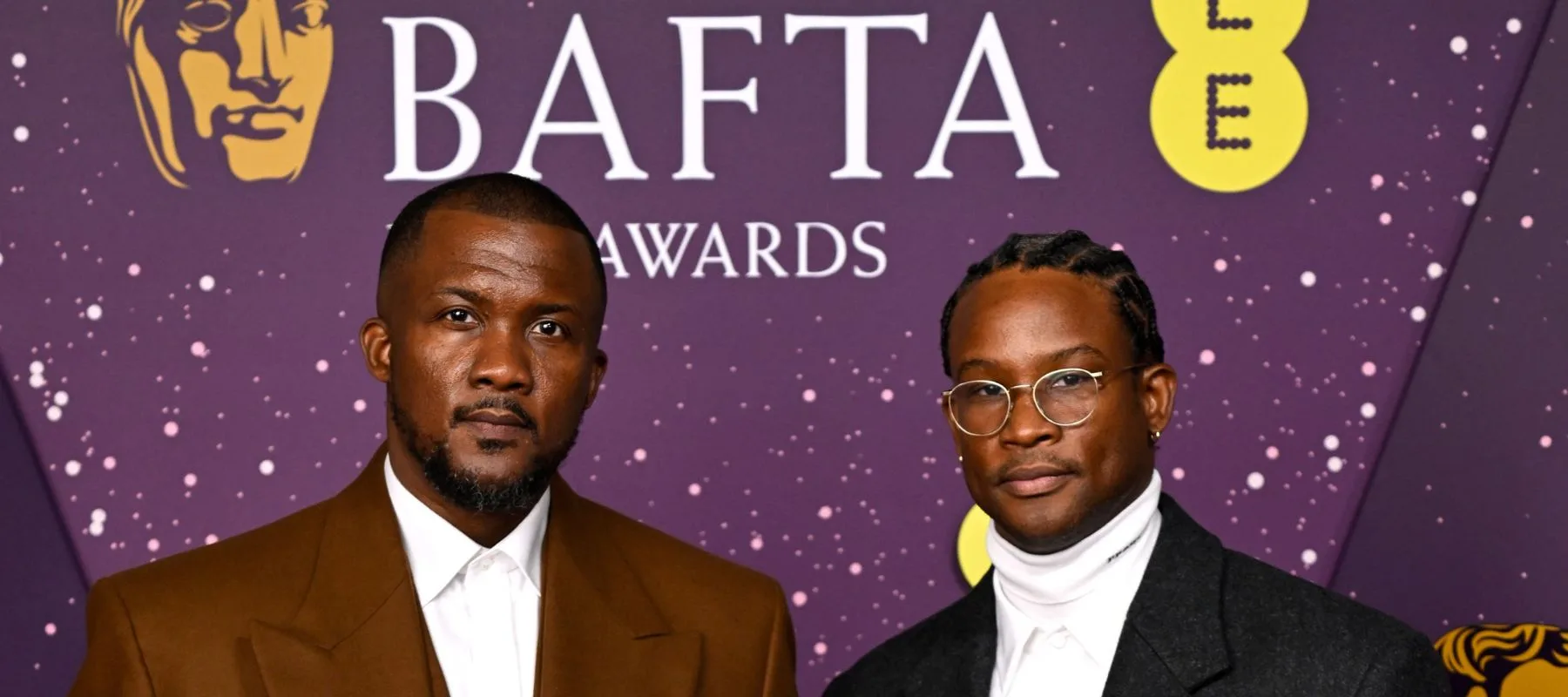
The award presented to brothers Akinola Davies Jr. and Wale Davies at the British Academy Film Awards (BAFTA) on Sunday, February 25, 2026, may have been titled Outstanding Debut by a British Writer, Director or Producer, but the story that brought the honour, My Father’s Shadow, is entirely Nigerian. The film tells the story of a Nigerian father’s love for his sons. It also tells the story of the impact of one of Nigeria’s defining moments: the June 12, 1993, election crisis, when Nigerians’ hopes of democracy were dashed. My Father’s Shadow, which is also the first Nigerian fiction feature to be officially featured at the Cannes Film Festival in France, takes the audience through the psyche of the average Nigerian in the buildup to this historic election that promised hope to a hopeless generation exhausted by over a decade of uninterrupted, oppressive military rule.
When the brothers took to the stage to receive their award, it was immediately clear that this moment was never just about cinema. Wale spoke first, dedicating the honour to their late father. “I want to give thanks to God and to my father, Akinola Davies Senior. Thank you for the shadow you cast over our lives — shadows are proof of light — and I hope one day we may cast a shadow that both intrigues and inspires our loved ones.” Akinola followed, acknowledging his ancestors before turning to the most intimate truth of the evening: “To my brother, Wale, who’s been the closest I’ve ever had to a father figure, thank you for nurturing this spark and writing this beautiful story.” In two speeches, the brothers had already told you everything you needed to know about the film.
My Father's Shadow takes home the win for Outstanding Debut by a British Writer, Director, or Producer✨#EEBAFTAs pic.twitter.com/WzmPHjYtrF
— BAFTA (@BAFTA) February 22, 2026
Their father’s absence is the wound from which My Father’s Shadow was made. In a September 2025 appearance on the I Said What I Said Podcast, Wale recalled losing their father when he was just five years old. “In some ways, I feel like a lot of my life’s journey has been trying to find what it feels like to have a father figure,” he said. The film, then, is as much an act of mourning as it is of imagination — a reconstruction of a day that perhaps never happened but should have. Wale has spoken about the film’s desire to challenge the reductive image of African fatherhood, to show that men are more than mere providers, that they can be present, tender, and guiding. The fact that Akinola credited Wale himself as the closest thing he has had to a father figure makes the film’s emotional stakes even more profound. These brothers did not just write a story about fatherhood. They lived its absence, and they made art from it.
That art is set against one of the most charged moments in Nigerian history. Moshood Kashimawo Olawale (MKO) Abiola was considered a messianic candidate in 1993. He was a prayer. In the film, ordinary Lagosians speak of his presumed victory with the kind of breathless, fragile hope that only people long denied something can muster. The brothers captured this pristinely. The danfos, the hustlers, the teeming human energy of a city that never stops moving but rarely gets anywhere. It is Lagos in its fullest, most honest expression. And beneath all that noise, a people daring to believe. The audience, burdened with the dramatic irony of history, watches all this knowing what those characters do not: that the candle is about to go out.
This is the emotional architecture of My Father’s Shadow — hope shadowed by doom, love racing against time. Folarin, the estranged father played with quiet, aching power by Ṣọpẹ́ Dìrísù, spends a single day with his two young sons, Akin and Remi (played by real-life siblings Godwin Egbo and Chibuike Marvellous Egbo), navigating Lagos while trying to recover six months of unpaid wages. But what he is really doing is compressing a lifetime of fatherhood into a few precious hours. The film suggests that the best a father can do is cast a luminous shadow for his sons to walk in. Wale’s speech at BAFTA confirmed that their own father managed exactly that.
Akinola Davies Jr. and Wale Davies arrive in style 🌟 #EEBAFTAs pic.twitter.com/Ig4zsIJXjx
— BAFTA (@BAFTA) February 22, 2026
The film’s triumph carries a particular sting of irony, given what happened just months ago. Last September, the Nigerian Official Selection Committee (NOSC) announced it would not be submitting any film for consideration in the 2026 Academy Awards’ International Feature Film category, awarded annually to a feature-length motion picture produced outside the United States (US) with at least 50 per cent non-English dialogue. Of the six submissions received, none was deemed competitive enough. NOSC Chairperson Stephanie Linus was candid, citing a “deficit in creative and technical intentionality” as the barrier between Nigerian films and global awards competitiveness. It was a difficult truth to hear, but an important one.
And yet, here we are. A Nigerian story — one rooted in the specificity of Lagos, of June 12, of an absent father and the sons he left behind — has just won a BAFTA. The contradiction is not lost. But My Father’s Shadow‘s triumph does not invalidate Linus’s critique; if anything, it sharpens it. The film won precisely because of the qualities she says are too often missing: a meticulous visual language, an emotionally intelligent screenplay, and a directorial vision that trusted its audience. Jermaine Edwards’s camerawork is patient and revelatory. The performances, particularly from the real-life Egbo brothers, carry a naturalistic weight that no amount of budget can manufacture. This is what creative and technical intentionality looks like when it is brought to bear on a story worth telling.
Nigeria has no shortage of such stories. The country is a vast, layered, contradictory, and magnificent subject, full of histories and heartbreaks and humour that the world has barely begun to understand. What My Father’s Shadow has demonstrated is that the gap between a film that wins at BAFTA and one that cannot make Nigeria’s own Oscars’ shortlist is not the story itself. It is the rigour and craft with which that story is told. The Davies brothers have shown what is possible when Nigerian filmmakers approach their work as artists first. That is the real lesson of this BAFTA win: not just that we can compete, but that we must prepare to. The stories are already waiting. Nigerian cinema must now rise to meet them.