



Tune in to listen
Bounce FM

Nigeria has genuine cultural assets capable of generating that level of attention.
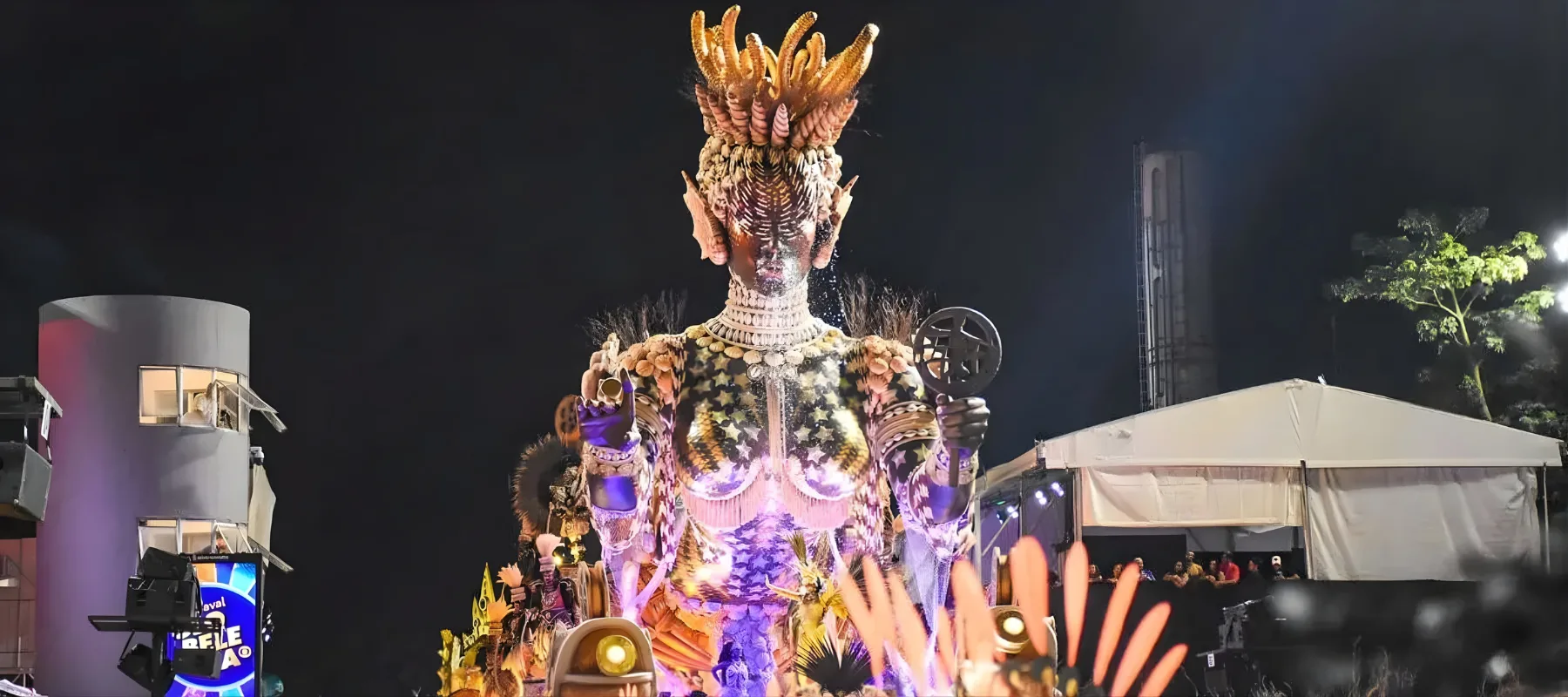
On Tuesday, February 17, 2026, a float carrying a towering statue of Yemọja, the Yorùbá goddess of waters, motherhood, and fertility, rolled into the São Paulo Sambadrome during Brazil’s Carnival 2026 and stopped the crowd cold. Inside the float was nearly 10,000 litres of water. It was a shrine on wheels and a piece of theatre so magnificent that it won the entire São Paulo carnival. Millions watched. The world took notice. And somewhere in all that celebration of Yorùbá divinity, one question deserved to be asked: what would it look like if Nigeria told that story on its own stage?
Yoruba Yemoja float with 10,000 Litres of water by Mocidade Alegre Won the São Paulo Carnival 2026 in Brazil! 🤩 pic.twitter.com/uo9zOf5PwU
— Yorùbáness (@Yorubaness) February 21, 2026
The samba school behind that float was Mocidade Alegre. Although they were paying tribute to the late iconic Brazilian actress, Léa Garcia, the deity they honoured was Nigerian. The culture they dramatised to a global audience originates from the Yorùbá people of South-West Nigeria. The presence of Yorùbá culture is the direct consequence of millions of Africans being forcibly transported to Brazil between the 16th and the 19th century. The Yorùbá people, mostly from what is today Nigeria and the Benin Republic, were the single largest group carried across that ocean. They preserved these traditions under immense pressure, eventually giving rise to Candomblé: the living religion of millions of Brazilians, and it sits at the spiritual core of the carnival that the whole world gathers to watch every year.
Brazil’s Ministry of Tourism reported that the country welcomed 300,000 foreign visitors during the seven days of Carnival 2026 alone, a 17 per cent increase compared to the previous year. That figure represents roughly 30 per cent of all international travel for an entire month, compressed into less than one week. Revenue from those visitors reached almost $186 million across the country. The President of Embratur, also known as the Brazilian Tourist Board, Marcelo Freixo, described the carnival as “a strategic engine for generating revenue, jobs, and development.” What Brazil has built is an economic architecture centred around cultural identity, and it works extraordinarily well.
Nigeria has genuine cultural assets capable of generating that kind of attention. The challenge is that those assets are not yet supported by the structures they deserve. Ojude Oba in Ijebu-Ode is a vivid example of what is possible when a festival captures the imagination. In recent years, it has grown into one of the most visually compelling cultural events in the country, with extraordinary fashion, breathtaking equestrian displays, and age-grade pageantry that has earned it a devoted international social media following. But it is one piece of a much larger cultural puzzle. And some of that puzzle is ancient.
Osun-Osogbo, for instance, is over 600 years old and was inscribed as a UNESCO World Heritage Site in July 2005, one of only a handful in West Africa. Foreign enthusiasts and diaspora Yorùbá people travel from Brazil, Cuba, Trinidad, and the United States every year to connect and reconnect with traditions their ancestors carried across the Atlantic. The spiritual and historical weight of Osun-Osogbo is not in question. What is missing is the government investment, coordinated promotion, and tourism infrastructure that would allow it to grow from a significant local festival into a globally attractive cultural event.
Nigeria recorded just over 1.2 million international visitors in all of 2023. Lagos, Nigeria’s commercial and cultural capital, drew only 18,273 international tourists in the entirety of 2024. Brazil, in contrast, welcomed 300,000 foreign tourists in seven days for a single event.
Osun takes the stage in stunning styles and costume 🔥 in Sao Paulo Brazilian 🇧🇷 carnival.
Yorùbá in Nigeria ought to be generating billions from our heritage. We're yet to utilize the full potential of our heritage #YorubaBeyondBorder#YorubaGreatness pic.twitter.com/nKdIVsGGAc— THINK YORUBA FIRST (@ThinkYoruba_1st) February 22, 2026
The distance between those two realities is not cultural. It is structural, and structures can be built with deliberate moves. The first is infrastructure investment around major cultural sites; the roads, hospitality capacity, and visitor experience that allow festivals to absorb large crowds and serve them well. The second is a diaspora strategy. Millions of people across Brazil, Cuba, the Caribbean, and the African-American community carry a deep ancestral connection to Yorùbá culture. They are natural partners in telling the story, and engaging them through deliberate outreach could turn festivals like Osun-Osogbo into pilgrimage events with genuine international profiles. The third is a national tourism campaign that treats cultural festivals as flagship products, promoted actively abroad and backed at home with the seriousness of a strategic economic priority, the same way Embratur treats the Brazilian Carnival.
Nigeria has ancient stories, living traditions, and a global diaspora hungry for connection. The infrastructure to match that inheritance is the only thing left to build.