



Tune in to listen
Bounce FM

This Women’s Month, and ahead of another WAFCON campaign, it is important to look back at the pioneers who built the culture of dominance that defines the Super Falcons today.
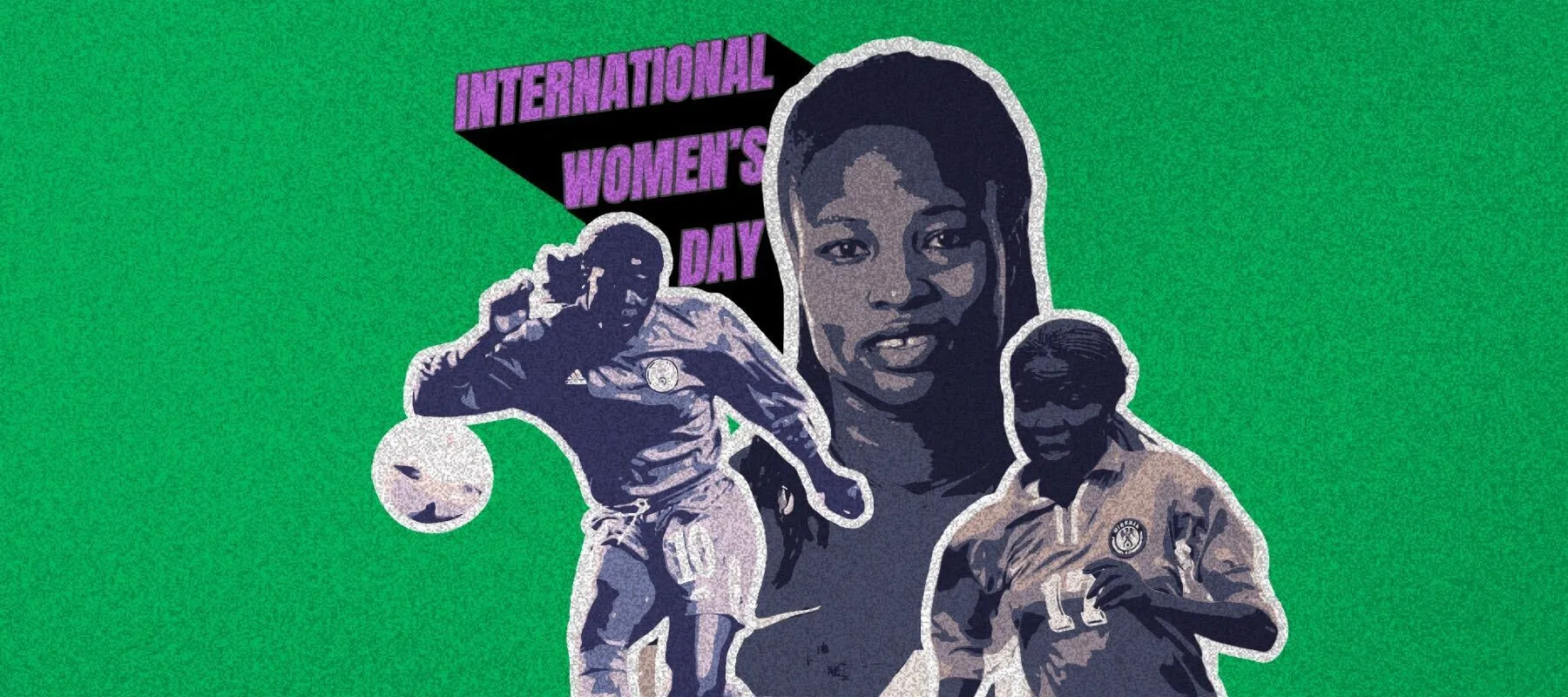
As far as continental titles are concerned, no national team has asserted its authority quite like Nigeria’s Super Falcons. With 10 titles from 13 editions of the Women’s Africa Cup of Nations (WAFCON), the senior women’s national team stands as the most successful national side in the world in terms of continental championships.
While that dominance has not been fully replicated on the global stage, it takes nothing away from their reign in Africa. If anything, it is proof that the Super Falcons carry Africa’s brightest prospects of improving the continent’s historically poor performance at the Olympics and the FIFA Women’s World Cup.
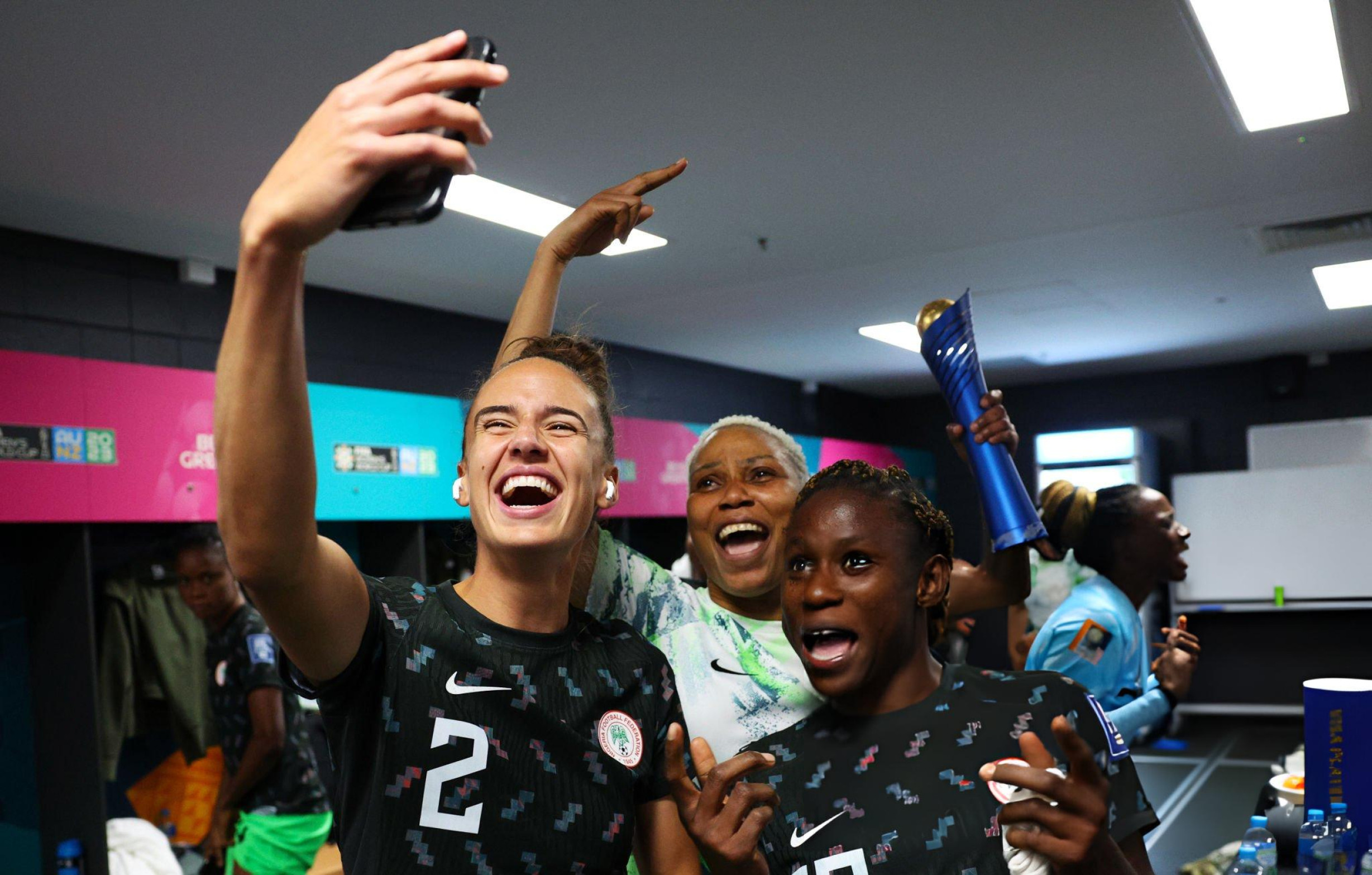
On the three occasions the Super Falcons failed to lift the WAFCON trophy, they still finished on the podium, with the lone exception being the 2022 edition, where they fell to hosts Morocco in the semifinal. Much to the delight of fans, WAFCON returns this March, barring any last-minute changes that have been rumoured. Once again, Nigeria enters as a leading contender, despite the administrative hiccups that have often trailed the team. The immediate mission is to defend the title they won through a historic comeback at the iconic Stade Olympique in Rabat against hosts Morocco last July, and also secure qualification for the 2026 World Cup, which will be guaranteed by reaching the semifinals.
By Super Falcons standards, this is almost a certainty. The current squad, coached by Justin Madugu and captained by Paris Saint-Germain forward Rasheedat Ajibade, boasts some of the finest talents on the continent. Even as legends like Asisat Oshoala gradually pass on the baton, the team remains as formidable as ever. However, this generation is only the latest chapter in a much storied legacy of excellence.
This Women’s Month, and ahead of another WAFCON campaign, it is important to look back at the pioneers who built the culture of dominance that defines the Super Falcons today.
Heroines do exist! 🦸♀
4x #TotalEnergiesWACON as a player.
1x #TotalEnergiesWAFCON as a coach.🇳🇬 Florence Omagbemi is the first African woman to win the competition both as a player and a coach! 👏#EmpoweringOurGame | #MondayMotivation pic.twitter.com/7dNjQmb1Zw
— CAF Women’s Football (@CAFwomen) May 22, 2023
There are only two Africans who have won the Africa Cup of Nations (AFCON) as both player and coach. Nigeria’s Florence Omagbemi is the only African woman to have achieved this remarkable feat with the WAFCON.
As captain, Omagbemi was pivotal to the Super Falcons side that won four consecutive continental titles in 1998, 2000, 2002 and 2004. The commanding midfielder later led the Nigerian women’s national team to another continental title in 2016 as head coach, after an earlier stint as assistant coach of the Falconets, Nigeria women’s national under-20 football team.
“No parents would allow their daughter to venture into football, but as a Warri girl, I would sneak out to play street football with boys. It eventually paid off, and the rest is history,” the 51-year-old Omagbemi told CAFOnline in a recent interview.
History was indeed made. A path was carved, and generations after her have walked it with pride. Before the likes of Ajibade grew into the type of leader who inspires confidence, players like Omagbemi fought tooth and nail to lay the groundwork for women’s football to thrive in Nigeria.
“As one of the pioneer members of the Super Falcons, my major focus then was to help my country, Nigeria, build a team that would outlive our time,” says Omagbemi.
Perpetua Nkwocha for Nigeria. 🇳🇬
👤: 99 Games
⚽️: 80 GoalsCLINICAL. pic.twitter.com/Xq1dbYlPFU
— NoteS. (@NoteSphere) December 14, 2024
For a striker, the primary currency is output, the ability to consistently deliver in front of goal. Perpetua Nkwocha was the very embodiment of this principle, setting a goalscoring standard that remains unmatched years after her retirement.
Across five WAFCON editions between 2002 and 2014, Nkwocha was a ruthless poacher for Nigeria, finishing as the competition’s top scorer on three occasions. It is telling that she recorded 80 goals in 99 caps for Nigeria. To put that into perspective, Asisat Oshoala, currently the second-highest goalscorer in Super Falcons history, has scored 37 goals.
Nkwocha once held the record for the most African Women’s Footballer of the Year awards with four, before Oshoala equalled the feat in 2019 and later surpassed it. Even so, Nkwocha’s place in the pantheon of African women’s football remains secure.
📂 The Archive!
Mercy “Marvelous” Akide, a true heroine of Nigerian women’s football! 🇳🇬✨
She lit up the 1999 FIFA Women’s World Cup, firing goals against North Korea and Denmark, and powered the Super Falcons all the way to the Quarter-finals. 💥⚽
🔥 Who still remembers… pic.twitter.com/oMKB4z8nHj
— The Super Falcons Show (@Superfalconshow) September 25, 2025
As far as Nigerian and African women’s football is concerned, Mercy Akide Udoh is a true pioneer. After two World Cup editions without a victory, it was Akide’s goal and assist at the 1999 FIFA Women’s World Cup in the United States that earned Nigeria their first-ever win at the tournament.
She followed that milestone by scoring Nigeria’s first-ever Olympic goal at the 2000 Sydney Olympics, further cementing her place in history.
Akide emerged as the first-ever African Women’s Footballer of the Year in 2001, setting a benchmark for excellence at a time when recognition for women’s football on the continent was still limited. Today, she continues to serve as an ambassador for the women’s game, mentoring young players and advocating for greater development and visibility across Africa.