



Tune in to listen
Bounce FM

The Super Falcons have been largely tipped by many to win their 10th WAFCON in July, but there appears to be more going against the idea than for it.

Across the continent, there’s hardly any national football team that has attained the level of dominance the Super Falcons have achieved. Nigeria’s senior women’s national team holds a formidable legacy, having won nine of the 11 Women’s Africa Cup of Nations (WAFCON) titles and reaching at least the semi-finals in every edition they’ve contested.
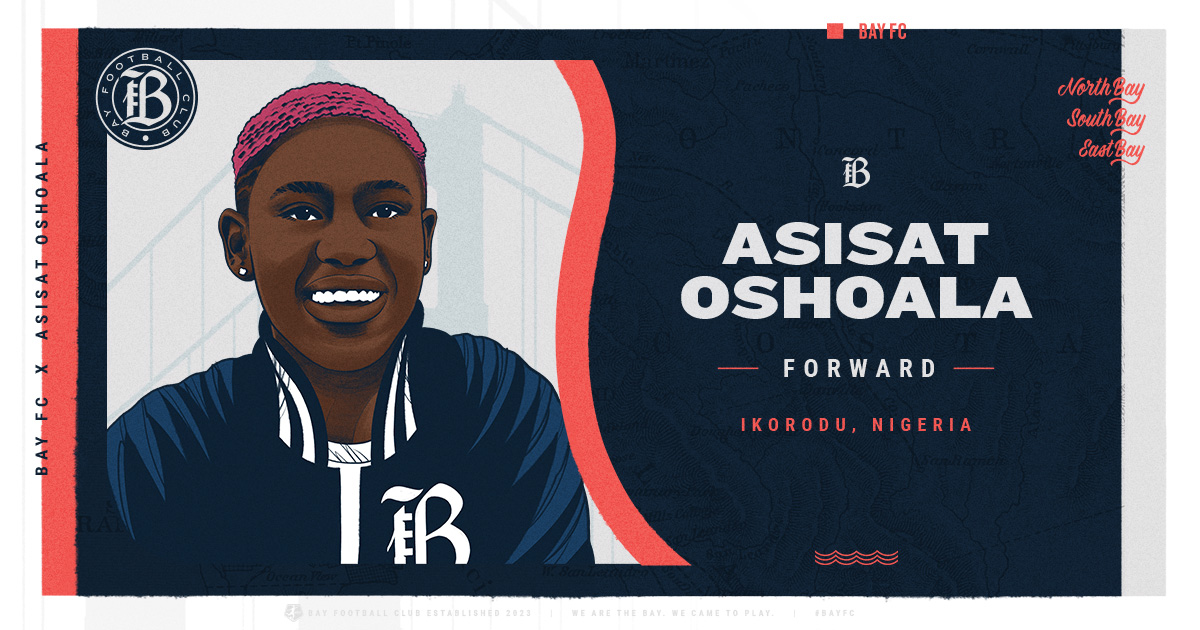
Whether men’s or women’s football, the Super Falcons remain the only African team to have qualified for every edition of the FIFA World Cup. They are also the only women’s team on the continent to have reached the quarterfinals of both the World Cup and the Olympics. With such sustained level of excellence, it’s no surprise the Super Falcons have long served as the standard for elite talent in Africa. The continent’s top individual prize, the African Women’s Footballer of the Year award, has gone to a Nigerian 13 times — 11 more than any other country — shared among four standout names: Mercy Akide (1), Perpetua Nkwocha (4), Cynthia Uwak (2), and the inevitable Asisat Oshoala (6).
However, there’s no denying that the Falcons’ dominance has waned since their last WAFCON title in 2018. The COVID-19 pandemic that upended most physical activities led to the cancellation of the 2020 edition, and finishing fourth in the 2022 edition was enough evidence of the Falcons’ dwindling dominance on the continent. It was a wake-up call, but in keeping with their history of defying odds, the Super Falcons responded wihh a spirited showing at the 2023 World Cup before breaking a 16-year to qualify for the Paris 2024 Olympics, even though it naturally ended in a group stage ouster after facing heavyweights like Spain, Japan and Brazil.
Now, with the 2024 WAFCON set for July 2025, the Falcons have been implicitly tipped to reclaim their spot at the top by securing a historic 10th title, a task dubbed “Mission X.” But as aspirational and exciting as the prospect sounds, there’s more going against it than for it.
Just last month, a documentary from Togethxr, a woman-centred lifestyle, culture and sports media house, peeled off the scab that was once thought to be healing. Featuring six-time African Player of the Year Asisat Oshoala, captain Rasheedat Ajibade, and 2023 World Cup breakout star Michelle Alozie, the documentary highlighted the ladies’ candid reflections on what it takes to represent Nigeria as women.
For many football enthusiasts, it was widely acknowledged that Nigeria would have it very tough at the Paris Games. As revealed by the players themselves, their Olympics return was more of an opportunity to test their mettle against reigning (and former) world champions than it was a medal hunt. However, the trio revealed that even their tempered expectations were let down by the Nigeria Football Federation (NFF), who made no effort to disrupt the familiar pattern of neglect.
Captain Ajibade who played nearly every minute of Nigeria’s campaign in Paris, recalled not being able to consult a physiotherapist due to limited resources, while their opponents had more than enough support staff. Alozie, who grew up in the US system, highlighted frequent issues such as training camp cancellations and poor preparation for tournaments, setbacks that the Super Eagles rarely encounter when preparing for major competitions.
Of all the teams under the NFF’s ambit, the Super Eagles have understandably been the team to wear the coat of many colours, with the federation uncharacteristically tending to most of their needs, including significantly higher investments, as opposed to their female counterparts. An embittered Oshoala, while acknowledging the economic realities behind gender pay gaps, pointed out that the Falcons are not being properly propped to bridge the existing gap.
“I’m not arguing the issue of pay,” the former Barcelona forward insisted. “There’s a way you project your team that brings more money. When the Super Eagles are set to play, the media is filled with posts and all, but that’s barely the case with the Falcons.”
Osereme Inegbenebor, an award-winning sportscaster and women’s football advocate, echoed this concern during an April discussion with Bounce Sports. “The NFF don’t care enough. The preparation of the Super Falcons ahead of major tournaments isn’t encouraging. This is a national team with players from different leagues and systems — there has to be enough time for bonding and acclimatisation, but that’s not the case. It’s particularly worrying considering the women outperform the men.”
The glaring disparity in how the men’s and women’s teams are handled was evident between April 26 and June 3, when the Falcons were scheduled to face Cameroon in a two-legged pre-WAFCON friendly in Ogun State. These were meant to be the team’s first substantial matches in six months, but the first leg had to be cancelled due to the late arrival of the Indomitable Lionesses, a situation that could have been avoided had the NFF scheduled the game well ahead in the window, like other teams did.
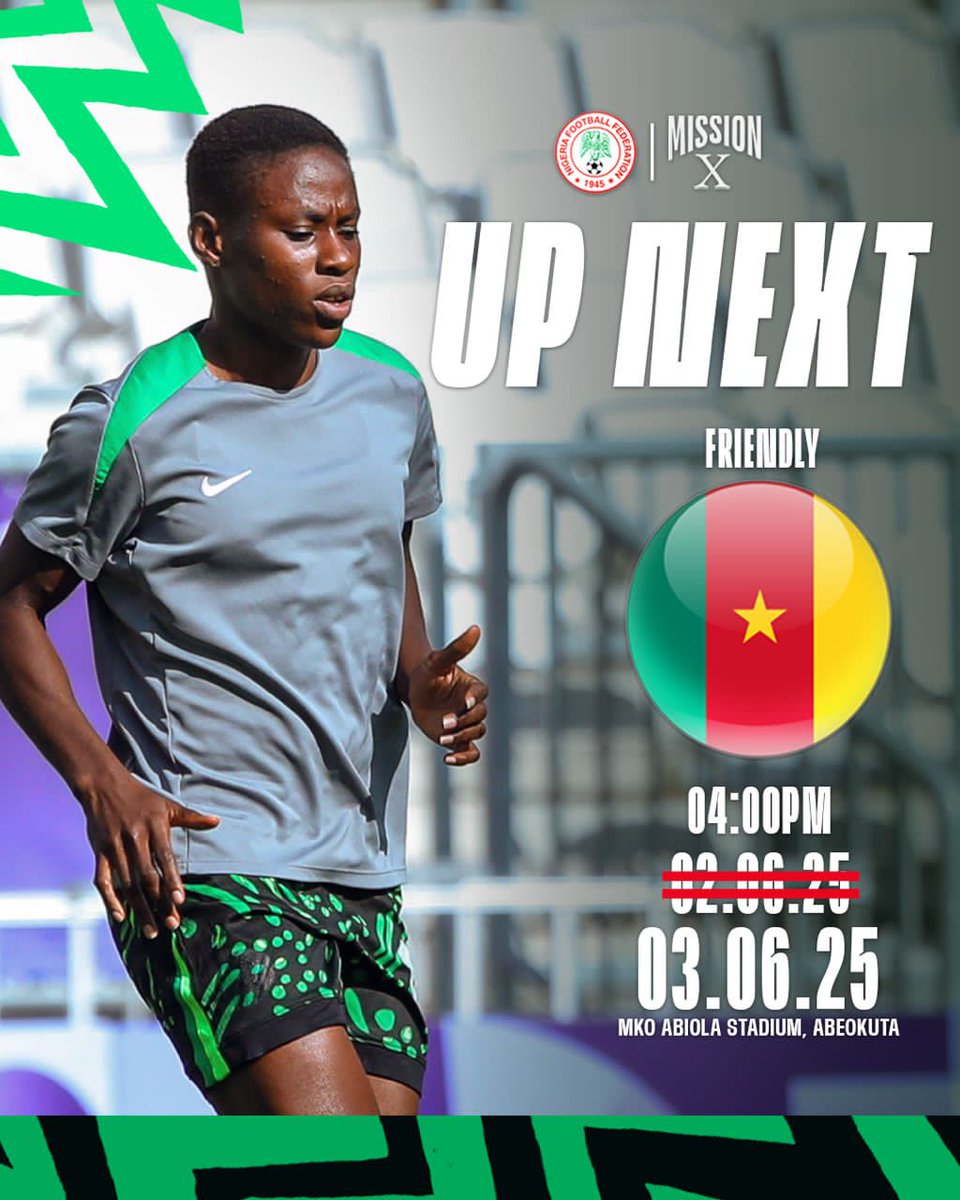
The mishandling didn’t stop there. With little time left in the FIFA window, one would have expected the administrators to rally behind the team. Instead, the poorly coordinated setup festered. As reported by Pulse Sports, both the Falcons and the Lionesses had to hold their final training sessions in Ijebu Ode, rather than at the MKO Abiola Stadium in Abeokuta where the match was slated to take place. This meant the teams didn’t access the match venue until the day of the game, and had to embark on an unusual and lengthy road trip just hours before kickoff. The disarray affected logistics so badly that the kickoff time, initially set for 2 pm, was moved several times to 4 pm, then 6 pm, before finally starting at 4:30 pm.
Despite the logistical mess, the Falcons rose above it all to seal a 2–1 victory. They did this on home soil while, at the same time, the Super Eagles enjoyed a hitch-free campaign at the Unity Cup in London and another friendly in Russia, both adequately supported by the same administrators.
Calling out the NFF has become a Sisyphean labour for the ladies, even as the neglect remains the constraint restricting their full potential, especially on the global stage. While the team keeps showing up, defying the odds with grace and grit, it doesn’t take a clairvoyant to see where this is headed when their individual brilliance and drive are left without a solid structure and support, while they’re expected to do more with far less against opponents who have everything going for them.