


Tune in to listen
Bounce FM

The pattern is consistent enough that it’s almost a civic strategy; if you want something done, make it loud enough that doing nothing becomes the more expensive option.
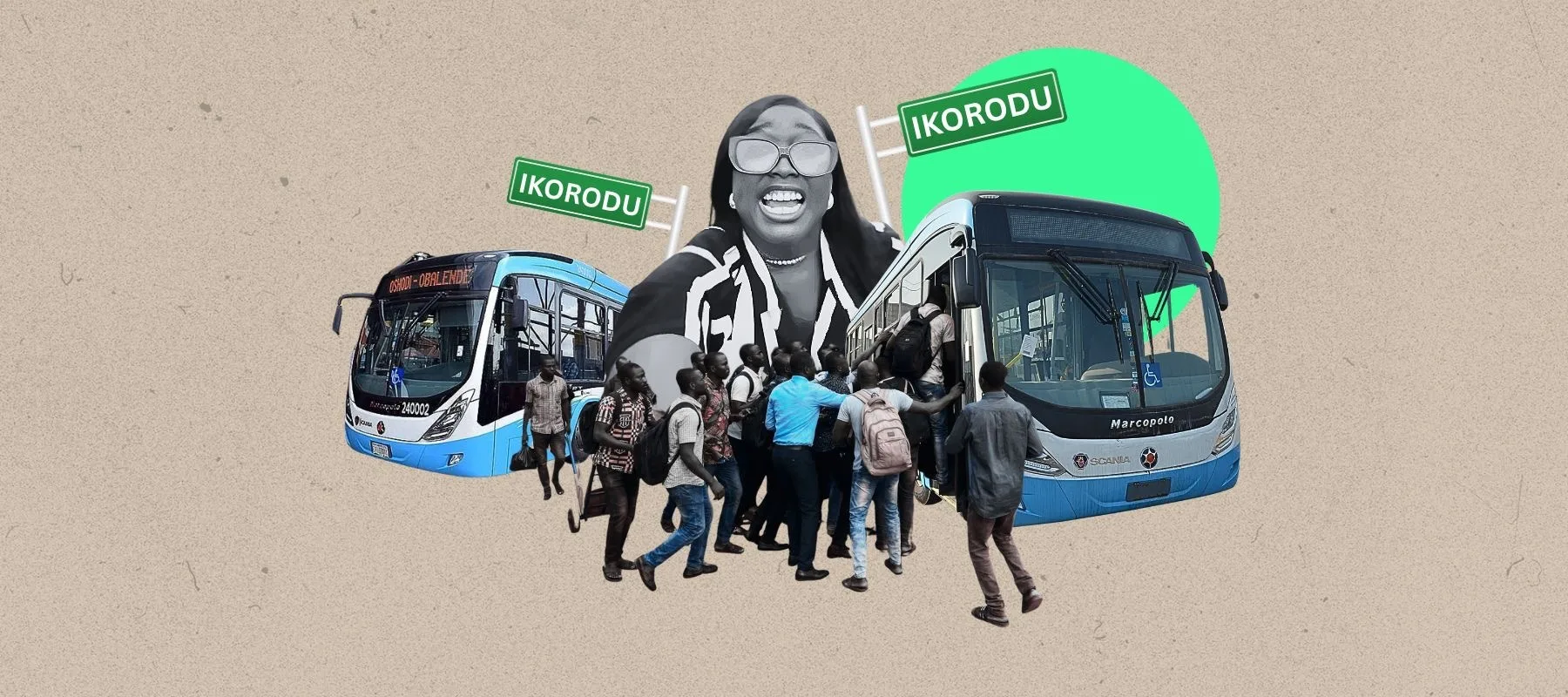
Every weekday morning, thousands of Lagosians wake up before the sun fully comes out, drag themselves to the Bus Rapid Transit (BRT) terminals across the city, and wait for buses to arrive. The BRT system, managed by the Lagos Metropolitan Area Transport Authority (LAMATA), was designed to make commuting predictable and efficient but it has been anything other than that in recent times, leaving passengers stranded for hours on some days due to unavailability of buses. Most complain under their breath, check the time, adjust their bags, and keep it moving, saying nothing.
But Darkskinned Ella, one of those Lagosians, has had something to say in recent weeks. The content creator, who commutes daily from Ikorodu to Lagos Island, started filming her experience at the terminal earlier this month: the long queues, the missing buses, the chaos of a system that was supposed to make commuting easier. By Wednesday, March 11, a transport official had told her to “tell your father to buy [a] bus here” in front of dozens of other stranded passengers who couldn’t find a bus to convey them to work.
Nigeriansssssss
Please tag the right people to look into this case. This woman had the guts to lay her hands on me.
She's not going Scott free!!!
My sister followed me because we had a feeling this would happen but God is with me!!#contentcreator #viral #9to5 #5to9 #viral pic.twitter.com/U0081QJh0S— darkskinned.ella (@Ella_Edit10) March 11, 2026
The reaction online was predictable in the way Nigerian social media always is: outrage, solidarity, and occasionally profound. People shared her videos. Commuters who had suffered in silence for months suddenly had a face and a story to attach their frustration to, and the conversation became loud enough that ignoring it would have been its own kind of statement. Lagos State didn’t ignore it.
By Thursday, March 12, the Commissioner for Information, Gbenga Omotoso, had been on the phone with her personally, and more buses arrived at the Ikorodu terminal shortly after. Just like that, something moved.
My voice was heard!
I didn't do it alone, we did it together!
Thankyou Nigerians. I hope buses keep being provided like they said because if not, I'd make more videos and blur out people's face.
My intention was never to invade anyone's privacy
I only tried to create awareness. pic.twitter.com/pfM07zi68U— darkskinned.ella (@Ella_Edit10) March 12, 2026
What Ella did was straightforward enough. She complained about bad service in public. But the speed at which it worked, and the level of attention it attracted, is worth paying attention to. There are hotlines, government portals, local government offices, and state ministries with entire departments dedicated to receiving citizen complaints. Most Nigerians couldn’t tell you if any of those things actually function, because the experience of using them suggests they mostly don’t. The formal infrastructure for accountability exists on paper. In practice, the most reliable complaints system in Nigeria is public embarrassment.
This is not new. It happens with bad roads that get fixed after a viral video, with hospitals that suddenly find supplies after a patient’s family posts on Twitter, with government officials who remember their job descriptions the moment a story starts trending. The pattern is consistent enough that it’s almost a civic strategy; if you want something done, make it loud enough that doing nothing becomes the more expensive option.
The tension in Ella’s story is that the problem didn’t end on Thursday. By Monday morning, March 16, she was back at the Ikorodu terminal, the extra buses were gone, and the queue was back. The problem that had apparently been solved over the weekend had quietly unsolved itself, the way things in Nigeria tend to do when the cameras are off and the timeline has moved on. Her tone shifted from “my voice was heard” to “were we fooled?” The win lasted exactly as long as the attention did, and the moment the cost of inaction dropped back to zero, the system reverted to its default.
These people don tire me!
Mondays are always hectic that's why I had to check myself and then the LONG QUEUE AGAIN.@Lamataonline the many buses that was provided Thursday and Friday, was it just for show? pic.twitter.com/bcrPPz3R9g— darkskinned.ella (@Ella_Edit10) March 16, 2026
Nigeria has seen this pattern at every scale, from transport complaints to national movements like #EndSARS, moments where pressure forced a response, but not always lasting change. It’s the culture in Nigerian public institutions. In countries with strong institutions, accountability is built into the system. In Nigeria, it is often improvised, forced into existence by noise, attention, and public scrutiny. And the moment that noise fades, so does the accountability.