




Tune in to listen
Bounce FM

The mission, formally designated Artemis II and funded by NASA, was the first crewed flight of the agency’s Artemis program.
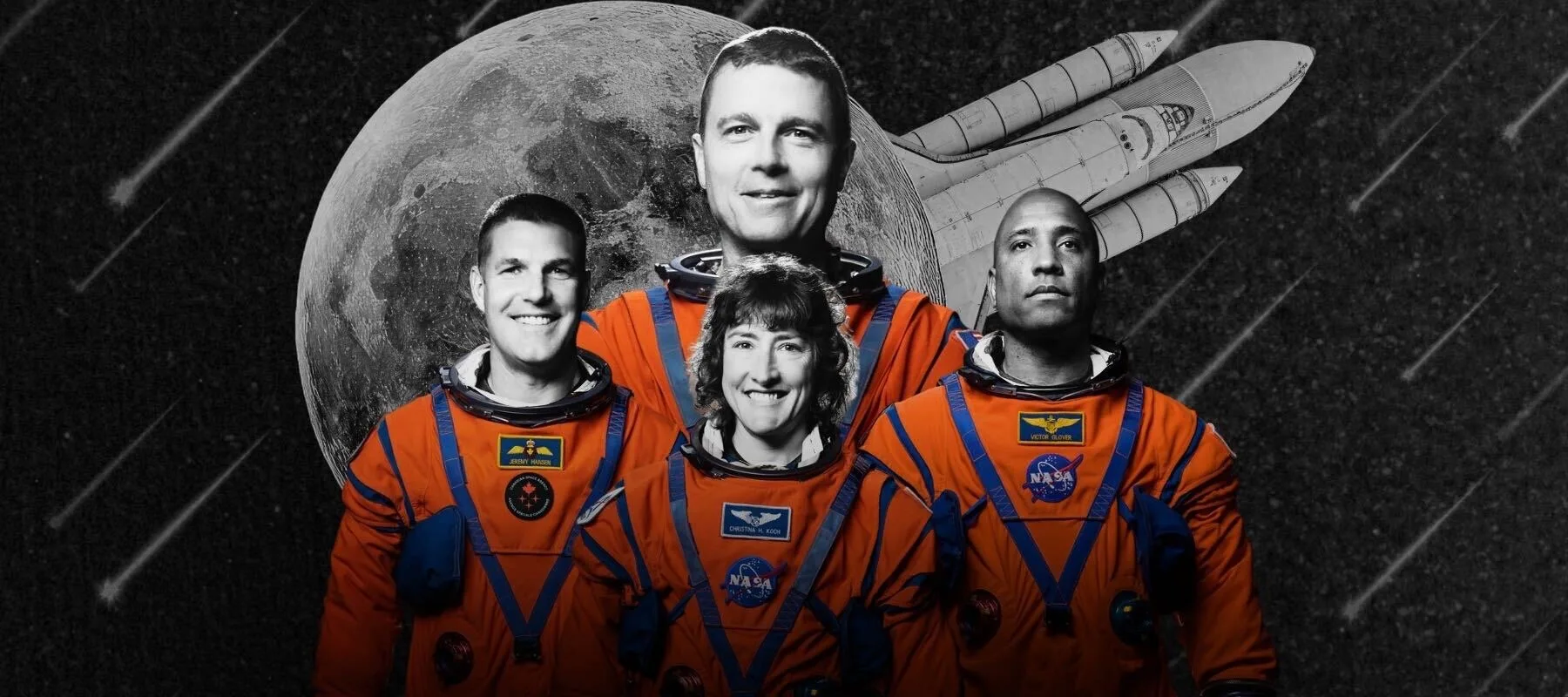
Ten days after an audacious space mission to the moon and back, the Artemis II astronauts returned to Earth, and the world will never quite look at the night sky the same way again. On April 1, 2026, three American astronauts and one Canadian launched into history from Kennedy Space Centre in Florida, embarking on a nearly 700,000-mile journey around the moon that concluded with a splashdown off the coast of San Diego on April 10. They were the first humans to travel anywhere near the moon in more than half a century.
The mission, formally designated Artemis II and funded by NASA, was the first crewed flight of the agency’s Artemis program, and the first time human beings had ventured beyond low Earth orbit since Apollo 17 in December 1972. Artemis II broke the 50-year hiatus. The crew, aboard the Orion spacecraft they named Integrity, flew a free-return trajectory around the moon that took them a maximum of 252,756 miles from Earth, surpassing the previous record set by the Apollo 13 astronauts in 1970 by over 4,000 miles.
Today, these four astronauts will make human history by surpassing the record set by the Apollo 13 crew in 1970 for the farthest humans have ever traveled from Earth. 🌎🚀🌖
⏰ NASA’s estimated timeline of key moments during the lunar fly-by:
2:45 p.m.: Lunar observations… pic.twitter.com/Vc6Ce5Vt8T
— Congressman Mike Haridopolos (@RepHaridopolos) April 6, 2026
The crew itself was, by any measure, extraordinary. Commander Reid Wiseman, a former Navy pilot and a widower raising two daughters alone since losing his wife in 2020, led the mission with a calm authority that belied the enormity of the task. Pilot Victor Glover, a decorated naval officer and test pilot, became the first Black astronaut to travel to the moon. Mission specialist Christina Koch, who in 2019 had already set the record for the longest continuous spaceflight by a woman at 328 days aboard the International Space Station, became the first woman to journey around the moon. And mission specialist Jeremy Hansen of the Canadian Space Agency became the first non-American, and a spaceflight rookie at that, to make the lunar trip. According to Vanessa Wyche, director of NASA’s Johnson Space Centre, the crew represented something far beyond the sum of its records: “the best of humanity as they explore for the benefit of all.”
The journey was every bit jaw-dropping. On day six of the mission, the crew witnessed a solar eclipse from the far side of the moon, watching the sun vanish behind the darkened lunar disc and studying the glowing corona around its edge. They photographed swaths of the lunar far side that no human eye had ever seen so closely, including ancient lava plains, ridges, and mountains that researchers say will help scientists better understand how the moon formed. They also proposed names for two small craters, including one they called Integrity, after their spacecraft and mission.
New photos from the Moon!
We’re continuing to unveil new images from the Artemis II mission—including these two photos from April 6, showing a crescent Earthrise and a closeup of the lunar farside. Keep up with the latest: https://t.co/rzM1P0QbOl pic.twitter.com/YuQ6cXWv61
— NASA (@NASA) April 13, 2026
Then there was the moment, six days in, when the crew broke the all-time record for human distance from Earth. At 252,756 miles from home, with all of human civilisation reduced to a pale suggestion of light behind them, Commander Wiseman and his crewmates could look back and see what astronaut Christina Koch described as “this lifeboat hanging undisturbingly in the universe,” surrounded by all that blackness. It was, she said, one of the most arresting things she had ever witnessed. Pilot Victor Glover put it differently. Speaking from somewhere beyond the Moon, he told the world, “I’m trying to tell you, just trust me, you are special.”
The return was technically precise and emotionally overwhelming. After a nearly 10-day mission covering 694,481 total miles, Integrity re-entered Earth’s atmosphere at roughly 24,664 miles per hour and splashed down in the Pacific Ocean at 5:07 p.m. Pacific time on April 10. The crew was retrieved by helicopter and taken aboard the USS John P. Murtha for medical evaluations before flying to NASA’s Johnson Space Centre in Houston the following day, where family and colleagues met them, including NASA Administrator Jared Isaacman, who called the mission “the greatest adventure in human history.”
At their return ceremony in Houston, the astronauts shared more than routine reflections. Commander Wiseman said the journey had taught him that being human and on planet Earth were “special thing.” Koch offered a meditation on what it means to be part of a crew: not just colleagues bound by a mission timeline, but people who, as she put it, “sacrifice silently for each other” and are “inescapably, beautifully, dutifully linked.” Hansen, reflecting on what the mission might mean to those watching from below, told the crowd, “We are a mirror reflecting you, and if you like what you see, then just look a little deeper.”
View this post on Instagram
The implications of Artemis II extend well beyond the records it broke. The mission collected critical data on how the human body responds to deep space radiation through a program called AVATAR, tested the Orion spacecraft’s life support and propulsion systems under real conditions, and gave NASA the confidence, according to the agency, to now turn its attention toward assembling Artemis III, the mission intended to put astronauts back on the lunar surface. That landing mission is currently targeted for mid-2027, with a crewed surface mission, Artemis IV, expected in 2028.
For now, thanks to the success of Artemis II, the moon is no longer an abstraction hanging above us. And perhaps most importantly, it restores the enduring idea that humanity, at its best, is still capable of doing the impossible.