



Tune in to listen
Bounce FM

The state offered a reminder that Nigerian voters are not as powerless as the country’s cynical political culture often suggests.
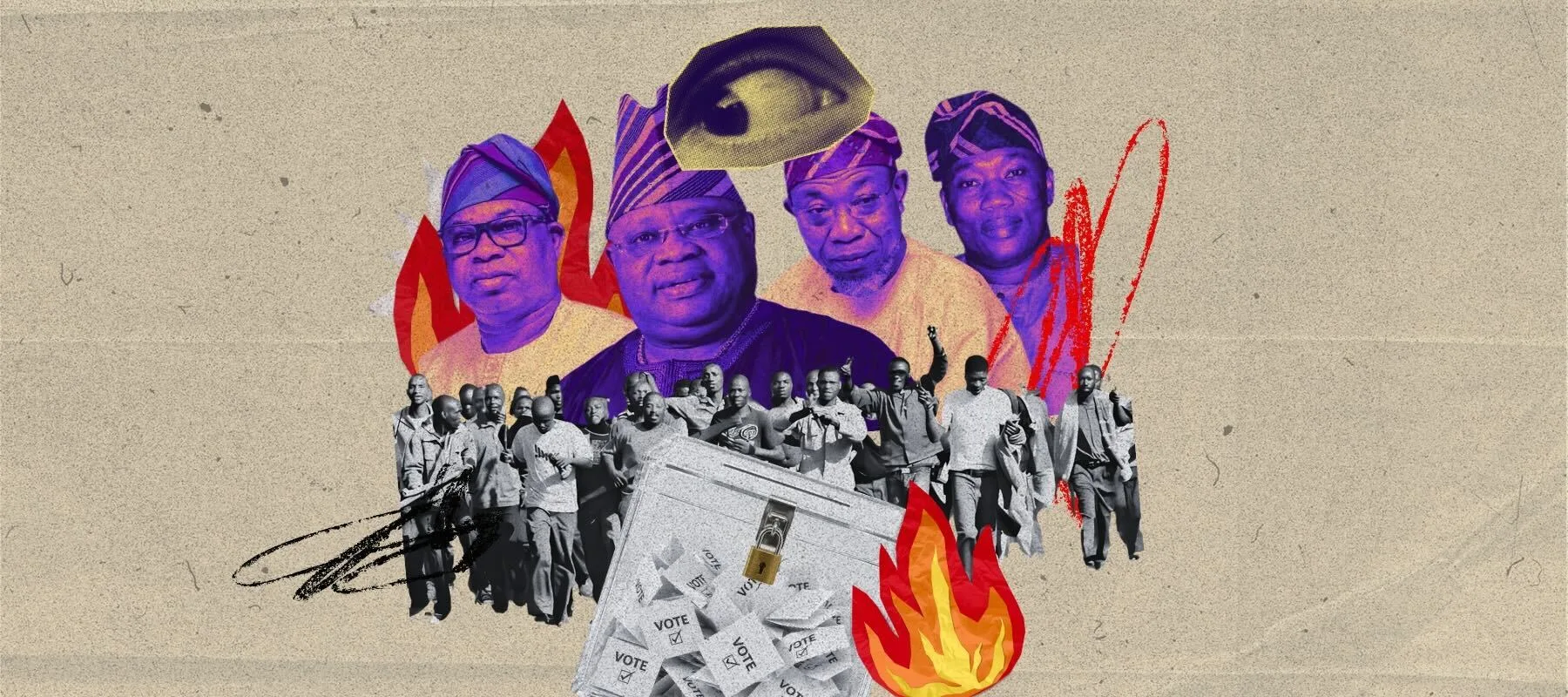
Nigeria’s 2027 general election is still roughly five months away, but Osun State has already given the country a preview of what to expect. The August 15 governorship election was billed as the Independent National Electoral Commission’s (INEC) dress rehearsal for the big one, and while polling day was largely peaceful, the contest exposed several problems that could become much bigger national headaches in 2027, from vote-buying and political violence to distrust in electronic result transmission.
This was a statement by Senator Fadahunsi now on video. Translation
"From now on, whenever you see Accord members, kill them. I authorise you to kill them. They have wives and children too. This is a Federal Government election. On election day, even if they come with voters… pic.twitter.com/67HlMmfS6K
— Davido (@davido) August 11, 2026
More importantly, Osun offered a reminder that Nigerian voters are not as powerless as the country’s cynical political culture often suggests. Turnout exceeded 43 per cent, citizens followed the results through the collation process, and the outcome has so far generated relatively little dispute from the losing side.
Here are five things Osun taught us about the election ahead:
One of the biggest lessons from Osun is that voters are the all-powerful decider of elections, even in Nigeria, despite apprehensions to the contrary. The story isn’t simply that Governor Ademola Adeleke won; it’s that voters turned out despite months of political violence and the widespread belief that elections are predetermined.
If the president had wanted to win the Osun State election at all costs, I would be involved, and I would have been there, and Governor Adeleke would have known that it would have been different.
– FCT Minister Nyesom Wike says Governor Adeleke’s victory was evidence that the… pic.twitter.com/0msp1LrtOM
— Nigerian Affairs Journal (@NigAffairs) August 18, 2026
The 43 per cent turnout shows that voters in Osun recognised the power that they wielded and were not hesitant to exercise it. This outcome challenges the dubious belief that votes do not count.
INEC introduced the Election Result Viewing (IreV) portal to boost public transparency and prevent late-night result manipulation. But in Osun, the portal left some room for doubt. It contained the vast majority of results by 8:00 pm on Saturday evening, but uploads stalled at 3,292 polling-unit results between 8:48 pm and 10:00 pm, leaving 471 outstanding.
INEC IREV uploads have been stuck for almost 2 hours now. 3292 out of 3763 results submitted and then silence. This is not acceptable!
Why has the uploading stopped?@inecnigeria
— Davido (@davido) August 15, 2026
Although transmission later resumed around 11:50 pm on Saturday night, the delay prompted widespread concern about what was going on with those outstanding units. The IReV delay is less about the portal itself and more about confidence. If results stop uploading for hours, people will fill the information vacuum with suspicion. INEC cannot expect Nigerians to simply trust the process in 2027, it has to earn that trust with efficient, transparent operations.
Following the declaration of Adeleke’s victory, his supporters mocked their opponents with a Yoruba song loosely translating to their rivals lacking the people’s support and their money being put to shame. The song nodded to an ugly reality that has bedevilled Nigerian politics for decades: vote-buying.
Alhamdulillah! 🙏✨ pic.twitter.com/vqwlsX6qa7
— Senator Lere Oyewumi, PhD. (@LereOyewumi) August 16, 2026
Even with relatively strong turnout, attempts to buy votes persisted. The lesson isn’t just that politicians are willing to spend; it’s that Nigeria still hasn’t made vote-buying sufficiently risky for those offering or accepting inducements.
Voters Agitate Over Allegedly Vote Buying In Ejigbo LGA of Osun state. pic.twitter.com/YZirRr8NSe
— CHUKS 🍥 (@ChuksEricE) August 15, 2026
Besides the belief that votes do not count, another factor discourages many voters from turning out: fear of getting hurt for simply discharging their civic duty. Unfortunately, this fear is often borne out by events, and Osun is the most recent case.
With at least 29 people, including a 14-year-old boy, killed during the campaign, the state became the capital of do-or-die politics. Elections cannot be considered successful simply because polling day was relatively peaceful when the campaign period has already claimed lives. The families of those people deserve better and the Osun governor agrees, announcing a ₦500m election violence victims endowment fund on Wednesday, August 19.
This is probably the biggest takeaway from Osun. What we saw on Saturday was voters following election results through the entire collation process.
The lesson from this course of action is that the ballot is only as powerful as the vigilance that follows it. “Vigilance is the most effective deterrent to result manipulation,” YIAGA Africa, an election transparency group, said in its post-election assessment. That is the lesson 2027 voters should carry forward.
Yiaga Africa Final Statement on the Process and Results of the 2026 Osun Governorship election. #OsunDecides2026#WatchingTheVote pic.twitter.com/kTM3u6x2x4
— Yiaga Africa (@YIAGA) August 16, 2026
Overall, Osun has shown that votes can count. But it has also shown that voters cannot afford to stop watching once they have cast them.