



Tune in to listen
Bounce FM

Today, some soundtracks are not only forgettable, but they also distract you from the story.
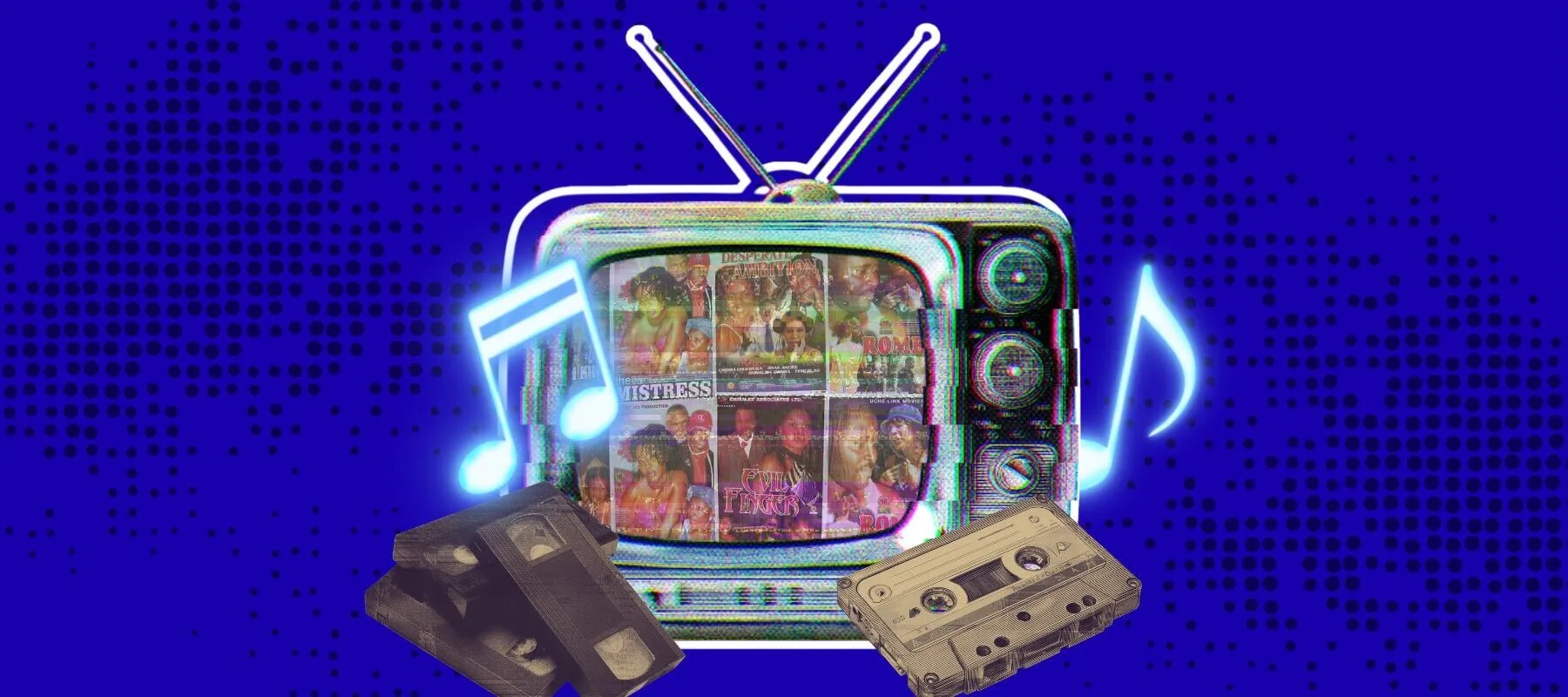
When was the last time you were genuinely moved by a Nollywood soundtrack? Not just moved, but consumed. The kind where the music crawls into your head and never leaves. Where, years later, you hear two lines of it and you’re right back in front of that screen, feeling every emotion the director intended. That used to happen regularly with Nollywood. It barely happens now.
Watch a Nollywood romance today and there’s a trending Afrobeats record in the background. Action films get the same club-ready production you would hear on the street any other day. Foreign songs drop into tearjerker scenes not because they earn the emotion, but because they are familiar. The music isn’t serving the story. It’s just filling the silence.
This matters because Nollywood once understood that a soundtrack is storytelling.
Throwback to this 1999 Nollywood classic that gave us this unforgettable soundtrack "Iyeme"
Directed by Ndubuisi Okoh, the movie starred the legendary Pete Edochie, Liz Benson, Ernest Asuzu, Onyeka Onwenu, Rita Edochie, and a host of others.
That "Iyeme ooo,oooo Iyeme" hit… pic.twitter.com/Ed4mqAeaW1
— Nostalgic Naija (@NostalgicVibeNG) April 25, 2026
When you hear “iheme o, iheme,” you either remember the sound from a comedy skit or from Chain Reaction (1999) if you have seen the movie. It is near impossible to be a Nigerian who has not heard that soundtrack. The film is 27 years old and the Stanley Okorie soundtrack is still alive in skits and the mouths of people who haven’t thought about the film in years. It worked because it was written for that film’s specific world: Liz Benson’s Eucharia terrorising the entire compound and Pete Edochie watching consequences unfold with grim inevitability. The song didn’t comment on the story from a distance. It warned you. In this life, you reap what you sow. And then you watched Eucharia dare the universe to prove it. And it does. She decides to commit suicide after losing everything.
That kind of alignment was the norm. In Karishika (1996), the moment those bouncy, chilling lyrics — “Karishika, Karishika, she is the Queen of Demons / Don’t believe her / She doesn’t love you, she only wants to destroy you” — hit your ears, you got the message. The soundtrack was telling you something bad was coming and you felt it. Anyone who grew up watching Yoruba horror knows Koto Aye (2003) the same way: through the soundtrack still sitting word-for-word in memory. And in Conspiracy (1999), Onyeka Onwenu’s “You and I Will Live as One” explained the love story before the dialogue did. Even the comedy worked this way. Nkem Owoh performing “I Go Chop Your Dollar” in The Master (2005) was a complete character portrait — the swagger, the cheerful shamelessness, the pride — delivered in song before the plot needed to spell any of it out.
No Nollywood soundtrack can ever match these two. pic.twitter.com/pvC2g5deUy
— TIMI OF LAGOS🍷 (@manliketimi_) April 19, 2026
Those soundtracks were fun. They were specific. They knew exactly which film they belonged to and they committed fully. You could hum them and conjure the scene. You could hear them decades later and feel the original emotion return, intact.
Old nollywood be doing the most, what’s that soundtrack?😂😂😂 pic.twitter.com/ovYm8bL3RP
— The oyinn💕 (@oyindamolaaa_xx) December 10, 2024
Just look at the suspense, the intrigue, the soundtrack. Nothing gets you here but old Nollywood man. https://t.co/1MMiWIbTMx
— Oogway Sensei (@KosiMensa) July 19, 2021
Today’s Nollywood naturally has better cameras, bigger budgets, and real technical ambition. But soundtracks have not been a part of that growth; in fact, they have rather declined. This is not to say that soundtracks are entirely absent in most Nollywood films. They are just rarely used properly. They hardly tell stories in fun and memorable ways, if they tell any story at all. Some are not only forgettable, but they also distract you from the story, delivering an even worse viewing experience.
But it is not all gloom and doom. With the likes of Stanley Okorie and Sammie Okposo no longer active, composers like Tolu Obanro are doing more deliberate work: his scores for films like Jagun Jagun and Gangs of Lagos at least try to breathe with the story rather than sit on top of it. But even his soundtracks are not what you leave your screen humming. They are competent and mostly invisible, which is better than out of place, but still a long way from memorable. The bar has shifted from fun and alive to at least not distracting. That’s not good enough.
Ten years from now, the Afrobeats hits licensed for today’s films will still exist as Afrobeats hits, belonging to no film in particular. The “Iheme” soundtrack will still be alive in people’s heads. That gap is not accidental. It is the distance between music written for a story and music borrowed for a moment.
Nollywood once made soundtracks that outlived the films. It can do it again. It just has to want to.