



Tune in to listen
Bounce FM

These short films aren’t about social media trends; they reflect cultural nuances and expose unspoken conversations.
Despite the critical acclaim of feature-length films in the Nollywood industry, the surge of short films in recent years cannot be disputed. Amidst blockbuster movies and series, Nigerian filmmakers are also carving an ecosystem for short films that have garnered massive acclaim.
With fewer budgets and top-notch productions where the films are mostly released on YouTube, established and indie filmmakers are keeping Nigerian viewers glued to screens with deep-rooted cultural and emotional stories. These films aren’t just about social media trends; they reflect cultural nuances and expose unspoken conversations.
From films capturing themes of marriage and relationships, sex, mental health, and more, these Nigerian short films are what you should be watching right now.
Japa (2025)
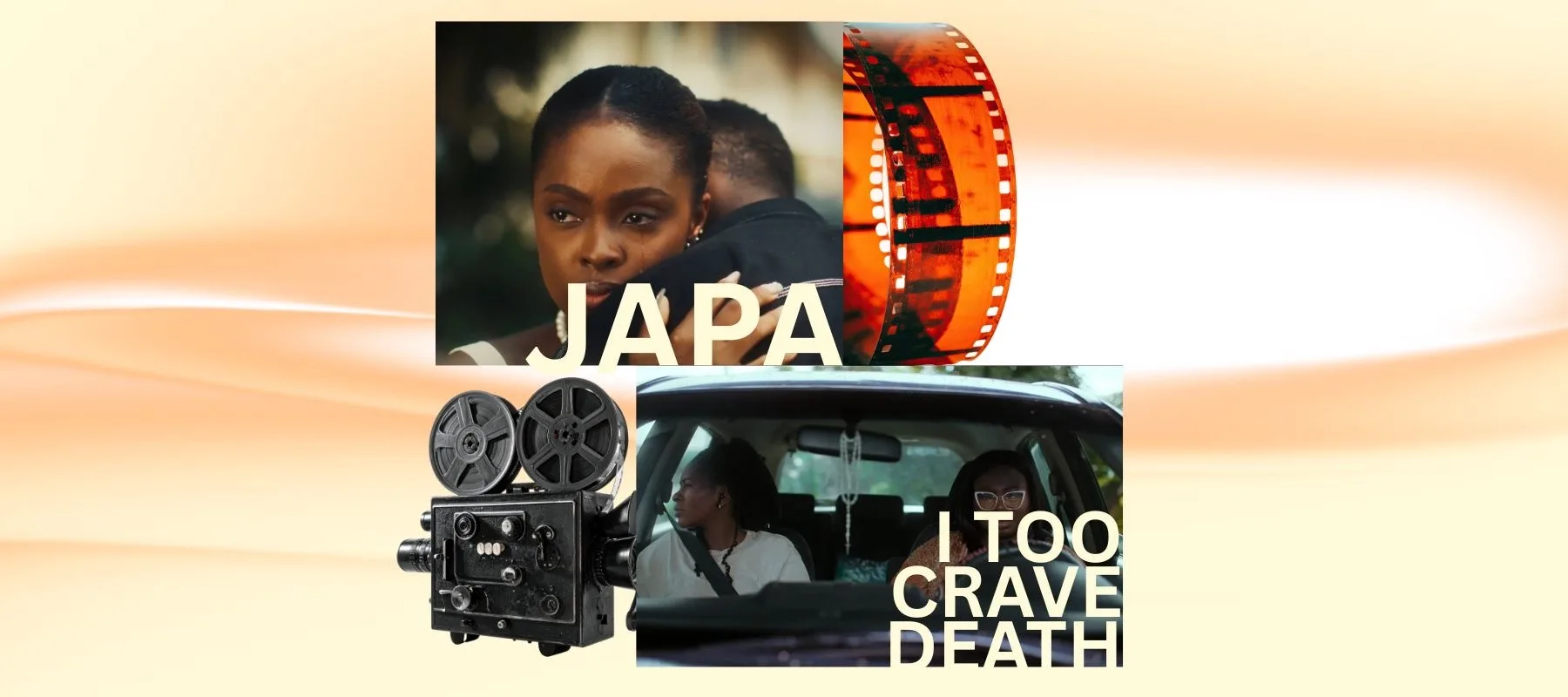
This is one story that explicitly uncovers the complexities and unspoken conversations around the ‘japa culture’ in this part of the world. In the film Japa by Kemz, two lovers, Fola (Ruby Akubueze) and Emeka (Adeoluwa Akintoba), find themselves hiding their plans to relocate from each other because their parents warned them to keep it secret for spiritual reasons. Days before bidding goodbye, Emeka reveals his plans despite his mother’s warning. This upsets Fola, who, on the other hand, kept her relocation plans from her boyfriend Emeka.
While the two partners were held back by their parents’ instructions, the film exposes the lack of trust between partners and the families regarding migration. This is a recurring tale between partners—and even close friends—who dream of a better life abroad but are forced to keep it secret out of fear it will be jinxed. The TINFF-nominated short film, written by John Amarachi, succinctly explores the nuances of the sacred reverence for migration, especially among Nigerians.
I Too, crave Death (2025)
For a society that preaches mental health awareness, the reception for individuals battling depression is not readily welcome. That’s what I Too, Crave Death narratively exposes. The film follows an Igbo mother and daughter forced to have a difficult conversation on depression and suicide after being stranded by their car breakdown.
The scenes follow their return from a visit to a dead relative who committed suicide. Chi (Ugoh Amanda), the daughter and a friend of the deceased, plans to also commit suicide, but finds herself in a heated conversation with her mother, NK (Tessy Brown). What began as a heated conversation and a scuffle resulted in an emotionally driven reunion between the mother and daughter. I Too, Crave Death is an award-winning film that uncovers society’s embrace of mental health issues, especially when it hits close to home.
Udo | When Love Isn’t Enough (2026)
For people whose love language is words of affirmation, Udo reveals that love truly thrives in reassurances. Written by Uzoamaka Power and directed by Timmy Davies, Udo explores love, intimacy, and choices that define sustainable relationships.
The film centers on two lovebirds at the verge of a breakup, when fear and vulnerability become the strings keeping them apart. Starring Onyinye Odokoro (Udo), Bobby Ekpe, and Rhoda Albert, Udo reminds us that you can never do too much to reassure your partner while carrying out other acts of love. It’s a film that beautifully captures fear masquerading as the act of guarding one’s heart in a relationship. The film’s immersive visuals set over a minimalistic backdrop highlight the remarkable acting of the characters.
Fishbone (2020)
Directed by Editi Effiong, Fish Bone is a gritty thriller shot in the slums of Makoko. The story follows a ruthless drug baroness, Mama T (Shaffy Bello), who sells counterfeit drugs. Mama T believes she is above the law, but soon enough, the law and karma catch up with her. The film’s stunning production captures the contrast between the wealthy and the oppressed.
Produced by the US Mission to Nigeria in collaboration with Anakle Films, the film also stars Daniel Etim Effiong and Moshood Fatai. It’s a fast-paced, violent, action-packed film with social commentary.
Dices (2021)
Sexual molestation of boys is an incident that still faces stigmatisation and sheer negligence over the years. For a society that clamps down on sexual assault, it doesn’t offer safe spaces for boys and men to open up when it pertains to them. Written by Tomi Adesina, Dices was produced to raise awareness of the psychological effects of sexual abuse on boys.
The short film directed and produced by Sandra Tetteh follows the story of David (Daniel Etim Effiong), who was sexually assaulted by his teacher as a child. This experience causes deep psychological and emotional trauma, which he battles in adulthood and marital life. He struggles to open up to his therapist despite confronting his past and eventually gives up the idea of marriage. It’s a film that doesn’t just raise awareness of sexual assault but also of the aftermath of it, exploring victims’ struggles to speak up because they’re not taught how to.
Away (2025)
Not many Nigerian feature-length films do justice to African folktales, yet Away does so succinctly and stunningly. Directed by Victor Onwudiwe and Goodnews Erico Isika, the short film explores the forbidden fruits of slavery and love bound by trauma. The story follows two partners, Zikora (Nelson Iwu) and Ola (Nancy Philip), whose freedom from slavery reveals hidden wounds and trauma that threaten their relationship.
Upon freedom, Ola still holds on to elements from her past, which upsets Zikora to a fault. In his attempt to confront her, she’s forced to open up about incidents that occurred during slavery. The two lovers find themselves in heated conversations that tear them apart despite their love for freedom. It’s a powerful film that questions moral values even in the face of bondage.
My Body, God’s Temple (2025)
Another brilliant short film from actor and director Uzoamaka Power, My Body, God’s Temple, is one of the releases from the Zikoko Life anthology. Produced by Blessing Uzzi and written by Uzoamaka Power, the film follows a newlywed couple, Omasilu (Uzoamaka Power) and Zion (Andrew Yaw Bunting), who struggle with sexual intimacy as virgins. It’s a film that opens conversations about intimacy, faith, and vulnerability.
Being a Christian, Omasilu’s perception of sex is viewed as sinful because she believes her body is God’s temple. But she takes her struggles with vaginismus to God, and through open conversations with friends and her partner, she soon figures out every answer she seeks. The production quality, acting, and storytelling brilliantly tackle a lingering issue in Christian marriages.
Fejiro (2020)
Written and directed by Courage Obayuwana, Fejiro follows the story of 13-year-old Fejiro from the heart of Sapele, Delta State, whose big imagination takes the centre stage in the film. Inside this award-winning short film, Fejiro discovers her biggest dreams as a filmmaker despite her humble background.
At a young age, she makes the world her stage, using anything she finds and her friends to bring her imagination to life. With a passionate drive and quest to fulfill her dreams from a small place, Fejiro reminds us to pursue our dreams no matter how big and scary they seem.
The Verdict (2023):
Based on true-life events, The Verdict is a powerful drama that tells the story of the case of Laveena Johnson, a 19-year-old Nigerian-American serving in the US Army. Laveena died under gruesome and suspicious circumstances, which the US military labelled a suicide and closed the case despite lingering evidence.
With Zainab Balogun as the character, The Verdict exposes the injustice perpetrated by the military even as supporters fight for the truth. Directed by Stanley Ohikhuare, this short film’s gripping, emotional storytelling reveals that justice is addressed in the face of higher authorities.
Something Sweet (2025)
As part of the Zikoko Life anthology, Something Sweet is a short film directed by Dika Ofoma that explores the tale of unconventional romance in Nigeria. The story follows a successful woman, Ziora (Michelle Dede), in her 40s, who finds herself attracted to a younger man, Leke (Ogranya), enabling them to challenge the societal perception of age in relationships.
The film’s captivating storytelling and acting offer insights into what intimacy looks like for older women. Something Sweet reveals how societal judgment and age affect individual choices, especially women, in romantic relationships.