



Tune in to listen
Bounce FM

The hearing came a few days after terrorists abducted 25 schoolgirls in Kebbi and gunmen killed and kidnapped Christian worshippers in Kwara.
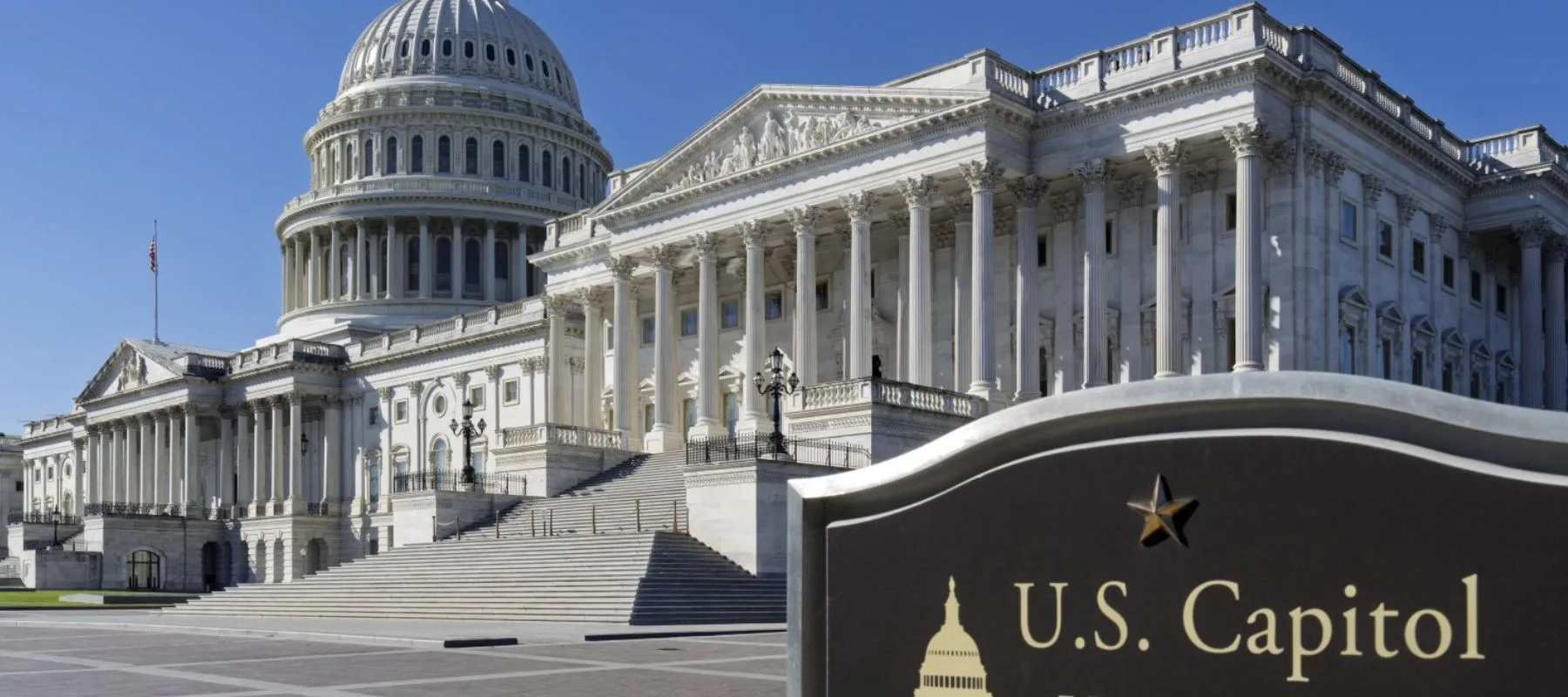
A high-profile congressional hearing in Washington, DC, United States (US), on Thursday, November 20, 2025, examined allegations of Christian persecution in Nigeria, coming in the wake of US President Donald Trump’s redesignation of the country as a “Country of Particular Concern” (CPC) and his threat of unilateral military action.
The hearing, led by the US House Subcommittee on Africa, followed a week of heightened international attention. On Tuesday, American superstar, Nicki Minaj, addressed the United Nations on claims of Christian genocide in Nigeria, which the Nigerian government swiftly denied. On Wednesday, a high-level Nigerian delegation led by National Security Adviser Nuhu Ribadu met with US lawmaker, Representative Riley Moore, a Republican, to discuss the country’s security challenges and response to concerns about religious persecution.
Lawmakers at the hearing were sharply divided along partisan lines. Democratic representatives cautioned against oversimplifying Nigeria’s insecurity as a Christian-versus-Muslim issue, highlighting complex social, economic, and governance factors.
Republican lawmakers, however, frequently framed the violence as primarily targeting Christians, calling for stronger accountability from the Nigerian government. The session also touched on individual cases, including the detention of Nnamdi Kanu and the death sentence of Adamawa farmer Sunday Jackson, with calls for their release and clemency.
Here are eight key takeaways from the hearing:
A survivor of the Yelwata attack in Benue State, Msurshima Apeh, recounted how she watched armed men kill her five children during the assault on her community.
Apeh said she escaped by climbing a tree while her children cried below.
The Yelwata attack, which occurred in June 2025 in Guma Local Government Area of Benue State, left an estimated 100 to 200 people dead and displaced more than 3,000 others. Many survivors were later moved to camps in Nasarawa State.
At the hearing on Thursday, the Bishop of the Catholic Diocese of Makurdi, Wilfred Anagbe, warned that Christianity faces the risk of being wiped out in parts of the North and Middle Belt if efforts are not taken to forestall further attacks on vulnerable communities.
Anagbe noted that Nigeria was entering “one of its darkest periods” for Christians, citing unrelenting killings, mass displacement and targeted attacks carried out “with impunity.”
He revealed that millions of displaced persons remain in camps, unable to return to their ancestral lands, threatening their cultural continuity, religious and economic survival.
Representative Sara Jacobs, a Democrat, criticised Trump’s threat to send US forces into Nigeria as “reckless” and illegal. Speaking during the hearing, Jacobs warned that the religious framing of Nigeria’s violence could exacerbate tensions.
According to the lawmaker, “distorting” what’s happening into a solely religious narrative erases the real drivers of violence, makes it harder to implement effective solutions, and may fuel violence against Christians whom the Trump administration claims it wants to protect.
Jacobs stressed that any unilateral military action without Nigeria’s consent would violate international law and likely result in increased civilian casualties and impunity, further fueling extremism. She urged the US to employ diplomacy, institutional reforms, and conflict-prevention programs to effectively assist Nigeria.
Senior US State Department official Jonathan Pratt outlined ongoing collaboration between the US and Nigerian governments. Under directives from Secretary of State Marco Rubio, the State Department is establishing a task force and action plan to address allegations of Christian persecution.
Under directives from Secretary of State Marco Rubio, Pratt said the State Department is establishing a task force and action plan to address allegations of Christian persecution.
He emphasized that the approach would primarily be diplomatic, covering security, policing, and economic assistance, rather than military intervention, and highlighted ongoing cooperation with the visiting Nigerian delegation led by NSA Ribadu.
Representative Moore urged the Nigerian government to pardon Sunday Jackson, an Adamawa farmer sentenced to death for killing an attacker in self-defence. Jackson reportedly subdued an armed assailant on his farm, yet the courts ruled against him.
Jackson reportedly subdued an armed assailant on his farm, yet the Adamawa State High Court and the Supreme Court ruled against him.
Moore criticized uneven enforcement of weapons laws, noting that armed militants often roam freely while civilians face severe penalties, and called on Nigeria to prioritize the protection of lives.
Representative Pramila Jayapal, a Democrat, highlighted that violence in Nigeria cannot be reduced to a purely religious conflict. She pointed to studies from Search for Common Ground indicating that in Nigeria’s Middle Belt, religion was not the primary driver of conflict.
She pointed to studies from Search for Common Ground indicating that in Nigeria’s Middle Belt, religion was not the primary driver of conflict.
Jayapal criticised Trump’s approach of threatening military intervention on social media, advocating instead for targeted, policy-driven solutions involving diplomacy and intelligence cooperation.
Moore also challenged claims made by Nigerian Foreign Minister Yusuf Tuggar, who asserted that only 177 Christians had been killed in the last five years.
Citing data discrepancies, Moore expressed concern about the Nigerian government’s efforts to downplay the scope of violence, saying nobody believes the foreign minister.
He suggested that the situation presents an opportunity for Nigeria to strengthen cooperation with the United States to address security and human rights concerns.
Republican Representative John James connected the detention of Nnamdi Kanu, the leader of the Indigenous People of Biafra (IPOB), to broader patterns of religious persecution and government complicity. Kanu, who was sentenced to life imprisonment on Thursday, had previously had charges dismissed by Nigeria’s Court of Appeals and had been recommended for release by the UN Working Group on Arbitrary Detention.
James also suggested that extremists have infiltrated the Nigerian government, but Pratt countered these claims, stating that there is no evidence of government complicity in terrorism. He described Nigeria’s response to the CPC designation as constructive, noting ongoing cooperation and engagement with the US government.
The hearing highlighted sharp partisan differences between US lawmakers in interpreting Nigeria’s violence, but it also revealed the bitter experiences of victims of the violent attacks in the country.
The hearing came a few days after terrorists abducted 25 schoolgirls from Government Girls Secondary School, Maga, Kebbi State. It also came on the heels of the killing of at least two worshippers and the abduction of many others after gunmen attacked the Christ Apostolic Church (CAC), Oke Isegun, in Eruku town, Ekiti Local Government Area of Kwara State, during a service.
Less than 12 hours after the hearing, gunmen invaded a Catholic school, St. Mary’s School in Papiri, Agwara Local Government Area of Niger State, and abducted several students and teachers. The exact number of those abducted has yet to be confirmed as security agencies continue search-and-rescue operations.