



Tune in to listen
Bounce FM

While she competes for Oscar glory, Nigeria will not be represented in the International Feature Film category this year.
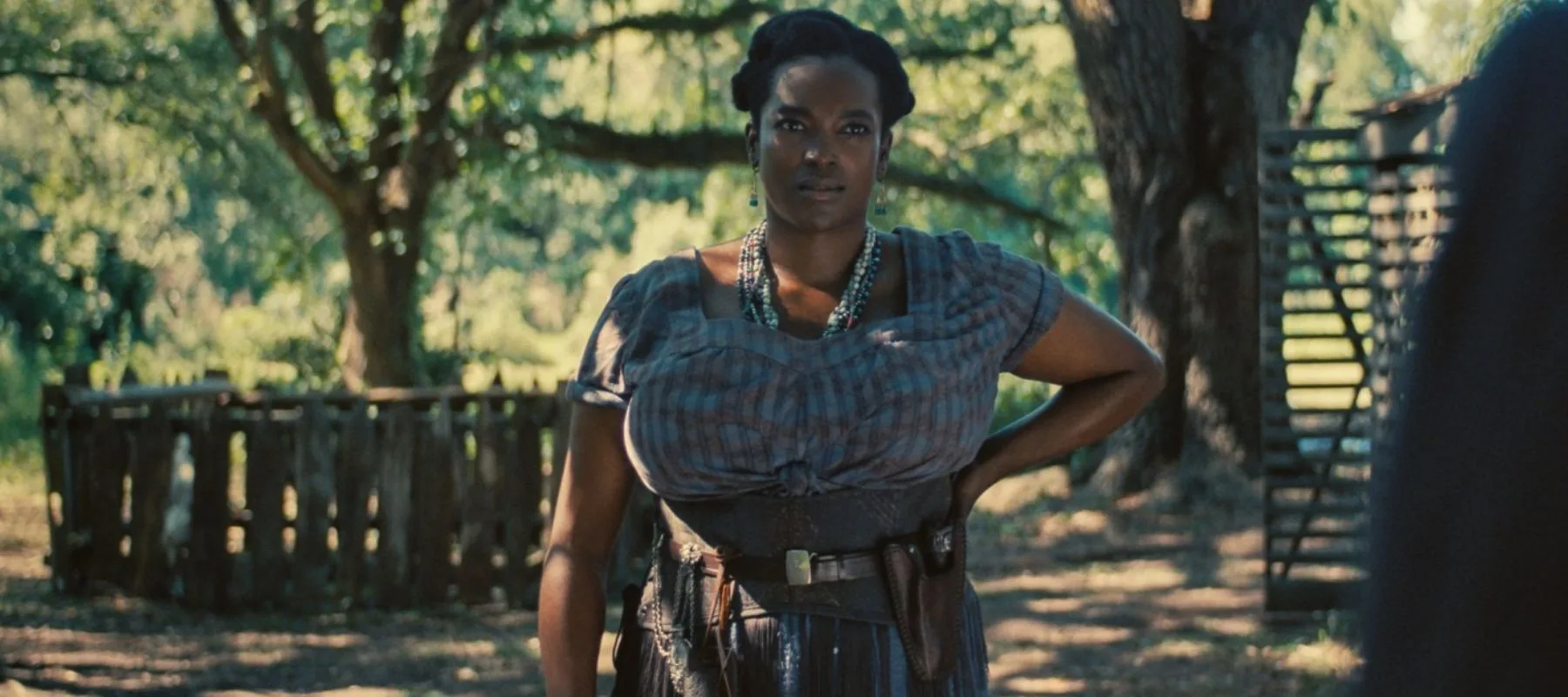
At midnight, Monday, March 16, 2026, a woman born in Zaria, Kaduna State, will be sitting in the Dolby Theatre in Los Angeles, United States (US), nominated for an Oscar for Best Supporting Actress. If Wunmi Mosaku wins, she could become the first Nigerian-born actor to win an Academy Award.
For context: Forest Whitaker won Best Actor in 2007 and has traced his ancestry to the Igbo people of Nigeria. But Whitaker is American, born in Texas and raised in California. Mosaku’s connection is different: she was born in Zaria, Kaduna State, before moving to the UK as a child. A win tonight would be a first for Nigeria and a signal of what Nigerian talent, given the right conditions, can produce.
Mosaku didn’t arrive in Hollywood on a shortcut. She spent years building serious dramatic credentials in British film and television, winning a BAFTA for Damilola, Our Loved Boy and a British Independent Film Award for His House, the 2020 Netflix horror film about South Sudanese refugees in England. When Lovecraft Country landed her in the American mainstream, the industry finally caught up with what she already was: a generational talent. Then Ryan Coogler called.
Sinners is set in 1932 Mississippi, a blues-soaked horror-thriller about twin brothers returning to the Jim Crow South of the US. Mosaku plays Annie, a hoodoo practitioner and to prepare for the role, she had to travel back to herself. Working with consultant Yvonne Chireau, she discovered that hoodoo, the spiritual folk tradition of the American South, has direct roots in Yoruba cosmology and the Ifá tradition. A woman who was discouraged from speaking Yoruba as a child in England found herself reconnecting with Ifá through a Black American lens on an American film set. “I didn’t know anything about hoodoo and the practice of it… I learned that it was a derivative of Ifa, which is a Yoruba traditional indigenous religion. I’m a Yoruba woman. I was born there but raised in the UK, so for me it was like this opening up of my ancestry, my survival, why I’m here,” she said. “Learning about Ifa grounded me in a way, because I found a part of myself that I didn’t know existed.” The research transformed the performance and transformed her. Sinners, which already earned Mosaku her second BAFTA win last month, itself made Oscar history with 16 nominations, the most any film has ever received.
Congratulations to Wunmi Mosaku who wins the BAFTA for Supporting Actress in Sinners ✨ #EEBAFTAs @WarnerBrosUK pic.twitter.com/cQ7W8ex5zT
— BAFTA (@BAFTA) February 22, 2026
Here’s the thing that should make every Nigerian uncomfortable. While Mosaku competes for Oscar glory, Nigeria will not be represented in the International Feature Film category this year. The Nigerian Official Selection Committee (NOSC) reviewed six films and voted, by majority, to submit none of them. Their reason? A “deficit in creative and technical intentionality.” And then there’s My Father’s Shadow — shot in Lagos and Ibadan, set during the 1993 Nigerian election crisis, performed largely in Yoruba and Pidgin — which won the BAFTA for Outstanding British Film last month. It was selected as the UK’s entry at these Oscars. A deeply Nigerian story, carrying a British flag.
The world clearly isn’t tired of Nigerian stories. Sinners is soaked in Nigerian spiritual heritage. The Davies brothers won a BAFTA with a story told entirely on Nigerian soil. The talent and the material exist; the problem is the machinery behind them.
Kunle Afolayan, one of Nollywood’s most ambitious filmmakers, just last Tuesday, March 10, revealed that his KAP Film Village in Ibadan spends roughly ₦11 million on diesel every four to five weeks, sometimes buying it on credit. That is before a single frame is shot. That is the environment in which Nigerian filmmakers are supposed to produce work competitive enough for Cannes, Toronto, and the Oscars.
Filmmaker Kunle Afolayan laments the rising cost of diesel in Nigeria.
"I can't cope with the ₦1500 per litre for diesel"
pic.twitter.com/Nn0sjerwzG— Nigeria News Today (@NigeriaTorch) March 10, 2026
Add underdeveloped post-production infrastructure, limited access to production funding, and limited international festival pipeline to bring work to global gatekeepers. The Oscar qualification rules require a seven-day theatrical run, but Nollywood has largely moved to streaming, which means most films don’t even qualify to be considered.
The NOSC’s criticism of Nigerian filmmakers isn’t wrong. But it is incomplete. You cannot demand five-star food from a kitchen with insufficient gas.
At midnight, Wunmi Mosaku will either make history or come agonisingly close. Either way, the lesson is the same: Nigerian stories are ready for the world. The industry just needs the infrastructure to tell them properly.