


Tune in to listen
Bounce FM

Political ideology is the guardrail that makes a party something more than a vehicle for personal ambition.
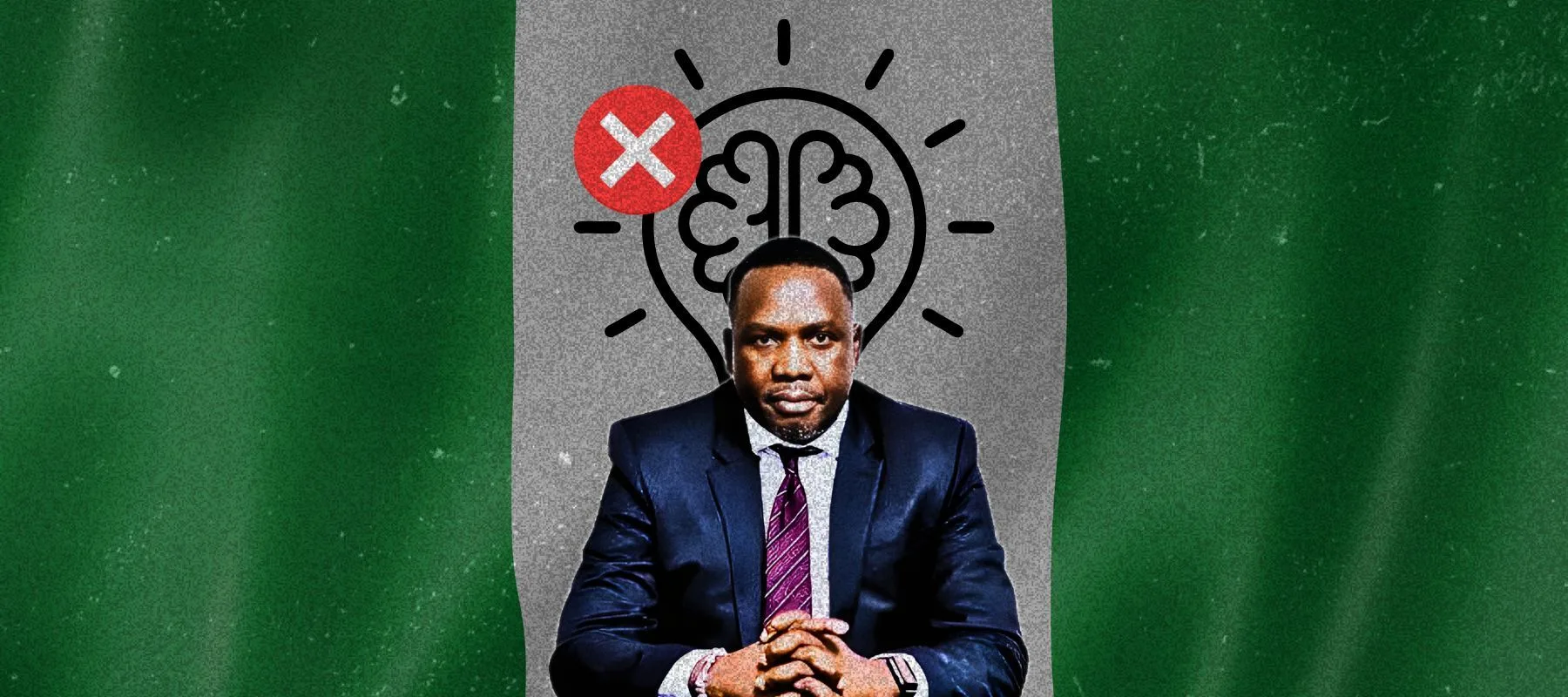
When Al Jazeera aired a recent episode of “Head to Head” featuring Daniel Bwala, President Bola Tinubu’s spokesperson, Nigeria’s internet lit up. Hasan came armed with receipts: old quotes, video clips, and past statements from when Bwala was a vocal critic of the same man he now champions. When confronted with his own words, Bwala denied them. When the clips played, the studio audience covered their faces. It was an uncomfortable watch.
But the most clarifying moment of that episode did not come from Bwala. It came from Aanu Adeoye, a Financial Times journalist on the panel. When Hasan raised the claim that Tinubu is a “wily political tactician,” Adeoye offered the crucial context: the president understands that Nigerian politicians have no political ideology and are not led by principles; their stomach effectively controls their political decisions.
“I think the crucial context here is, Nigerian politics is ideology-free. There’s no left or right. It’s mostly, unfortunately, about… stomach infrastructure and self-interest,” Adeoye said.
"I made a choice to leave the President after the Muslim Muslim ticket, but I came back seeing that he meant well for the Christian minorities in the North. I am a human being and can change my opinion on things the same way Mehdi Hassan has worked with the BBC, left for the… pic.twitter.com/btlbESzdWF
— Julius J. Adebayo (@HeIsJayjam) March 6, 2026
And that’s exactly what has played out over the last year with several governors of the opposition parties, especially the People’s Democratic Party (PDP), quitting their party and joining the ruling All Progressives Congress (APC), the same party many of them once scorned for failing to govern Nigeria efficiently. They chose self-preservation over loyalty to nonexistent party ideals.
But it was not always like this; Nigeria once had ideological politics. In the First Republic, Obafemi Awolowo’s Action Group was a democratic socialist party that launched free universal primary education in the Western Region in 1955. Nnamdi Azikiwe’s National Convention of Nigerian Citizens (NCNC) had progressive leanings. Aminu Kano’s Northern Elements Progressive Union (NEPU) stood openly for the Talakawa — the poor masses — against the feudal Northern People’s Congress (NPC) establishment. Even the conservative NPC had a legible philosophy. You knew what each party stood for. But that coherence did not last: the NCNC, ideologically closer to the AG, allied with the conservative NPC after independence simply because the NPC controlled federal power. Principle yielded to power. It was an early warning.
By the Second Republic, ideology was drowning in ethnicity and regional interest. Ibrahim Babangida tried to force a fix in 1989, creating two parties by decree — “one little to the left,” the other “a little to the right.” The experiment briefly produced something remarkable: a Muslim-Muslim ticket in Abiola and Kingibe that Nigerians voted for across ethnic and religious lines. But the parties had no genuine roots, and politicians simply joined whichever side offered better odds. Bola Ige called them “two sides of the same coin.” Then Babangida annulled June 12 and buried the project. By the Fourth Republic, ideology had almost disappeared entirely.
And here we are today. Party membership means almost nothing about what you believe. Politicians move anywhere belle face. APC, PDP, ADC, Labour Party and others are not ideological homes; they are vehicles for accessing power and distributing patronage. A man can be in the APC on Monday, the PDP on Tuesday, and back in the APC by Wednesday and face no significant blowback, because there is no ideological identity to betray. Bwala is not an anomaly. He is the template in this case.
So here is a question worth asking yourself: do you have a political ideology? Not just who you voted for in 2023, but what you actually believe. On the economy, are you conservative: trusting free markets and limited government? Liberal: convinced the state must redistribute wealth and protect the poor? Libertarian: wanting government out of both your wallet and your personal life? On social issues, are you progressive or conservative? Or are you Bwala with whom anything goes? These are not trick questions. In functioning democracies, they determine which party a person belongs to and they keep politicians honest, because constituents hold them to ideas, not just vibes.
In the United States (US), a Republican senator who suddenly campaigns for Medicare for All faces a primary challenge before the week is out. In the United Kingdom (UK), a Labour MP who pushes to privatise the NHS gets hounded out of their constituency. Political ideology is the guardrail that makes a party something more than a vehicle for personal ambition. Nigeria has no such guardrail and the people who pay for that absence are not the politicians. They are the millions of ordinary Nigerians whose welfare never makes it into any political masterplan, because no party is ideologically obligated to put it there.
When there is no North Star, governance becomes a game played by elites for elites. Social programmes appear and disappear on a whim. The poor remain poor because the people in charge were never philosophically committed to making things better for them. That is the real story behind the Bwala interview. Not one man’s inconsistency, but a system that produces inconsistency as its default setting. Until Nigerian political parties mean something, or more specifically, until belonging to one requires believing in something, good governance will remain a phrase everyone screams in vain.