


Tune in to listen
Bounce FM

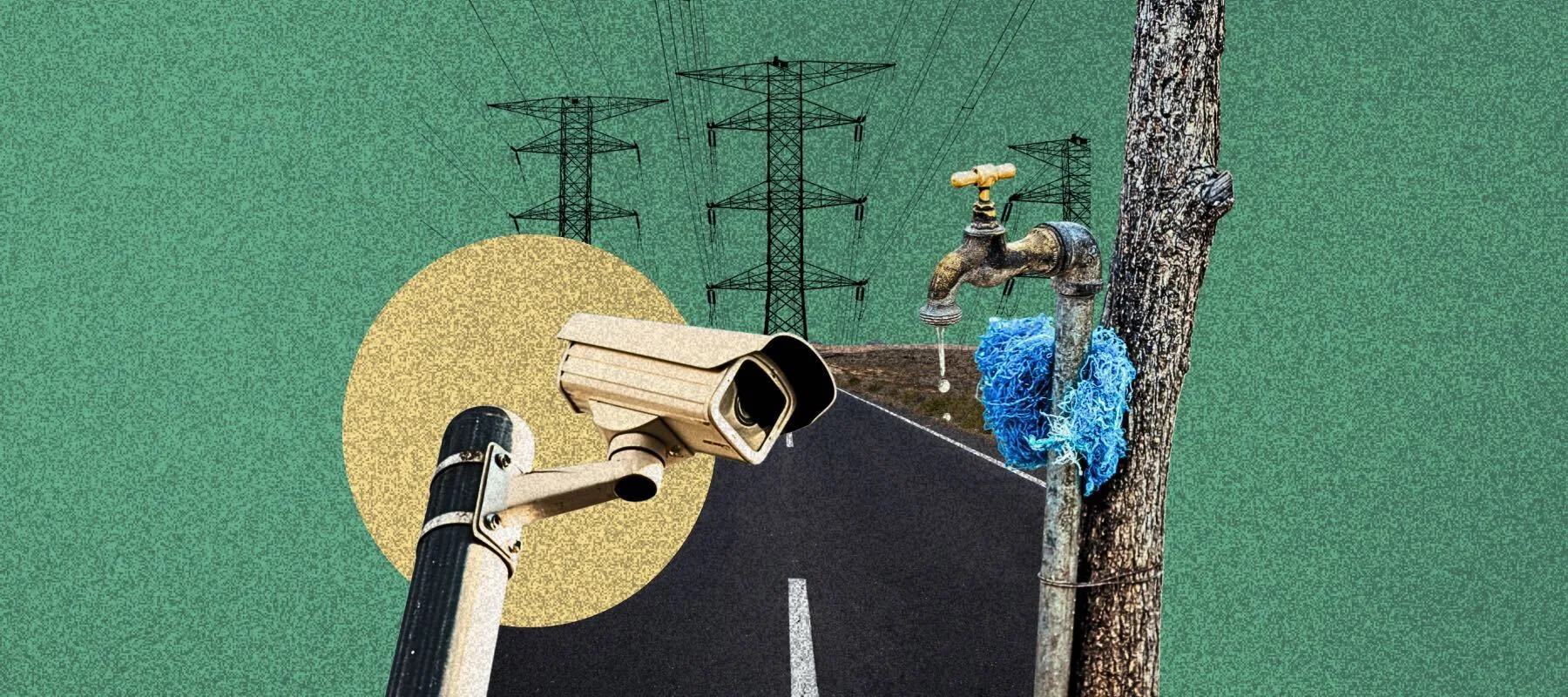
Former AfDB President, Akinwumi Adesina, put a name to what most Nigerians experience without being able to articulate it: an implicit tax.
There’s a running joke about Nigerians: push them to the wall and they won’t fight back; they’ll dig a hole in it and try to make it through. Some call it cowardice. Others call it resilience. Many Nigerians know it for what it is: survival in a country where the government rarely shows up.
That instinct to find a way through no matter the cost played out again on Sunday, March 22, 2026, when lawyer, Modupe Odele, better known as Mochievous, made a post essentially asking Nigerians to make a hole in the wall to get through a biting problem. “Nigeria has a lot of sunlight,” she wrote. “You are literally burning cash if you don’t have solar.” The post was in response to Nigeria’s monthslong blackout crisis, which continues to disrupt the lives and livelihoods of millions of Nigerians who can’t access affordable alternatives.
Nigeria has a lot of sunlight. You are literally burning cash if you don’t have solar set up at least as a backup system (mine is my primary sys)
For my solar set up in my house, I had to grudgingly do it but once I did, my only question to myself was why i didn’t do it earlier.
— Moe (@Mochievous) March 22, 2026
The backlash to Mochievous was swift and harsh. But the people who came for her aimed at the wrong target. She is not the problem. She is a product of the same system she was trying to help people navigate, one that, 65 years after independence, still cannot provide the basics that taxes are supposed to fund.
Think about what it takes to own a functioning solar setup in Nigeria. A full home installation can run anywhere from ₦1 million to ₦5 million. Mochievous very likely paid something in that range, not out of preference but out of resignation. Yet for critics like X user TheIgboWolf, who noted that many Nigerians are already in debt for food and transport, the advice landed as tone-deaf. Jola Ayeye, podcaster and co-host of I Said What I Said, put the sentiment most plainly: “I want power from the national grid. I don’t want solar or inverter. I want my country to work.” The backlash grew loud enough that Mochievous eventually clarified: Nigerians deserve a 24/7 power supply, and her post had nothing to do with justifying the situation. She was right on both counts. So were her critics. That is what makes this complicated.
I actually want power from national grid. I don’t want solar or inverter. I want my country to work. Shitty ass place that makes your co sufferers talk down at you for not being able to figure out or hustle solutions for government incompetence. Foolish place I hate it hereeeeeee
— Jola (@Jollz) March 22, 2026
But electricity is only one thread in a much larger unravelling. As far back as January 2021, former African Development Bank (AfDB) President Akinwumi Adesina put a name to what most Nigerians experience without being able to articulate it: an implicit tax — levies borne but never recorded. Citizens generating their own power, sinking their own boreholes, funding their own security through vigilantes and community gates, paving roads their local governments abandoned, and pulling children from public schools that the government has slowly defunded. None of this appears in any budget. None of it is counted when the government touts its tax-to-GDP ambitions. But it is real money, leaving real pockets, to perform a government’s most basic functions.
Education’s share of the national budget has slid from 10.75 percent in 2015 to 6.1 percent in 2026, well below the international benchmark of 15 percent to 20 percent. More than 70 million Nigerians lack access to safe drinking water. The government collects and, in too many cases, does not deliver. So the citizen pays twice: once to the government, and again to compensate for it.
What makes this hardest to sit with is that Nigerians have not been silent. Older generations shouted “Up NEPA” until the phrase became a cultural relic. Younger generations inherited the outrage and moved it online. In the months since the current blackout crisis deepened, social media has been loud with grief and fury, enough noise that the Minister of Power, Adebayo Adelabu, finally broke months of silence this week to apologise and promise improvements within two weeks. It was something. But even if the promise is kept, it will be a return to an unequal normal: thousands of communities will still be rationed into long stretches of darkness and distribution companies (DisCos) flouting the band structures meant to guarantee some minimum hours of supply.
"I'm mentally str£ssed. Today, I bought petrol for over ₦1,300. There's no light, and I've been running generator back to back. I don't understand why Nigeria is one of the first countries to be affected by the w@r in Ir@n"
— Actor Kunle Remi lament pic.twitter.com/gf6w8tLl6O
— CHUKS 🍥 (@ChuksEricE) March 25, 2026
And so Nigerians do what the joke says they do. They break through the wall. They install solar panels, drill boreholes, pave their own streets, fund their own security, and pay school fees to replace a public system that was never quite built. Mochievous was only doing what Nigerians have always done: finding a way through. The harder question, the one the argument on her timeline could not quite reach, is why breaking through the wall has become the expectation, and not the exception.