


Tune in to listen
Bounce FM

What we call gimmicks are no longer side tactics or distractions from the music. They are the system that carries it.
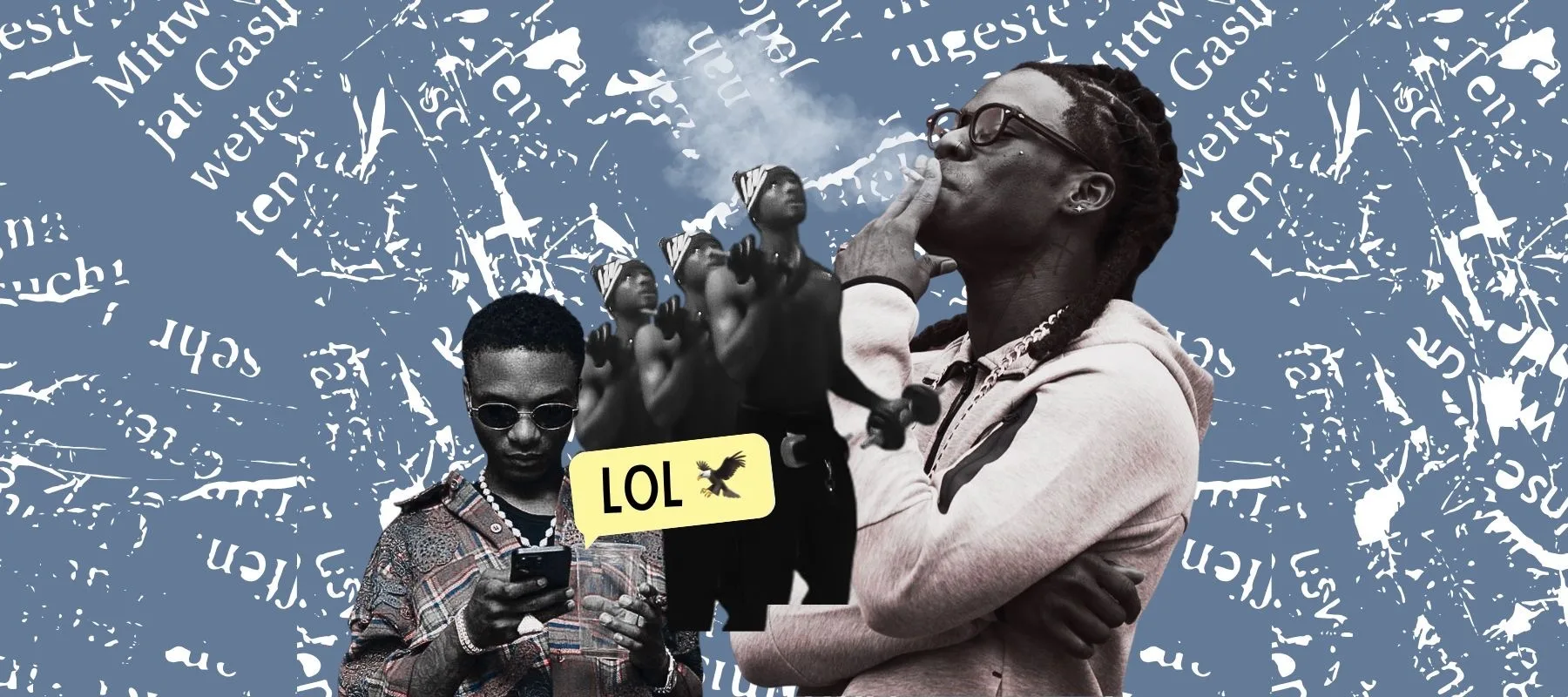
Every few weeks, a Nigerian artiste trends for something that has little or nothing to do with music. A tweet. A controversy. A sudden shift in persona. Almost anything to stir up conversations on social media.
At first glance, it looks like chaos: Two artistes tweeting recklessly against each other, a hot take or braggadocious claim dropped on a Western podcast, or even publicly going bald. The fans are not left out as they join in fueling the conversations. Yet when the album drops, fans are quick to label it a charade.
No more Big 3 there’s now a Big 4.
— REMA (@heisrema) April 27, 2024
But what if none of it is random? Fans call it clout-chasing, a publicity stunt, or “doing too much.” Most times, they call it gimmicks. But what if this chaos is actually the most structured part of modern music marketing?
Years ago, music releases were marketed through media houses, including radio stations. With the industry’s expansion, the radio tours extended to international media, snippets, brand partnerships and creative teasers.
But now more than ever, the dynamics have changed. And artistes are strategically positioning themselves to maintain cultural relevance.
The word “gimmick” is used to imply something cheap—an unserious distraction from the “real” art. But in today’s Nigerian music landscape, that definition feels outdated because these so-called gimmicks are rarely accidental.
Take Rema, for example: his bravado show-off with cigarettes in almost every appearance, paired with chest-thumping statements on social media circa his HEIS era, were more than performative rituals. They were identity-building.
HEISツアーは続く pic.twitter.com/oXr0wXw7ii
— REMA (@heisrema) June 4, 2025
On Asake’s exit from YBNL Nation, the valiant display of luxury cars, evolving hairstyles, and theatrical outfits was a thematic statement for his era with Giran Republic. For an artiste charting a new course, it was more than intentional. And so the music couldn’t stand alone; it needed to arrive with a persona.
While acts like Omah Lay often fall into this, as an artist whose music is driven by deep-seated emotions marked by introspective lyricism and melancholy, any attempt at authenticity and vulnerability can be seen as a gimmick.
Everything surrounding his sophomore album Clarity Of Mind has been a series of marketing tactics: a public meltdown via social media posts, an esoteric embrace of the spiritual, shaving his hair to make controversial statements about Afrobeats at his London listening party, and other media outlets. But when you create a debut album like Boy Alone, there are depths you can touch to surpass that.
— Omah Lay (@Omah_Lay) March 13, 2026
Even Wizkid’s well-timed online “crash outs” and Burna Boy’s recurring controversy cycles feel less like accidents and more like rhythm—peaks of attention that often align suspiciously well with releases.
Burna Boy speaks on AfroBeats as a genre
“… AfroBeats as people call it, is mostly about nothing, literally nothing. there’s no substance to it — like, nobody is talking about anything in it. it’s just a great time.” pic.twitter.com/rfzOtCaZZY— benny. (@1BENNY7G) August 22, 2023
Call them gimmicks if you want. But they work well as strategies, because at the end of it all, two things happen: attention is won, and the fans are at the centre.
The evolution of the music industry has spanned beyond the composition of sound and lyrics to reach the audience. Attention is now the currency that determines whether music is even heard.
Music is no longer just about what you hear. It’s about what you see, what you share, and what you can’t ignore. For an industry that thrives on virality, staying visible between releases fuels an artiste’ relevance. And with platforms like Twitter and TikTok, silence is more expensive than creative rollouts.
So when artistes drop music anymore to sustain their presence, visibility tactics become a tool. When paired with personality, it becomes content that makes visibility the currency.
But despite fans’ complaints about the constant gimmicks used by Nigerian artistes, the same fans have consistently rewarded them with engagement that has fueled music promotions. From trending topics, debates, memes, and the like, fans reward these artistes with engagement that builds up to a music release or helps push the music. The same audience that complains about “too much drama” is often the one amplifying it the most.
Many argue that gimmicks like Wizkid and Davido trading words in 2024 were yet another promotional antic. Yet the conversation trended for days and can be said to have boosted Wizkid’s Morayo release-day streams.
🤣😂 https://t.co/hzprTcz1B9 pic.twitter.com/zRZNY0DWMB
— Wizkid (@wizkidayo) April 29, 2024
If anything, fans aren’t just spectators; they’re participants who complete the loop. After all, relevance today is marked by virality. And whether the audience agrees or not, they will always be instrumental in this game.
With the music industry’s ever-evolving state, rollouts will continue to change. What used to be a straightforward campaign—announce, promote, release—has evolved into something more layered.
Albums now arrive with narratives and storytelling, marked by distinct personas, characters and eras. An artiste no longer wants to drop a project; they want to introduce a version of themselves in it. And every “gimmick” then becomes part of that narrative. But the music is still central, now surrounded by moments designed to make it linger in the audience’s minds.
The shift has already happened.
What we call gimmicks are no longer side tactics or distractions from the music. They are the system that carries it.
This isn’t artistes doing too much. It’s artistes understanding exactly what the moment demands.
And as long as attention remains the currency, the rollout will never just be the music again.