



Tune in to listen
Bounce FM

There are at least three options the government has not used, and that it should, to make life easier for Nigerians.
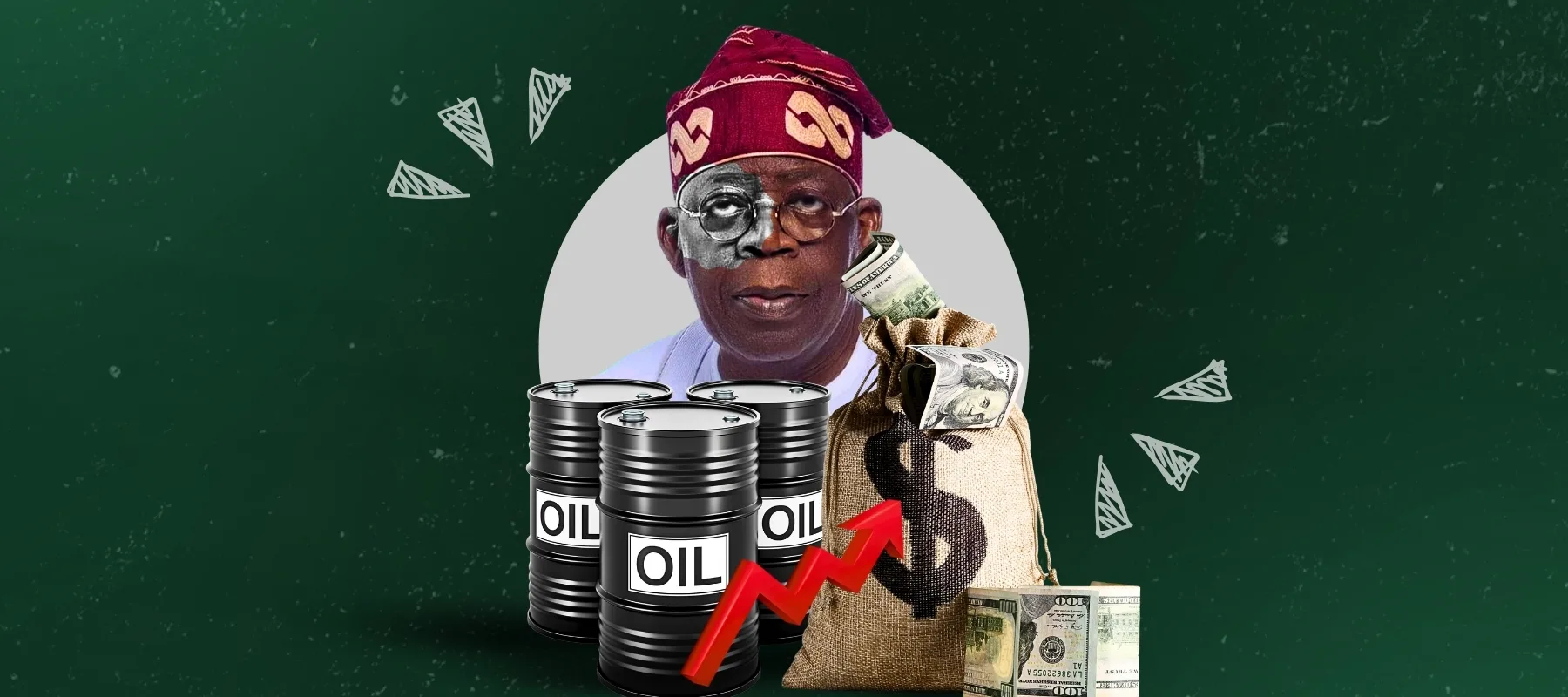
As global oil prices rise, Nigeria earns more. At the same time, Nigerians are paying much more at the pump.
This is the central contradiction of the past five weeks. Since the outbreak of the United States (US)-Israel war on Iran on February 27, crude prices have crossed $100 per barrel, well above Nigeria’s 2026 budget benchmark of $64.85. Every barrel exported above that benchmark is money the government was not counting on. That means the government is, by any measure, in a better revenue position than it was in January.
Yet pump prices, which averaged between N875 and N900 per litre before the war, rose to between N1,261 and N1,330 per litre within 19 days of the conflict starting and have remained elevated since.
It would be too simple to blame the war alone. Nigeria’s fuel prices were already vulnerable before the first strike on Iran. The 2023 removal of the petrol subsidy tied pump prices directly to international market movements. A naira under sustained pressure against the dollar made every litre of imported refined product more expensive. And the Dangote Refinery, despite its scale, sources a large portion of its crude feedstock internationally, meaning global price spikes pass through to its gantry price and then to the pump. The war did not create these vulnerabilities. It exposed them, sharply and suddenly.
What it has also exposed is the absence of any government response. More than five weeks into what the International Energy Agency (IEA) has described as the largest oil supply disruption in history, the federal government has offered no relief measure to cushion the impact on ordinary Nigerians. No announcement. No emergency framework. Nothing.
Contrast this with what other governments have done. Countries like Serbia and Croatia moved within days to cut fuel excise duties and freeze prices. Indonesia extended energy subsidies. Cambodia and Laos — economies a fraction of Nigeria’s size — suspended fuel taxes and introduced targeted support for consumers. These governments did not abandon their broader economic frameworks to do so. They made emergency adjustments within them.
What would that look like in Nigeria? There are at least three options the government has not used, and that it should, to make life easier for Nigerians.
The most immediate is the suspension of the five per cent fuel tax and the regulatory charges that the Nigerian Midstream and Downstream Petroleum Regulatory Authority (NMDPRA) adds to the pump price. These levies sit on top of whatever the market determines and inflate what consumers pay. Removing them temporarily for the duration of the crisis would bring prices down without dismantling the deregulation architecture the administration has built its economic identity around. It requires no legislation. It requires a decision.
The second option is scaling up the Naira-for-Crude programme. The Dangote Refinery currently receives only five crude oil cargoes per month from the Nigerian National Petroleum Company (NNPC) Limited against a contracted volume of 13 to 15. That shortfall forces the refinery to buy crude on international markets at a premium, a cost that flows directly into pump prices. Compelling NNPC to honour the full contracted volume would reduce the refinery’s dollar exposure and, over weeks, ease what consumers pay. This is not a new policy. It is enforcement of an existing one.
The third, and most politically loaded, is a temporary emergency subsidy to hold pump prices near pre-war levels. Governments around the world have introduced time-bound price support mechanisms since the conflict began, pegged explicitly to the duration of the crisis. Nigeria has not. The irony is that President Bola Tinubu, who built his economic legacy on ending the subsidy era, is also the one with the clearest authority to define what a temporary, emergency measure is and is not. That is not the old subsidy regime. That is crisis management.
Notably, late on Tuesday, April 7, some of that crisis appeared to ease. The US agreed to a two-week ceasefire with Iran, brokered by Pakistan, with Iran committing to allow safe passage through the Strait of Hormuz during the pause. Oil prices have subsequently fallen below $90 on the news. If they continue to fall and the Dangote Refinery follows and marketers pass it on, Nigerians may see some relief at the pump in the coming days.
But that relief, if it comes, will have arrived from global developments rather than domestic policy action.