


Tune in to listen
Bounce FM

This tournament has shown that politics has a remarkable ability to taint even the purest of spectacles.
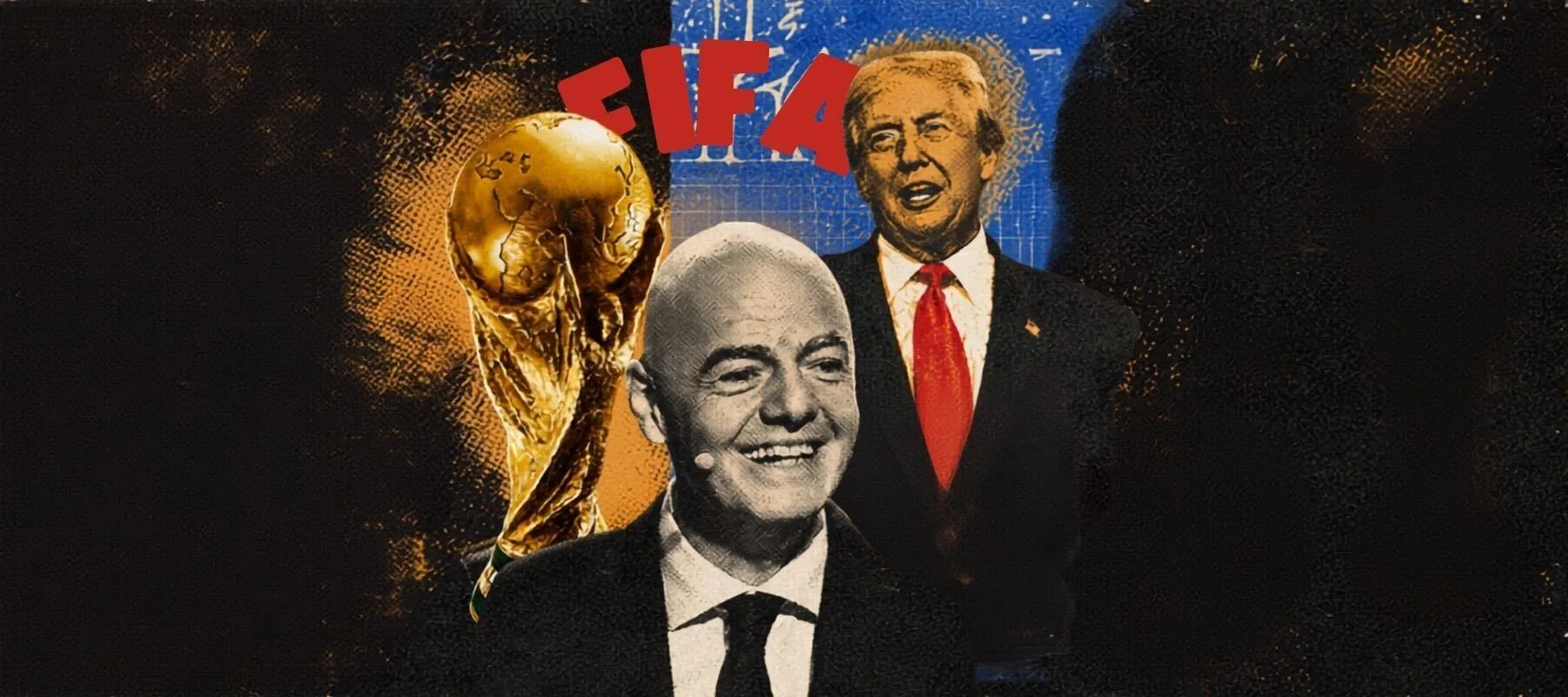
The ongoing 2026 FIFA Men’s World Cup in the United States (US), Mexico, and Canada has arguably been the most exciting in recent memory. It has written some of the most beautiful pages in world sports history, showcasing the ultimate uniqueness of football.
Millions of football fans will not soon forget the incredible story of Cape Verde and its goalkeeper, Vozinha. The debutant 40-year-old goalkeeper captured the imagination of football fans worldwide by pulling off seven saves against tournament favourites and current semifinalists Spain, in Cape Verde’s first-ever World Cup match on June 15. That stunning performance, besides earning his country its first-ever World Cup point, propelled the veteran shot-stopper from under 50,000 Instagram followers to over 29 million in less than a month. Football fans will also not forget the trash-picking Japanese fans, excellent examples to follow in our own communities. And Norway may have crashed out of the World Cup, but many will hold on to fond memories of the rowing Norwegian vikings and the drumming after each of their wins, right up until Sunday morning’s painful exit at the hands of England in the quarterfinals. We have also seen African teams shine and flourish, despite falling short when it mattered most.
Dear Norway fans… you are, without question, the finest supporters this tournament has seen.
From a nation of just over five and a half million people, you travelled across oceans, filled stadiums, painted American streets red and white and turned every single game into a… pic.twitter.com/kSMIKjM55B
— Geronimo Morgans (@GeronimoMorgans) July 5, 2026
But as we have seen the beauty, so too have the ugly sides of the game come to the fore. This tournament has shown that politics has a remarkable ability to taint even the purest of spectacles. FIFA is an organisation with a well-documented history of corruption — former President Sepp Blatter remains suspended from FIFA activities since 2015 as a result of the corruption case made public that year, but such scandals have usually centred on non-sporting matters like media and marketing rights.
So when United States (US) striker Folarin Balogun’s red card (vs Bosnia & Herzegovina) was shockingly suspended last Sunday, July 5, many in the footballing world raised their eyebrows, sensing something strange, because there was no avenue to appeal on-field decisions at this World Cup. You had to go back to the 1960s to find another case of a red-carded player being eligible for the next match. It then emerged that US President Donald Trump had directly called current FIFA President Gianni Infantino to “review” the red card. The call was perhaps the most brazen political interference in football’s modern history, made worse by the fact that Trump, who admitted to knowing nothing about what a red card means or how it works, got exactly what he wanted. Infantino defended the decision by saying a review was already ongoing and that the ban suspension was made by an independent panel, but reports emerged on Sunday, July 12, that of the 18 members who sit on FIFA’s disciplinary committee, only one — chairman Mohammad Al Kamali of the UAE — took the unprecedented decision to lift Balogun’s automatic ban. There is a case to be made that the VAR process leading to Balogun’s red card was itself problematic, but the process used to suspend the ban was shaped by raw politics, and that hurts the integrity of the sport.
BREAKING: President Trump reveals the details of his conversation with FIFA President Gianni Infantino over the controversial red card call on star American player Folarin Balogun.
"All I did was ask for a review because I didn't think it was a foul. And, you know, again, I'm… pic.twitter.com/MD5Q9t44th
— Fox News (@FoxNews) July 6, 2026
But if Trump’s phone call showed how politics can infect the game if its custodians allow it, other moments at this World Cup have been far more personal and ugly. After a bruising Round of 16 match between France and Paraguay, Paraguayan senator Celeste Amarilla launched a series of racist attacks on French superstar Kylian Mbappé. Mbappé, in an apparent response to Paraguay’s rough style of play throughout the match, had ignored goalkeeper Orlando Gill’s outstretched hand at the final whistle. Amarilla’s disgraceful response was to call arguably the greatest footballer of his generation a “colonised Cameroonian pretending to be French,” going on to disparage arguably the greatest footballer of his generation in dehumanising terms. While it was encouraging to see her fellow senators pass a motion denouncing her “racist and discriminatory” remarks, it was nonetheless clear that politics had once again done nothing but hurt the game.
"Yo no tengo que pedir disculpas a Mbappé por decir que chupaba cocos en vez de leche materna y solo conocía a chimpancés. Yo vengo de una sociedad donde se le pegaba a los gays y decir negro de mierda era lo más usual".
Celeste Amarilla, una senadora ultraderechista paraguaya,… pic.twitter.com/srPwx3jSDb
— Daniel Mayakovski (@DaniMayakovski) July 8, 2026
Amarilla is far from the only politician to resort to racism at this World Cup. Ahead of Tuesday’s semifinal between Spain and France, former Spanish Prime Minister Mariano Rajoy suggested that the French team was filled with Africans. In an article published in the Spanish daily El Debate on Sunday, Rajoy described the French team as a “very high-level squad. That said, they don’t have any French players.” Of course, everyone on the French team is French and 23 of the 26-man squad are, in fact, born in France. The former Spanish leader’s comments came just a week after Hebe Casado, deputy governor of Argentina’s Mendoza province, described the French team as an “African team” that is “weak on manners,” in a post on X after France beat Paraguay 1-0, prompting the French Embassy in Argentina to ban her from its premises.
Muy bien Paraguay. El equipo africano flojo de modales. No lo aguanto a Mbappe.
— Hebe Casado (@hebesil) July 4, 2026
Football thrives because fans believe that ninety minutes can still be decided by merit and because players believe the game belongs to them regardless of where they’re from or what they look like. The moment politics convinces supporters otherwise, whether through a phone call that bends the rule or a racist tirade, the sport loses something far more valuable than television rights or sponsorship money. It loses trust, in the game’s fairness, and in its promise that talent, not tribe or skin colour, decides who gets to be great.