



Tune in to listen
Bounce FM

To live in a clean environment, Nigerians must take ownership of their spaces, not leave their waste for others to clean up.
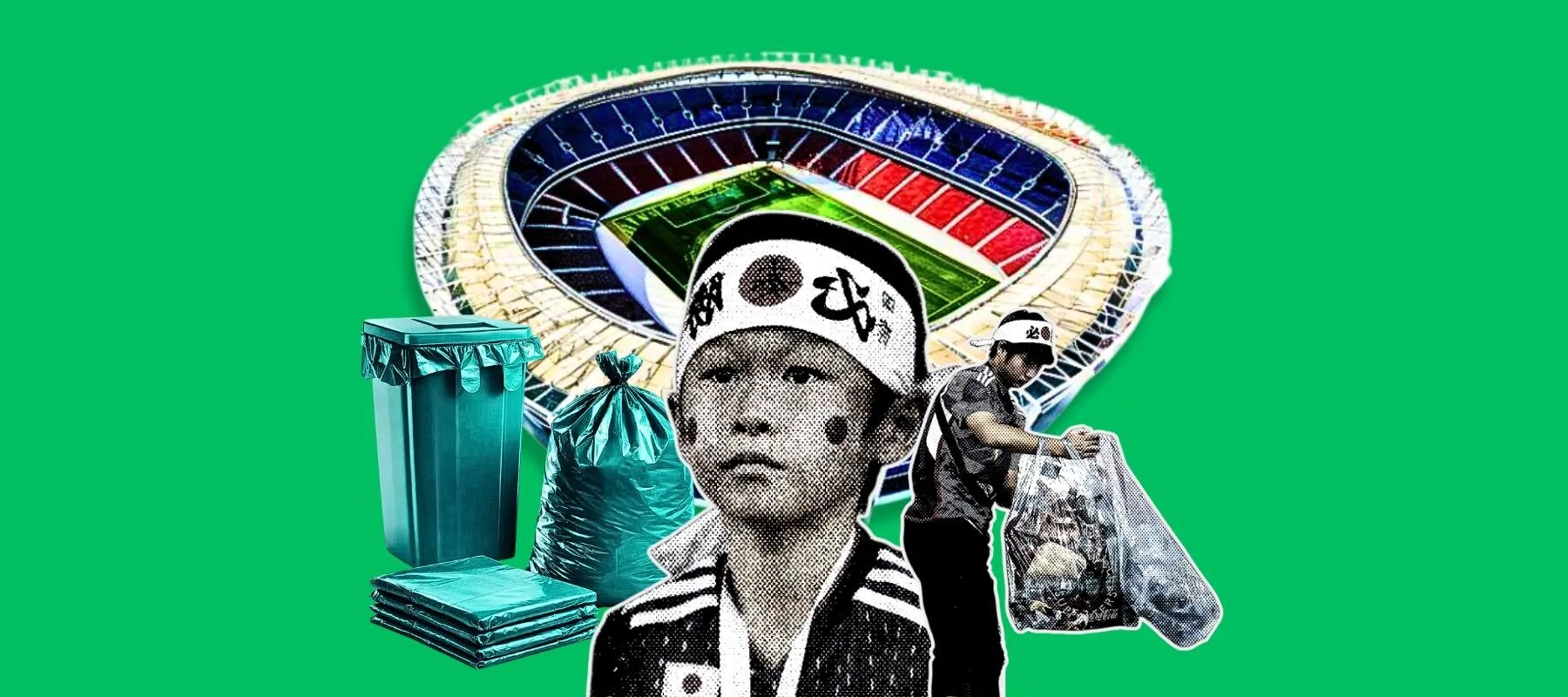
When was the last time you stepped out of your Nigerian home and found a heap of trash in the middle of the road? Probably yesterday. Maybe even this morning. In recent days, social media has been awash with photos and videos depicting Lagos as a giant dumpsite. Whether you are in Egbeda or Mushin, you are very likely to find yourself surrounded by garbage.
Snapshots from Lagos today.
Eko o ni baje o https://t.co/TDEMHT7i0i pic.twitter.com/b1xfnneGKP
— Oluwanifise (@Oluwanifise13) June 12, 2026
From Egbeda to Idimu is an eyesore even extending down to Ejigbo. The road “median” has been decorated with dirts for days, and it keeps mounting. Are we not on cusp of an epidemic? @Lawma_gov @muyiwag @Dontee___ @tokunbo_wahab @IgumaScott @AlimoshoOnline @egbeidimulcda pic.twitter.com/tIzFfSsYRM
— Alao Abiodun (@biodun_alao) June 15, 2026
Lagos is not alone, however. Other states live in the same reality, whatever the Lagos-centric social media bubble might suggest. This is the way of life in this country; the Nigerian culture, as uncomfortable as that is to admit. People leave their homes early in the morning, put their trash in their cars, drive to the nearest major road and dump it there without a second thought. They do not feel out of place because they find other people’s trash there too. It is how it is done, however backward it makes us all look.
But can we choose differently? Absolutely. Consider the Japanese fans at the World Cup, who once again caught the attention of the world for cleaning up the stadium after their cracking opener against the Netherlands on Sunday, June 14, 2026. At the 2018 World Cup in Russia, the Samurai Blue supporters, equipped with large trash bags they had brought from home, earned widespread admiration for tidying their rows and seats before leaving, just as they had done in 2014 and before. In Qatar in 2022, it was the same story. Now, in the United States, they are doing it again.
Japan fans doing what they do 🙌🇯🇵
Following their incredible 2-2 draw with Netherlands, @jfa_samuraiblue supporters once again demonstrated their impeccable manners, tidying the stands before departing Dallas Stadium. pic.twitter.com/clODmtsH2w
— FIFA (@FIFAcom) June 15, 2026
For these Japanese fans, that behaviour is culture. It is simply the way of life and the complete opposite of how many Nigerians relate to their shared public spaces. “It’s not just part of the football culture but part of Japanese culture,” Japan-based football journalist Scott McIntyre told the BBC in 2018, making clear that the supporters’ conduct was not stadium etiquette but a reflection of how they live. “An important aspect of Japanese society is making sure that everything is absolutely clean,” McIntyre added.
So why can’t Nigerians pursue a similar attitudinal shift? Would that not be an honourable way to live? As a predominantly religious population, would it not also be the moral and godly thing to do? As the saying goes, cleanliness is next to godliness.
I asked Japan fans what the deal is with these trash bags they’re waving.
They’re actually functional trash bags. Everyone brings them to cheer during and clean up after themselves after.
Very on brand with Japan culture. easiest stadium cleanup Dallas has ever seen incoming pic.twitter.com/wCdG4SAtC0
— GFed🇺🇸 (@GfedGoCrazy) June 14, 2026
On Sunday, Lagos State Commissioner for Environment and Water Resources, Tokunbo Wahab, attempted to make precisely that case. In a post on X, he shared a photo depicting the consequences of roadside dumping — a stark image that captures the irony of a people who litter their own streets and still expect a clean and serene environment.
“Every time a bottle, food pack, nylon bag, or any waste is thrown from a vehicle onto the road, it may seem insignificant. However, when thousands of people do the same, our streets become littered, drainage channels become blocked, and the environment suffers,” Wahab wrote. He added that a clean Lagos “is not the responsibility of government alone — it is a duty we all share.”
Every time a bottle, food pack, nylon bag, or any waste is thrown from a vehicle onto the road, it may seem insignificant. However, when thousands of people do the same, our streets become littered, drainage channels become blocked, and the environment suffers.
What you throw… pic.twitter.com/KSPvS16GSJ
— Tokunbo Wahab (@tokunbo_wahab) June 14, 2026
The commissioner is right to call out this behaviour and its consequences. To live in a clean environment, Nigerians must take ownership of their spaces, not leave their waste for others to clean up as we routinely see on our roads.
But the government bears a significant share of the blame too. It is the state’s responsibility to provide reliable, accessible waste collection infrastructure. In a properly functioning system, relevant agencies would mandate that every household maintain a refuse drum outside their premises and face penalties for failing to do so. Those agencies would then need to ensure regular collection. That has clearly not been happening. Lagos is experiencing its current refuse crisis in large part because the government and its agents have failed residents. Many allege that the Lagos State Waste Management Authority (LAWMA) has not collected refuse in some areas for several weeks. Responding to Wahab’s post, a Lagos-based private jet charter founder, Daniel Omole, complained that despite disposing of his trash responsibly, LAWMA had not visited his home in over a month.
Oga I dispose my waste properly in my bin. The bin has been full for over a month and whenever I call LAWMA they either say that the dump site is difficult to navigate during the rainy season and they have not offloaded their truck or their truck is bad.
Lagos state has poor… https://t.co/0ya3trMuTk
— Jet Daniel 🛩️ (@LaceVine) June 15, 2026
Are Lawma workers on strike??? I am holding my breath everywhere . She fe pa wa ni
— Ummi❤️ (@Khaeer__) June 16, 2026
There is also the matter of street-level infrastructure. Sometimes, the environment itself forces indiscriminate disposal upon you. You are walking down a street, you finish a bottle of water, you look for a bin and there is none. Rather than carry the bottle to your destination, you do what the environment has quietly taught you to do: you drop it in a drainage channel or by the roadside. The trash accumulates, and the community suffers for it. Ensuring that this behaviour is not the inevitable is precisely the kind of work the local government should be doing if it had not been handicapped by the state governor.
Above all, governments at every level must enforce a culture of accountability. Nigerians have spent decades littering streets and roads without consequence. Breaking that habit and building a cleaner civic culture — one more like Japan’s — will not come easily. It will require creating the infrastructure that makes cleanliness achievable, while firmly penalising those who undermine it.
But are the federal, state, and local governments prepared to drive that transition? Or must ordinary Nigerians take the lead themselves? No Japanese official asked those supporters to pick up their rubbish after the match on Sunday. They did it because it was simply the right thing to do. “That is the culture… we don’t want to make the mess and then leave it,” one Japanese fan told FIFA.
The reason Japan fans clean the stadium after each game. Respect. 🤝🇯🇵 pic.twitter.com/o9qJUOLefY
— FIFA (@FIFAcom) June 15, 2026
Perhaps that is where Nigerians need to start too; not making the mess and then walking away from it.