




Tune in to listen
Bounce FM

The tragedy of Nigeria’s consequence vacuum is not confined to the elite.
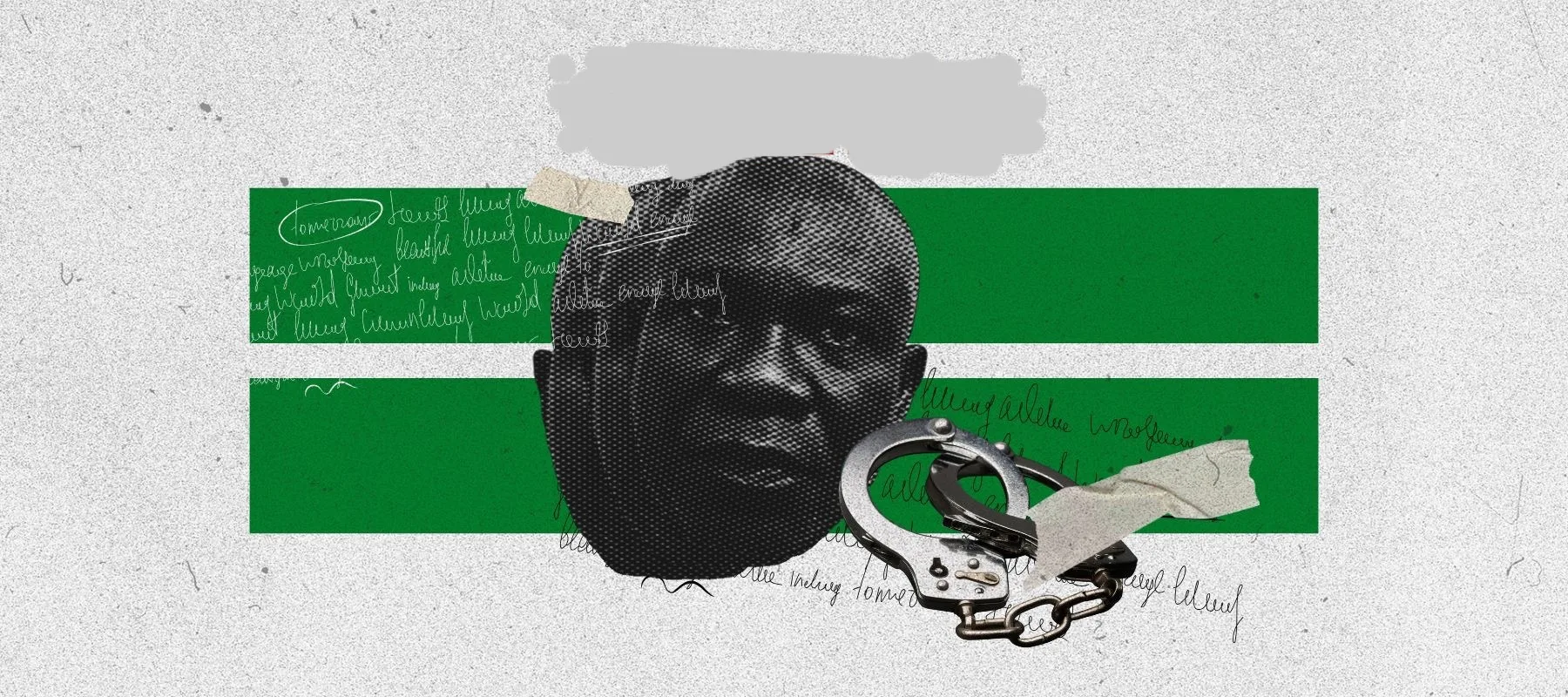
Nigeria’s greatest tragedy is not just corruption, it is the near-total absence of consequence, especially for those insulated by wealth or significant political influence. The higher one climbs in the country’s political or economic hierarchy, the further accountability recedes, until the very idea of consequences becomes negotiable, reversible, or simply irrelevant. From presidential pardons for convicted politicians to government lobbying for citizens imprisoned abroad, Nigeria consistently demonstrates that status, not innocence, is what determines who faces justice. And the country offers no shortage of examples to prove just how destructive this culture has become.
The latest subject of this culture is the former Deputy Senate President, Ike Ekweremadu, who is currently serving nine years and eight months in a British prison for trafficking a young Nigerian man to harvest his kidney for his sick daughter. His wife, Beatrice, and a collaborating doctor, Obinna Obeta, were also convicted. It was a rare moment of accountability and consequence for a powerful Nigerian. In a functioning consequence culture, this conviction would be a sobering reminder that power does not override the law and influence cannot shield wrongdoing.
Yet, on Monday, November 10, 2025, President Bola Tinubu dispatched a high-level delegation, including the Minister of Foreign Affairs, Yusuf Tuggar, and the Attorney-General and Minister of Justice, Lateef Fagbemi, to the UK Ministry of Justice in London to undo that consequence. The delegation’s mission was to arrange for Ekweremadu’s release from a British prison and facilitate his transfer to a Nigerian prison. A cynical mind would say no one in their right mind would willingly flee a British prison — with arguably better facilities — for a Nigerian prison which is likely substandard, dangerous, and inhumane, except they’re assured of evading the full consequences of their crimes once they’re in Nigeria. The cynical mind would be forgiven for disbelieving the idea that a former deputy senate president would choose to be imprisoned in a country that hosts four of Africa’s worst prisons without securing commitments not to live within that rotten system. Thankfully, the British government has rejected the baffling request to transfer Ekweremadu to a Nigerian prison. But the fact that the Nigerian government made the request speaks volumes about its values.
Of course, successive Nigerian governments, regardless of their anti-corruption rhetoric, are known to protect their powerful friends, and Tinubu, who recently pardoned a bunch of cold-blooded murderers and drug traffickers, is not doing anything out of the ordinary. Even former President Muhammadu Buhari, who rode to power on the promise of fighting corruption, granted presidential pardons in April 2022 to former governors Joshua Dariye (Plateau State) and Jolly Nyame (Taraba State), both convicted of looting billions of naira. Their crimes were proven. Their appeals were exhausted. Their guilt was affirmed by Nigeria’s Supreme Court. Yet Buhari, the self-styled anti-corruption crusader, set them free under the guise of age and ill health.
Beyond pardoning the worst offenders in society, financial corruption cases involving some notable politicians, including Senate President Godswill Akpabio, have been dropped by the Economic and Financial Crimes Commission (EFCC) in recent years after they joined the ruling All Progressives Congress (APC). These decisions are an affirmation of comments made by Adams Oshiomhole, an APC chieftain, during a rally in Benin State, the Edo State capital, in January 2019. Oshiomhole had promised opposition politicians that “your sins are forgiven” once they joined the APC.
Equally troubling is the re-emergence of Major Hamza Al-Mustapha, the former Chief Security Officer to the late dictator, General Sani Abacha, who has now declared his intention to run for president in 2027 under the Social Democratic Party (SDP). Al-Mustapha was deeply implicated in some of the darkest chapters of Nigeria’s military dictatorship. He was charged with involvement in the 1996 assassination of Kudirat Abiola, the attempted murder of journalist and minister Alex Ibru, and another assassination attempt on Admiral Isaac Porbeni. These charges were hardly fabricated; they arose from a regime that brutalised citizens and extinguished dissent with cold precision. In any society with a functioning moral memory, anyone associated with such acts would be permanently disqualified from public life. But in Nigeria, where history fades quickly, and accountability evaporates even faster, he is welcomed back into politics with applause, entourages, and endorsements. Besides spending a little over a year in prison after his initial conviction for murder and before an appeal court cleared him of wrongdoing in July 2013, he has not faced any meaningful consequence. This is what decades of absent consequence culture produce: the recycling of impunity into legitimacy.
But the tragedy of Nigeria’s consequence vacuum is not confined to the elite. It is embedded in everyday life, performed by ordinary Nigerians who condemn corruption yet practise evasion at every turn. The average citizen fears consequences just as much as the political class avoids them. For example, when a child is sexually abused, many families — especially elders — prefer to bury the matter. “Don’t disgrace the family,” they plead. “Don’t destroy the boy’s future.” The victim is pressured to stay silent, and the abuser is shielded. Communities close ranks to protect offenders and urge forgiveness without justice. The victim’s trauma becomes a footnote — the perpetrator’s reputation is the priority. This reflex — this collective instinct to suppress wrongdoing rather than confront it — is the cultural software of Nigerian society. It is how crimes multiply. How abusers evolve into predators. How petty wrongdoing graduates into grand corruption.
The same culture thrives in schools where exam malpractice is normalised, in homes where domestic violence is tolerated, in marketplaces where bribery is woven into every transaction. People try to bypass queues, evade tax, bribe police officers, fake receipts, forge documents, manipulate processes, and dodge responsibility. The citizen who condemns leaders for being corrupt is the same citizen who bribes for a driver’s licence or offers “something small” to avoid a traffic fine. The political class does not behave differently from society; it behaves exactly like it.
Nigeria’s consequence deficit is therefore not just a governmental failure; it is a national value failure. It is a collective resistance to accountability that stretches from the presidential villa to the street corner. Where consequences do not exist, systems collapse. Where accountability is negotiable, the law becomes irrelevant. Where wrongdoing carries no cost, it becomes inevitable.
That is why corruption thrives in Nigeria. Why insecurity festers. Why public funds vanish without a trace. Why politicians return to fanfare after disgrace (see Orji Uzor Kalu, who returned from prison for stealing public funds and was welcomed by a senate delegation led by the Senate President). Why criminals find redemption in politics. Why institutions cannot reform. Why justice is selectively applied.
A nation built on this foundation cannot prosper. It cannot progress. It cannot heal. Nigeria will not become better by accident. It will only become better when wrongdoing finally becomes costly and when consequence is no longer an enemy. Until Nigerians — leaders and citizens alike — learn that actions must attract consequences, that justice must supersede sentiment, and that society must be defended by its moral backbone, not its excuses, nothing will change.