



Tune in to listen
Bounce FM

Without deliberate checks and balances, we wouldn’t just be witnessing AI’s gradual displacement of our music and art, but also of jobs.
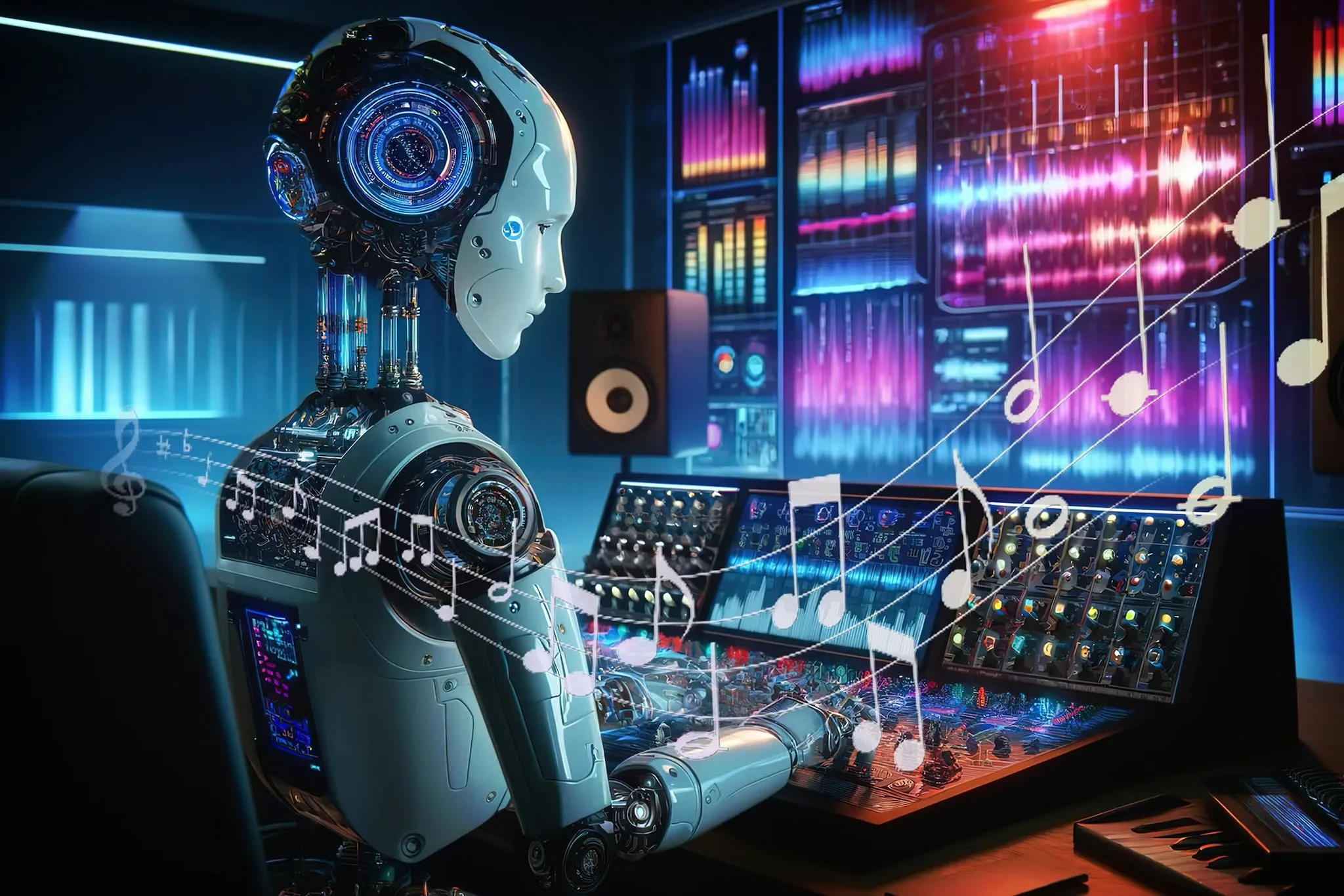
There has been a gradual wave of Artificial Intelligence (AI) in Nigerian music, and in no time, it might consume the entire industry.
Years back, the creation of music was largely engineered by humans, and subsequently, its consumption was driven by the advanced technology of social media and streaming services. But in recent times, the advancement of technology has resulted in the permeation of the music industry with AI at the forefront.
Globally, the rise of AI started as a fraught acceptance, particularly on the capability as an assistant or a disruptor in not just ‘stealing jobs’ but eroding human full capabilities and potential. However, this has been largely overcome with the massive adoption of AI across major fields, especially in tech.
Yet, despite the unsettling capabilities of AI, the entertainment industry has relatively embraced this advancement in recent years, using it to aid its creative process and output. From AI-generated content for social media consumption to script development, videography, set design, and more for filmmaking processes, the embracement of these technologies in the entertainment industry is speedily gaining momentum on the global scene. In the global music industry, digital streaming platform Deezer joined the adoption by rolling out the music industry’s first AI tagging system. According to Deezer, over 20,000 fully AI-generated tracks are uploaded to its platform every day.
The Nigerian film industry has also begun experimenting with AI integration. The release of AI-generated films, including Makemation and OmegaMax Conspiracy, earlier in 2025, sparked debates and opened up the possibilities for exploring AI as a tool in the entertainment industry.
And now, the music industry has also been affected by the influx. Despite the push-pull debates, Nigerian music acts like Toliban and Odumodublvck have boldly accepted this wave, releasing fully AI-generated music videos for their songs, “Ramadan” and “Wage War.”
But this was just the beginning; while Toliban and Odumodublvck made a deliberate choice to embrace the trend in their music, there has been a current displacement of Nigerian music by AI-generated ones.
For context, an AI-generated music collective known as Urban Chords (not to be mistaken for Loud Urban Choir) has been largely pirating popular Afrobeats songs. This AI-engineered choir emulates a real-life choir with orchestrated melodies and instrumentals, thereby transforming Afrobeats songs into soulful choir anthems. However, this choir has no human-backed voices, and neither has its production been found to involve any human effort — AI entirely generates it. Reportedly owned by Olamide Emmanuel Ajayi (also known as Emanvee), an artist-producer and self-dubbed vocal designer, Urban Chords has garnered massive traction across TikTok, with millions of streams on Spotify and Apple Music.
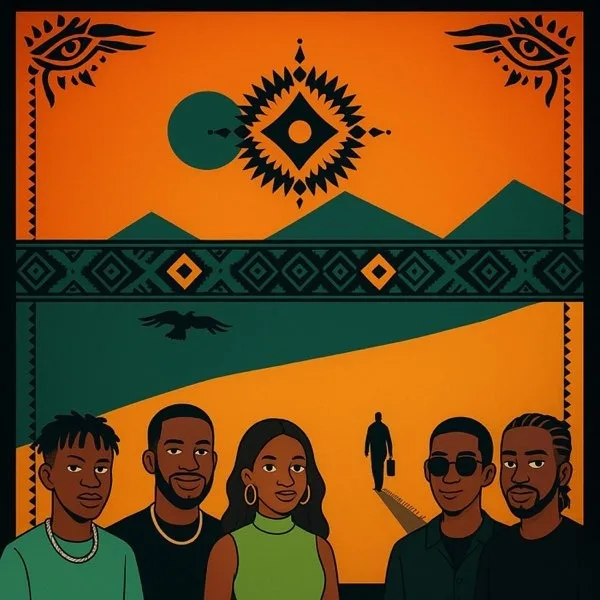
Their album, Choir Refix, before taken down, encompassed covers of viral songs including: Sarz’s “Getting Paid” featuring Asake, Wizkid, and Skillibeng, Asake’s “Lonely At the Top” and “BADMAN GANGSTA” featuring Tiakola, Olamide’s “99” featuring Asake, Seyi Vibez, Young Jonn, and Daecolm, and Libianca’s “People.” Their most-streamed cover from the album pirated Omah Lay’s hit song “i’m a mess” and garnered over two million streams on Spotify and over five hundred thousand streams on Apple Music. On TikTok, it has garnered over a million views and uses. Turntable Charts also reported the album was ranked at number 43 on the Official Top 100 Albums chart, with 834,000 on-demand streams.
On the surface, this may sound laudable for the capabilities of AI. However, upon closer examination, it reveals significant gaps and poses questions about the legal restrictions in Nigerian music. In addition to the recognition of the artistic and human effort that goes into creating music. What many netizens don’t understand is that while Emanvee and Urban Chords creatively remix Afrobeats songs into choir anthems, they have grossly crossed the line in the copying, production, and distribution of these artists’ works without consent. These remixes weren’t only released on social media but also assigned songwriting and distribution credits to themselves (under the companies Lyripedia and Inner Circle Entertainment Limited).
Yet this is a fragment of what Urban Chords has disrupted in the Nigerian music industry. Another official release track titled “Afro Mix” has been found on Digital Streaming Platforms. This track mixes several songs like Wizkid and Tem’s “Essence” with Burna Boy’s “Last Last”, Ayra Starr’s “Rush”, Davido’s “UNAVAILABLE” featuring Musa Keys, amongst others.
And recently, Nigerian singer-songwriter Fave became a victim of this wave of AI displacement. Her single, “Intentions,” which was first released on COLORS in June, had been pirated by Urban Chords into yet another choir refix. This remix took over TikTok, garnering over 500,000 user posts and grossly overshadowing the original song. However, rather than taking legal steps against Urban Chords to have the AI-generated version taken down, she posted a video expressing her indifference to the AI-generated version of her song and, at the same time, acknowledging the massive appeal of her audience to the song.
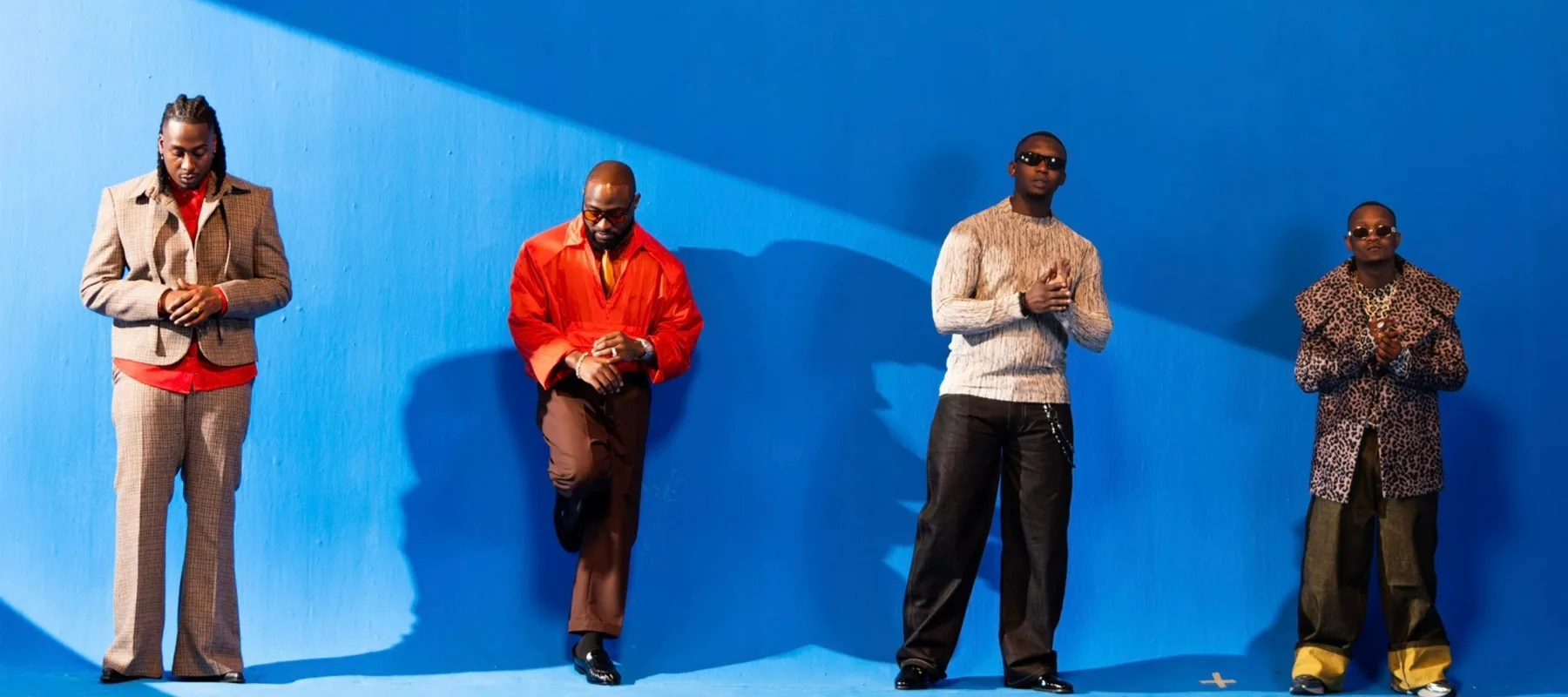
We painted our bodies metallic blue to portray a futuristic moment as otherworldly beings with a message that I consider raging hypnotic!
INTENTIONS feat urbanchords OUT NOW for streaming. pic.twitter.com/Cftu8V7Uke
— FAVE (@faveszn) November 24, 2025
The following week, she released the official version of the AI-generated “Intentions,” featuring a re-recorded version of herself with vocals from Urban Chords. This has sparked numerous debates and mixed reactions from music critics, with some calling for the cancellation of Urban Chords.
Of course, the onus rests on the artist to strip the record off the AI choir. Still, in situations where an AI-generated version outperforms the original, it is only logical to take the more calculated approach: re-sing, re-record, and release the AI-generated version under the artist’s name.
But how do we mitigate the continued popularity of an AI remix over the original human work?
Yet, despite the fuss surrounding the current AI influence, this collaboration symbolizes a significant moment for the Nigerian music industry. What began as a pushback against AI resulted in the first Nigerian music collaboration between AI and a real-life artist.
Apart from music production, the AI wave has permeated the visual arts of music, and might be the newly discovered trend. In a country where cultural preservation and expression thrive in the visual arts, music videos and album covers are held in high esteem. However, with the inclusion of AI-generated visuals, this may gradually be erased. Not only are the art and stories watered down, but the creatives responsible for bringing the visuals to life are being displaced.
Other Nigerian music acts have also embraced this wave. Singer-songwriter Teni recently teased a fully AI-generated music video for her single “Speed,” featuring American rapper Gunna. While music video director TG Omori posted an AI-generated album cover for Flavour’s upcoming album, Afroculture.
THEM NO FIT CATCH US @1GunnaGunna 🤫‼️‼️‼️ pic.twitter.com/LBmVrWi0ED
— OBA ORIN THE REAL IDAN (@TeniEntertainer) November 18, 2025
Perhaps an argument could suffice as an economical approach to budgeting. For instance, in an industry where music video directors charge up to ₦100 million, it seems economical to adopt the AI approach while embracing the latest innovations.
The Rising Concerns: IP, Copyright Issues, and Ethics Accountability
The fear of creative displacement poses a significant concern in the adoption of AI. This has been evident in various fields, and now, it appears the entertainment scene is about to befall the same fate. Will AI replace backup singers, music producers, composers, graphic designers, makeup artists, and many more, or will creatives and the audience collaborate to preserve human-led creativity?
Perhaps the most pressing concern is why AI remixes are released without clearance, resulting in copyright infringement and ethical concerns. Since artists cannot control audiences’ preferences, they should be able to exert control over the production and distribution of their work.
I have not stopped thinking about how Fave handled AI and her song “Intentions.” An AI choir lifted her lyrics, remixed the melody, went viral on TikTok and suddenly the fake version was getting more attention than the original.
Legally and ethically, it was wild to watch.…
— Foza Billions (The Oracle) (@fozadoza) November 25, 2025
What AI Means for the Future of Nigerian Music
While many Nigerians are reluctantly embracing this new development, the pushback against AI might serve as a deterrent to the evolution of music that is currently underway. If anything has been discovered, humans are grudgingly accepting seeing AI as a tool rather than a threat.
With the gradual wave of AI in the Nigerian music industry, the forward-thinking approach would be the controlled adoption of it in reshaping production, songwriting, vocal arrangement, and visual design. Otherwise, we risk over-saturation & loss of cultural nuances. However, beyond the pathway of collaboration, the need for IP regulation, legal frameworks, and industry guidelines should be highly prioritised.
Overall, Nigerian music must adapt strategically to protect creativity and preserve its culture while embracing innovation. And although AI is still in its early stages in this part of the world — as it will only improve — creatives will learn to maintain originality while using AI as a creative assistant, not a replacement.