


Tune in to listen
Bounce FM

Many critics—whether in music, film, art, literature, or politics—increasingly face personal criticisms that fail to engage with the merits of their arguments.
In the Nigerian cultural space, praise is always welcome. Criticisms, not so much. Whether it’s a film, a song, or a literary work, once the public embraces a creation, any dissenting opinion is often treated as betrayal, envy, or outright sabotage. Critics are dismissed as “haters,” their expertise doubted, and their motives questioned. This aversion to criticism doesn’t just stunt artistic growth; it undermines the very possibility of building a mature, self-reflective creative culture. Without criticism, creativity stagnates. Without dialogue, standards slide. And yet, in this country, the critic is rarely seen as a partner in the creative process, but rather, as an enemy to be silenced.
Social media reactions to the reviews of To Kill a Monkey (TKAM), the buzzy new thriller series by Kemi Adetiba, have been varied and colourful. For example, an X (formerly Twitter) account tagged Nigerian Movie Reviews posted a frank critique, and tech entrepreneur Fola Olatunji-David responded bluntly: “Go and shoot your own 10/10 show.” That one reply summed up a widespread sentiment: if you don’t like it, make your own, as though criticisms were a competition. As though the right to comment must be earned through creation.
SHUT UP YOUR DIRTY MOUTH!
“Nigerian movie reviews”
Go and shoot your own 10/10 show and don’t piss me off! https://t.co/6aZOFf1YAh
— Fola Olatunji-David (@folasanwo) July 26, 2025
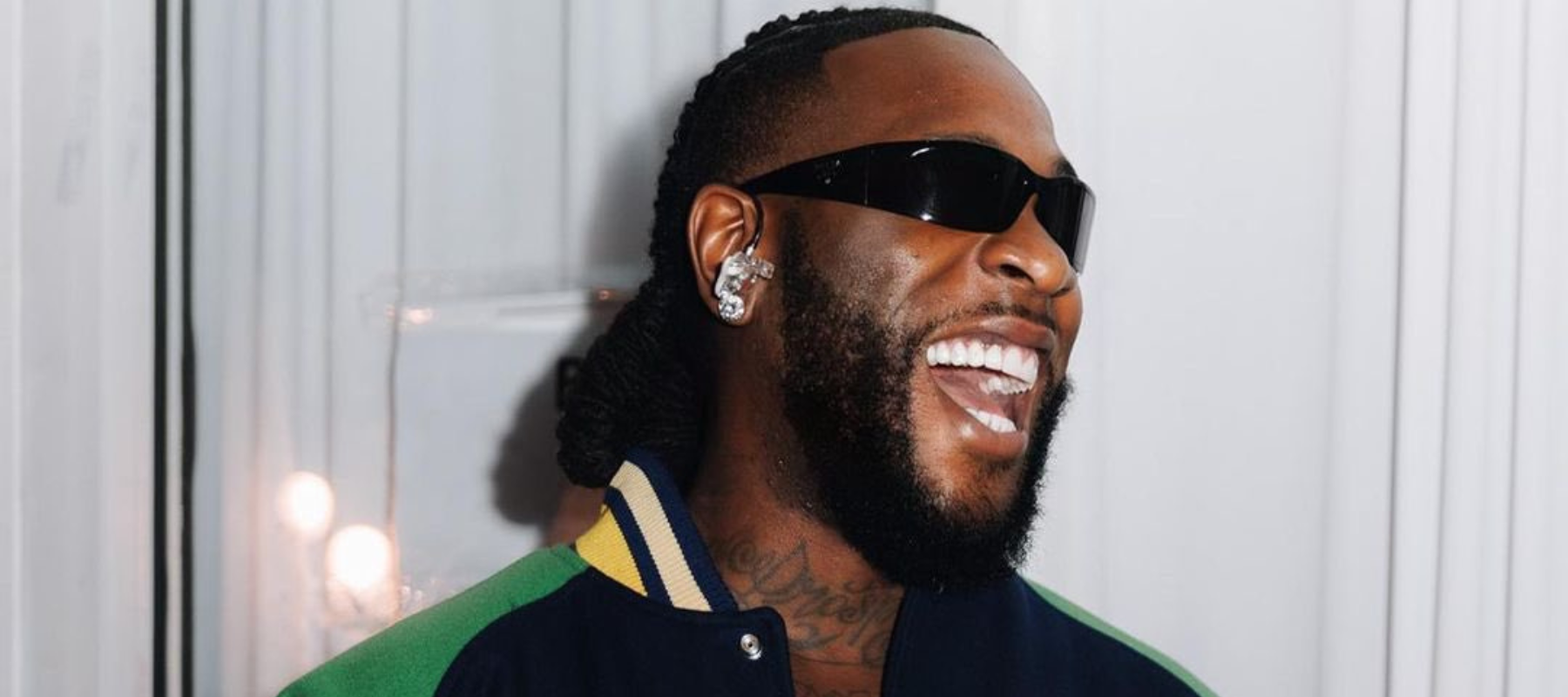
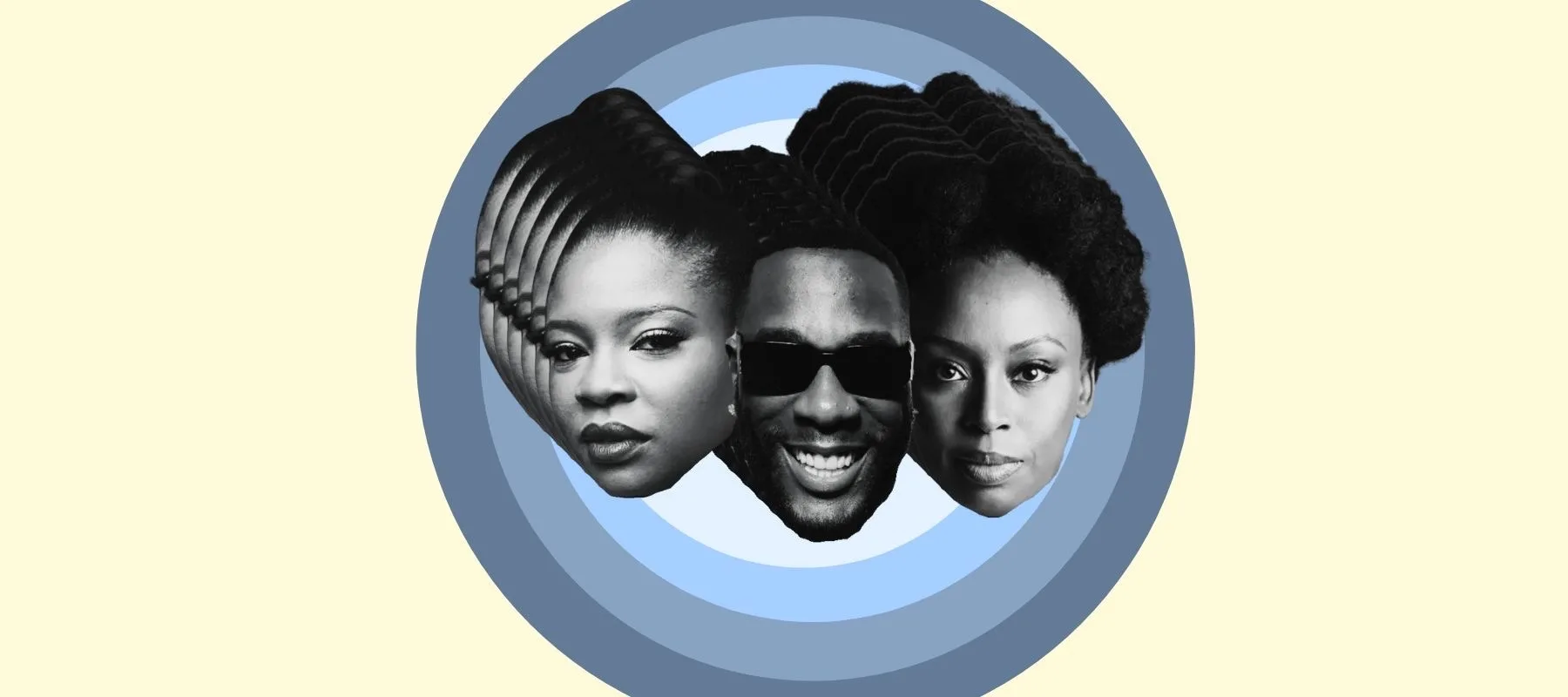
As one of Afrobeats’ most important and polarising figures, Burna Boy invites a guaranteed level of debate that ought to follow his productions as one of Africa’s finest musical exports. Hence, the release of his latest record, No Sign of Weakness, arrived beneath an inevitable storm of discourse. Not all of it was flattering. Pulse Nigeria took a hard line, calling the album’s sequencing “scatterbrained” and pointing to “an obvious weakness in Burna Boy’s writing and delivery.” But, again, with great success comes a formidable defense and being one of the Big 3 means that the African Giant has cultivated a devout, digitally-native army of fans—his Outsiders—who act as perpetual lookouts on social media, ready to defend their star’s image and his work. When the Pulse review made its rounds, the stans mobilised; they weren’t having it at all. One fan dismissed the review as “hatred towards the most successful artist Africa has produced.”
This guy pressed play on a new released album not to enjoy the music but very much determined to find faults and reasons why Burna Boy is “burnt out”. This is not criticism by the way, this is hatred towards the most successful artiste Africa has produced https://t.co/oYRdtcDr8j
— M4M (@Here4buz) July 21, 2025
Just as in film and music, the same goes for literature (and for basically any form of cultural production). Early this year, popular novelist Chimamanda Ngozi Adichie put out her latest novel, Dream Count. So far, it hasn’t caught fire the way her past work did, and the reviews have been split. Vulture took one of the sharpest swings, calling it a “frustrating return” and saying the book was “so uncritically hung up on its men that it neglects its women.” The critic argued that Adichie was circling “men’s badness” without stepping into “more interesting second- and third-order questions about the lives of women, about how to be a feminist in the 21st century.” Written from a progressive stance, the review met a wall of resistance, particularly from her Nigerian readers, a loyal core who justifiably regard her work as part of the national literary canon.
The point was never whether either of these reviews highlighted was right or wrong, but that they raised questions worth engaging with, questions that blind loyalty can make impossible to confront. Criticism rarely exists in a vacuum, and a reviewer’s biases can show. The backlash to Vulture’s review of Chimamanda Ngozi Adichie’s Dream Count had the effect of placing her beyond critique. Adichie is, without question, an icon of contemporary literature. The review may have, or may not have, carried hints of bias and overreach. Even so, it was more than a swipe at a beloved author; it was a challenge to a feminist novelist for, in the critic’s view, failing to probe deeply enough into the lives and complexities of her female characters—a line of inquiry squarely within the bounds of legitimate literary criticism. No artist, no matter how established, is exempt from that process. As long as a work takes up space in the culture, it remains open to debate, interpretation and dissent. The answer is not to shield it from criticism, but to meet that criticism on the strength of the work itself.
Many critics—whether in music, film, art, literature, or politics—increasingly face personal criticisms that fail to engage with the merits of their arguments. Music and film critic Ayomide Tayo points to “cultural literacy” as a key source of disconnect between critics and audiences. “When an average viewer is watching a series like To Kill a Monkey, they are not looking at the intricate parts of the film production; they are not concerned with camera angles or other technical elements like grading, editing, or sound quality. They’re not even assessing the quality of the plot,” Tayo, a self-styled culture decoder, tells BSide. By contrast, he explains, a film critic seeks out plot holes, technical lapses, and evaluates the overall story quality, leading to a different opinion from a typical viewer who consumes content at face value.
Writer and art critic Rilwan Balogun agrees with Tayo, stating that most audiences watch primarily for entertainment. “The major reason [the audience] rejects ‘negative’ criticisms is to protect what they deem of that movie [or music]. Of course, they are not critical enough and don’t have the trained eyes [or ears] to see [or hear] loopholes, provided it serves that entertainment value to them,” Balogun tells BSide. Supporting these points, writer and poet Oluwadamilola Ajayi suggests the disconnect lies in expertise: “A critic is an expert. A viewer is not one. A work of art can achieve commercial acclaim if viewers fawn over it; a critic can still pan such work within a few inches of meaning,” he says.
These comments echo the observations of Jonathan Haynes in his 2016 book Nollywood: The Creation of Nigerian Film Genres, where he wrote: “Nigerian audiences care about the story a film is telling above all else—if they are happy with that, they will ignore all kinds of technical and other deficiencies.”
Despite the general hostility towards criticism in Nigeria’s art and cultural sectors, insiders argue that critique is essential for the survival and growth of these industries. In a 2023 essay, critic and founding editor at Afapinen, Carl Terver, posited that many writers are now openly hostile to critique. He wrote: “Criticism is essential to art. If bad writing emerges, it shall be pointed out. If one doesn’t have the stomach for it, leave art to artists, or form niches where to rub each other’s backs and praise kitsch.” Terver added that it is right to point out what is bad, even if no one listens, for those who may listen and appreciate it.
Over the decades, critics have acted as provocateurs and curators of taste, pushing key stakeholders to improve their craft. Their primary goal? High-quality output—projects that are original, thoughtful, well-executed, and resonant not only with audiences but with the artistic standards of the form itself, rather than shallow or pandering. And they have largely succeeded. There was a time when Nigerians proudly proclaimed they did not listen to Nigerian music, preferring foreign artists. That is no longer the case. While Afrobeats’ international breakthrough came through commercial momentum and global partnerships, its internal growth owes something to critics who refused to lower the bar for artistry: music journalists and culture critics who helped contextualise the genre, set expectations, and define its aesthetic boundaries. They also serve as necessary checks, taking on the less comfortable but essential task of calling out misjudgments. When Burna Boy derided Afrobeats on a global platform as lacking substance, well‑meaning critics challenged the remark, framing it as both dismissive and untrue given the genre’s depth and diversity. Their case was compelling enough that The African Giant later walked that statement back and apologised for it.
Criticism has also played a key role in the evolution of Nollywood. In Nollywood: The Creation of Nigerian Film Genres, Haynes traces how criticism helped shape the Nigerian film industry—from the celluloid era to home video. From Living in Bondage in 1992 to TKAM in 2025, Nollywood has advanced in sound design, picture editing, and overall production quality. This feedback loop has encouraged greater attention to craft, helped shape audience expectations, and contributed to a growing body of films that can compete credibly on both local and international stages.
Still, criticism should not be elitist or wielded as a weapon to destroy the work of individuals whom critics dislike. “I think criticism is valuable feedback that can give creators an outside perspective on how to improve. I don’t think critics go in search of negatives,” music critic Ade Adeayo tells BSide.
Indeed, critics are not meant to seek flaws for sport; they are compelled to point out areas where content falls short. And no, the critic does not need to be a creator to have that dialogue. You don’t need to be a chef to appreciate a good meal, though a solid understanding of cooking helps. In the same vein, critics possess a technical grasp of art and culture to critique relevant aspects. Responding with remarks such as “go write your own film” or “go sing your own song” misses the point. Criticism is about interpretation and analysis, not necessarily production. After all, some of the greatest coaches in sport were not the most accomplished athletes.
In his 1967 essay titled The Death of the Author, French literary critic Roland Barthes dismissed the traditional notion of an author’s intentions dictating the interpretation of a text. Instead, he argues that the reader is responsible for interpreting the story according to their own life experience and philosophies. The critic is therefore not a lesser participant, but a valid interpreter whose insights may exceed those of the creator. Legendary film critic Roger Ebert, for example, never directly made films, yet he was one of cinema’s most respected voices. Filmmakers paid attention to him and his clear-eyed, uncompromised assessments that were of real value to the audience.
It’s important for audiences to understand that criticism is not always born of malice. It is an honest assessment and expression of what went well and what went wrong in a project. For film, the critic examines how well a story is told through elements like narrative, direction, acting, visuals, sound, and theme. Is the structure coherent? Does the mood sustain throughout the film? Does the story stay consistent? With music, the critic assesses how effectively a song or album conveys its message through lyrics, melody, production, vocals, delivery, and structure. They assess whether these elements stick together, evoke emotion, and show artistic intent. And for literature, the literary critic examines how well a text uses language, structure, character, and theme to explore its ideas.
In many cases, the simple role of a critic is not merely to malign but to demand more from the work and those who make it.