



Tune in to listen
Bounce FM

Trebling down on his position as African music’s metaphorical leader, Burna Boy launches into familiar subject matter with renewed fervour.
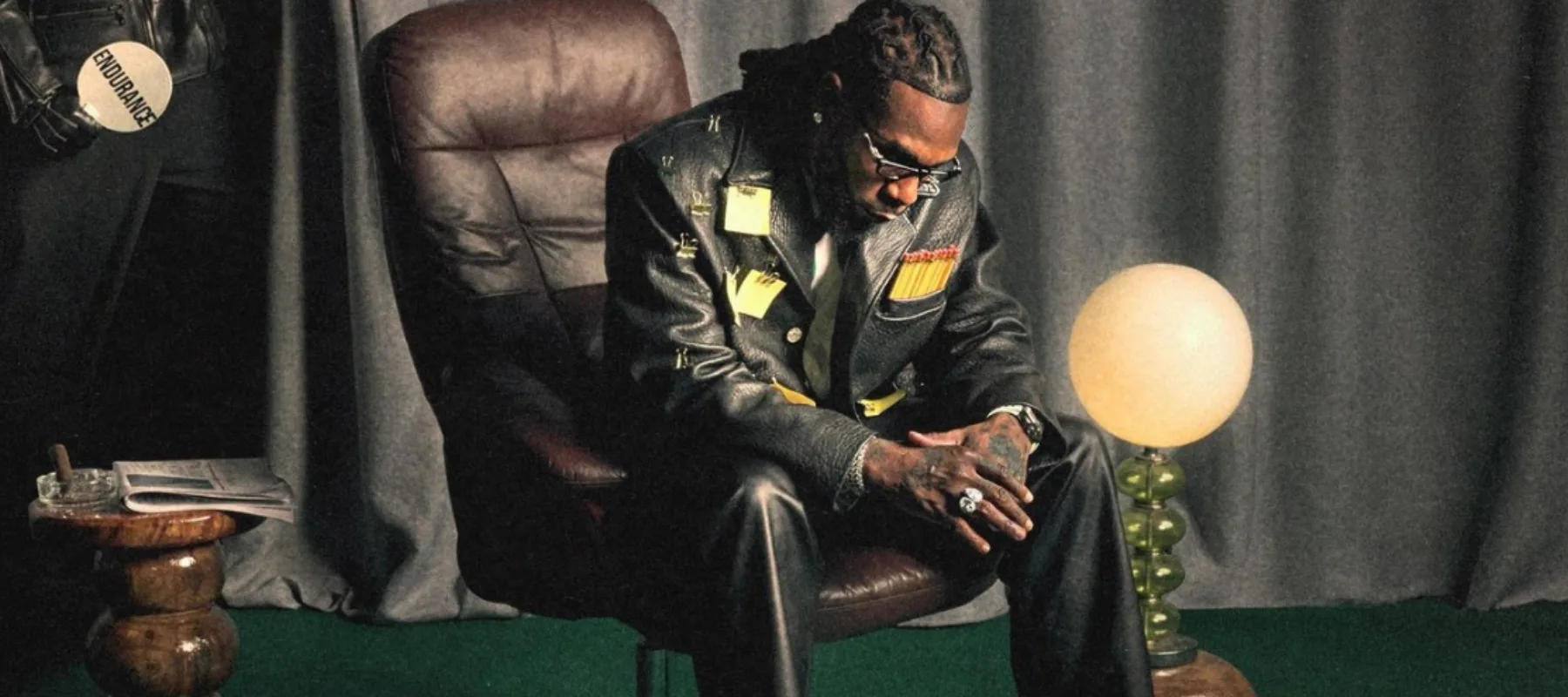
Burna Boy’s last trilogy of albums starting from 2019’s African Giant and ending with 2022’s Love, Damini, cemented his artistry across the globe and led to the superstardom Burna Boy had warned us all that he was capable of, churning out hit after hit with alarming accuracy and consistency while maintaining the outlook of Afrobeats star quarterback. When 2023’s I Told Them… arrived however, critics quickly pointed at the continuation of a moot narrative. All the flak drawn from that body of work has borne unsurprising fruit with Burna Boy’s latest LP, No Sign of Weakness. Trebling down on his position as African music’s metaphorical leader, Burna Boy launches into familiar subject matter with renewed fervour.
His favoured sample-heavy approach continues to reap dividends and true to form, there are a few instantly recognizable interpolations that strike the ears and make it clear that Burna Boy is not simply arranging an Afrobeats album, but in keeping with his explorative nature (and declaration of being an Afro-fusion artist), a proper body of music. A few of the more notable examples include Marlon Asher’s “Ganja Farmer” on “28 Grams,” Soul II Soul’s “Back to Life” on “Update,” and “New God Flow” by Kanye West/GOOD Music on the outro of the title track, “No Sign of Weakness.”
Opener, “No Panic” is a rapid introduction into the music, complete with a Pan-African soundbase. Lyrically, the focus is sparse — save for Burna’s aggressive jab at his critics — but the music does all the work here. Followed quickly by a deeply reverbed voice on “No Sign of Weakness,” Burna Boy channels his inner wordsmith to a T, leading with an intense rhyme sequence that switches up on the second verse. Cheeky bars like “Kanayo O Kanayo, sacrifice all of y’all” make up most of the hook and refrain. “Buy You Life,” “Love” and “TaTaTa“ (featuring Travis Scott) close out the album’s first act as Burna Boy establishes both emotional depth and commercial viability early on. Utilizing elements of palmwine music and highlife on “Buy You Life,” the record is cautionary and borrows subject matter from “No Panic,” further entrenching Burna Boy’s militant persona.
R&B cut “Come Gimme” slips into the stream of longstanding Burna Boy ballads, albeit being more hip-hop tinged than most offerings in that pocket. While the writing might not be as compelling as on previous efforts such as “On the Low” or “Dirty Secrets,” his voice does all the heavy lifting on the most recent entry. Next up on “Dem Dey,” Burna Boy’s villain arc takes a sharp left turn as he cements one of the most viral incidents in his recent history into lore – all while creating Afropop gold.
“Sweet Love” finds Burna Boy delivering his most impassioned vocal performance on the album over a swinging reggae harmony. The measure of an artist is sometimes what is achievable with the minimum level of fuss. Every element of “Sweet Love” works towards exactly that for Burna — coasting in familiar territory musically and lyrically, the only task he really has (and executes superbly) is singing as convincingly as he can. He’s so compelling, you almost forget the context of the previous record. “28 Grams” represents Burna’s latest installment in his pro-bud catalogue, joining classics such as “Mary Jane.”
“Kabiyesi” in isolation feels completely out of place on this project but within a global context, makes absolute sense. With the uptick in EDM (yes, once again) and Burna Boy’s storied nightlife interests, it makes sense to create something that sates that need while opening up the subgenres of Afro-House/Electro in an indigenous way. Performed almost entirely in Yoruba to a pulsating synth, log drums and flutes, this Amapiano-EDM-House hybrid is club-ready. Capable of working in the clubs of Joburg, the parties in Ibiza and the raves of Lagos, it’s a guaranteed smash.
Burna Boy’s economy is more apparent on this project than ever before. While the songwriting left a bit to be desired elsewhere, the Mick Jagger featured “Empty Chairs” does not suffer the same fate. Burna Boy’s flow is tight and the words cut sharply on the first verse, however, on the second tarries into middling territory. In truth, “Rolling Stones lead man as a light feature on an album cut” is the real story here. Burna Boy is a prolific collaborator and has maintained that momentum for the most part of his career. At this stage, only a handful of names will send pulses racing in terms of features and that is evident across the album. Travis Scott, Belgian-French auteur, Stromae and breakout Nigerian-American Country singer, Shaboozey represent the only features on his latest effort, with each act elevating the album at key points.
Early singles, “Update,” “Change Your Mind” and “Bundle by Bundle” close the album out with the aid of outro “Born Winner,” Burna Boy’s sequencing is a silent reason behind the success of his albums and the last act of No Sign of Weakness highlights this efficiency, interspersing downtempo and uptempo records to great effect. “Update” represents one of the few Afrobeats focused records on the album, aided in sections by the classic Soul II Soul hit, “Back to Life.” “Pardon” utilizes the piano to devastating effect. Burna Boy’s verse and hook blend seamlessly into Stromae’s efforts as the pair pass the buck back and forth throughout the record. An unexpected duet centred around richer subject matter than usual elevates the final act of the album immensely. In true Burna Boy fashion, the party resumes in fifth gear on the next record, “Bundle by Bundle,” where the hook expounds on his fascination with vanity and inebriation. Presented with his usual sheen of polish, it sets up the Shaboozey supported “Change Your Mind” expertly, easing into softer listening. Almost entirely an Afropop effort, Burna Boy explores vulnerability behind the sheen of soft harmonies and strong kicks on one of the shorter records on the album. “Born Winner” opens with powerful affirmations from a narrator and launches into an Amapiano inspired Afropop hybrid instrumental. Sung almost entirely in Yoruba, Burna Boy ebbs and flows between muted braggadocio and sincere gratitude, reinforcing themes explored on “Love,” “No Panic” and title track, “No Sign of Weakness.”
Critics of Drake and Burna Boy share similar complaints about their music. From a failure to grow to being considered too decadent, what most listeners fail to acknowledge is how little the relevant subject matter remaining to traverse is. Burna Boy has documented pain, loss, superstardom, its pitfalls, and everything in between. Coupled with his colorful come-up over the course of the last fifteen years, this makes for perhaps the most compelling catalogue of any Nigerian artist to ever do it. It is fair to say there are not many stones left unturned lyrically for artists in this cadre to explore but the commitment to ensuring the quality of the music is maintained deserves applause. No Sign of Weakness sounds timely while maintaining an air of familiarity, an ingredient necessary to maintain even keel for long term success.