



Tune in to listen
Bounce FM

The struggle for LGBTQ+ rights constitutes an essential dimension of anti-imperialist politics precisely because it contests the enduring legacies of colonial rule.
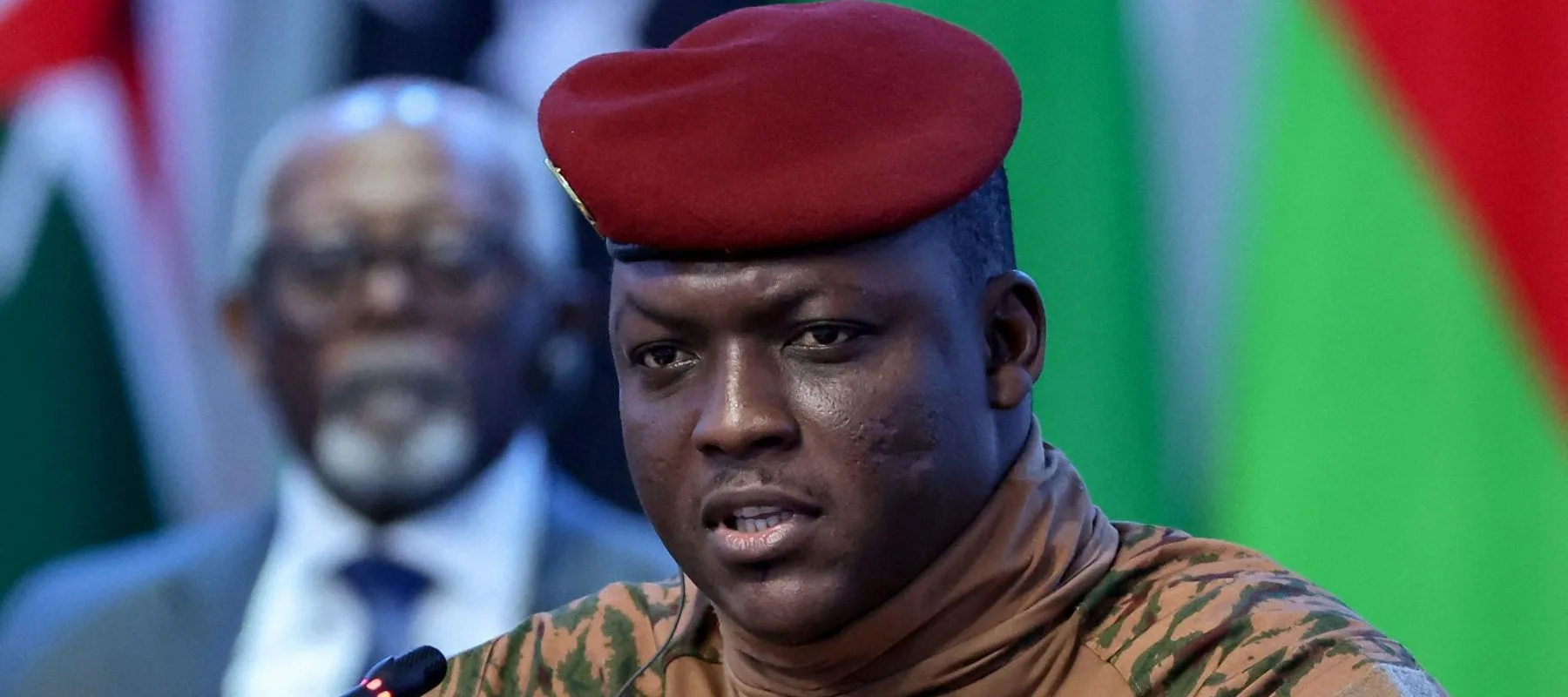
Burkina Faso’s military government, led by Captain Ibrahim Traoré, has removed visa fees for all African travelers. This policy, announced by Security Minister Mahamadou Sana, is believed to be a concrete step toward realizing the Pan-African vision of open borders and strengthened continental ties. While citizens must still complete an online visa application, the removal of the financial barrier aims to boost tourism, facilitate the movement of people and goods, and deepen cultural exchange. This decision aligns Burkina Faso with other nations like Ghana, Rwanda, and Kenya that have recently eased travel restrictions for fellow Africans, pushing forward the broader agenda of the African Union for greater integration.
This development is part of a series of policies that buttress Traoré’s broader political ideology. Since seizing power in a 2022 coup, the young military leader who turned 37 this year is one of the youngest heads of state in the world and has positioned himself as a staunch Pan-Africanist and an anti-imperialist. His popularity among some African youth movements reflects broader disillusionment with traditional political elites and a search for leaders who embody self-reliance. Traoré’s government has taken steps to assert national sovereignty. Earlier this year, Ouagadougou, along with Bamako and Niamey, announced their withdrawal from the Economic Community of West African States (ECOWAS). The three governments subsequently formed the Alliance of Sahel States (AES), a bloc that pledges mutual defence and deeper economic integration.
The regime’s rhetoric often challenges neo-colonial dependencies, emphasizing economic self-reliance through initiatives like nationalizing gold mines and rejecting loans from Western institutions. These actions, alongside the visa fee waiver, are presented as a return to the ideals of the country’s revolutionary former leader, Thomas Sankara, who championed self-sufficiency and a strong African identity. The visa waiver policy has been interpreted by observers as a symbolic continuation of Sankara’s ideology, as well as a practical measure to attract African travellers at a time when the country is struggling with security challenges. Burkina Faso remains one of the epicenters of jihadist insurgencies in the Sahel region, with thousands killed and more than two million displaced in recent years. Security concerns have hurt the tourism sector, and officials hope that easing entry requirements may help offset some of the economic decline.
Alongside regional integration, Traoré has promoted economic independence. His government has announced moves to nationalise gold mining operations, a sector long dominated by foreign companies, and has repeatedly rejected financial assistance from Western institutions. The leadership has framed such decisions as necessary for ending what it describes as “neo-colonial dependencies.”
However, Traoré’s Pan-African vision also includes a redefinition of social and cultural norms, often in opposition to what his government portrays as Western-imposed values. In another development, Burkina Faso’s transitional legislature passed an amendment to its Code of Persons and Family, banning homosexuality, criminalising “promotion” of homosexual acts, imposing two to five years in prison, plus fines. Justice Minister Edasso Rodrigue Bayala called same-sex acts “bizarre behavior,” and framed this law as essential for preserving “marriage and family values.”
🚨🇧🇫 Ibrahim Traore banned Hοmοsexuality in Burkina Faso
He said, "It's not an African value, but a Western degeneracy" pic.twitter.com/C9vXuDhrZn
— Global UPDATES (@GlobalUpdates24) July 28, 2025
The measure places Burkina Faso among a number of African states, including Uganda (which in 2023 enacted one of the world’s harshest anti-homosexuality laws) and Nigeria, that have recently passed or reinforced legislation against LGBTQ+ people. The narrative is that homosexuality is a “foreign import” that threatens traditional African society and therefore must be legislated against as a matter of sovereignty and cultural defense.
Historical evidence from before the colonial era demonstrates that various forms of same-sex relationships and diverse gender identities existed across the continent. Terms in indigenous languages, such as the Wolof “gor-digen” in Senegal, or the documented “female husbands” among the Igbo people in Nigeria, show that African societies were not monolithically homophobic. The criminalization of homosexuality, and the deeply entrenched homophobia seen in many parts of Africa today, is often a direct result of colonial-era laws imposed by European powers and the spread of Abrahamic religions that condemned such acts. But even if no historical evidence existed to counter such claims, the principle of cultural sovereignty would not justify criminalising citizens on the basis of sexuality. Scholar M. Jacqui Alexander has written that postcolonial black nationalism often rests on three gestures: “the normalisation of violent heterosexuality, the organisation of an internal homophobic discourse, and nostalgia for a state free from Western decadent incursions.”
Critiques of Traoré’s regime are frequently dismissed as diversions from the imperatives of revolutionary struggle, as though resistance to sexual hegemony were somehow external to, or incompatible with, anti-imperialist praxis. Such a framing is conceptually flawed. The struggle for LGBTQ+ rights constitutes an essential dimension of anti-imperialist politics precisely because it contests the enduring legacies of colonial rule, which not only entrenched exploitative economic structures but also institutionalised heteronormativity and codified sexual regulation through imported legal regimes.
Burkina Faso’s removal of visa fees for Africans seems to be a gesture in favour of continental integration and Pan-African solidarity. But while visa-free travel reflects an outward-looking solidarity across states, restrictive social laws curtail freedoms within its borders. A truly liberatory Pan-Africanism must rest on total decolonisation, dismantling every hierarchy — racial, ethnic, gendered, sexual — that colonialism left behind. Anything less risks reproducing colonial domination under a different name.